A scratching post can look solid in the store and still fail the first time an adult cat really uses it. A strong cat can pull hard enough to tip a light base, while a weak cardboard surface may start crumbling after only a day. Even the scratching material itself can be a problem if the cat's claws slide across it instead of catching.
Small design details can also change where the scratching happens. An open-bottom cardboard scratcher may let catnip fall onto the carpet, giving the cat a reason to investigate the wrong surface.
These problems are easy to miss because they often appear only during actual use. A careful buyer should look beyond height, appearance, and simple marketing claims. The base needs to stay planted, the scratching surface should hold together, the material should give the claws a useful grip, and any catnip should stay where it is meant to be.
What Happens When a Scratching Post Base Is Too Light for Adult Cats
A 15-pound adult cat does not politely tap a scratching post and ask whether it is ready. When he leans in, stretches out, and pulls hard, a light base can flip the whole thing over in one motion—and suddenly the scratching session becomes a wrestling match with the furniture.
That is what makes the larger-cat problem easy to miss when shopping. A post can look perfectly fine sitting untouched in a room, yet become useless the moment a strong adult cat actually puts his weight into it.
One reported case, tracked here as PGH-CASE-D99Y, involved a larger male cat repeatedly flipping the scratcher over. Another, PGH-CASE-Q47W, used a reversible wavy-and-flat design that became noticeably unstable after being flipped. The result is simple: if the base moves when the cat pulls, the cat has little reason to trust it again.
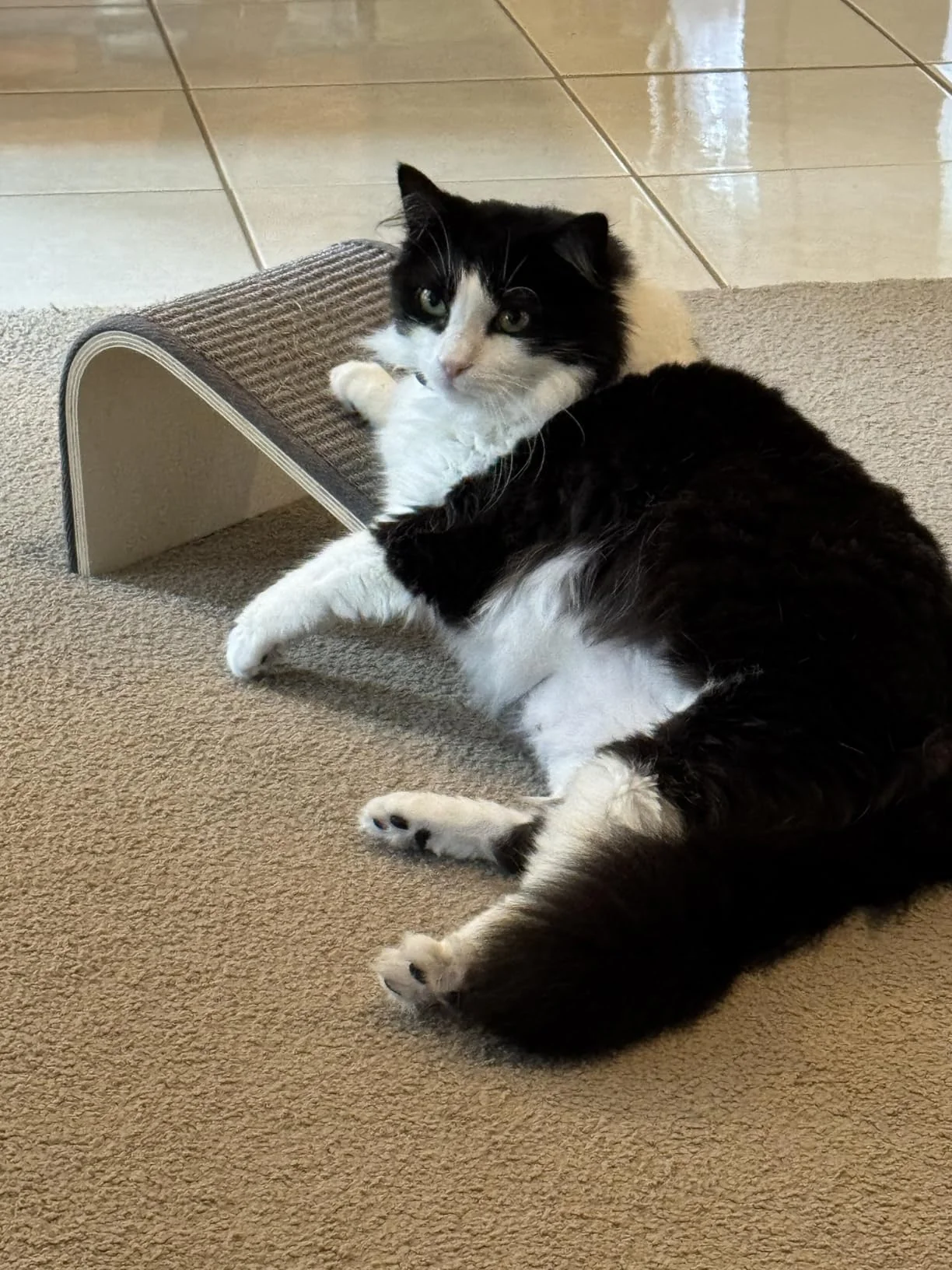
🫳 Push the Base Before Your Cat Does
Put the scratcher on the floor and press down on one edge with your hand, then give it a firm sideways push. If the base rocks, slides, or starts lifting on the opposite side, that is the same kind of movement a powerful stretch can expose.
The reported 15-pound-cat problem is not just about appearance. Once the post tips repeatedly, the cat may abandon it and return to the couch or carpet instead.
There is also a useful size clue in the research supplied for this section. Moesta's 2018 guidance puts the base width at least 50 cm, while Pereira et al. (2023) found that a stable scratching setup played a major role in whether cats reduced unwanted scratching. In that study, 71.4% of cats with persistent scratching problems reduced destructive behavior when given a stable, tall post near their resting areas.
So when comparing a cat scratching post for a large cat, do not stop at the listed height or the word "sturdy." Look at how much floor area the base actually covers and whether it stays planted when you push it.
For heavier, active cats, the current feedback makes the safer choice fairly clear: a wider, firmly planted base deserves more confidence than a lightweight design that only looks stable while empty.
Signs of Thin Corrugated Cardboard Breaking Down Too Quickly
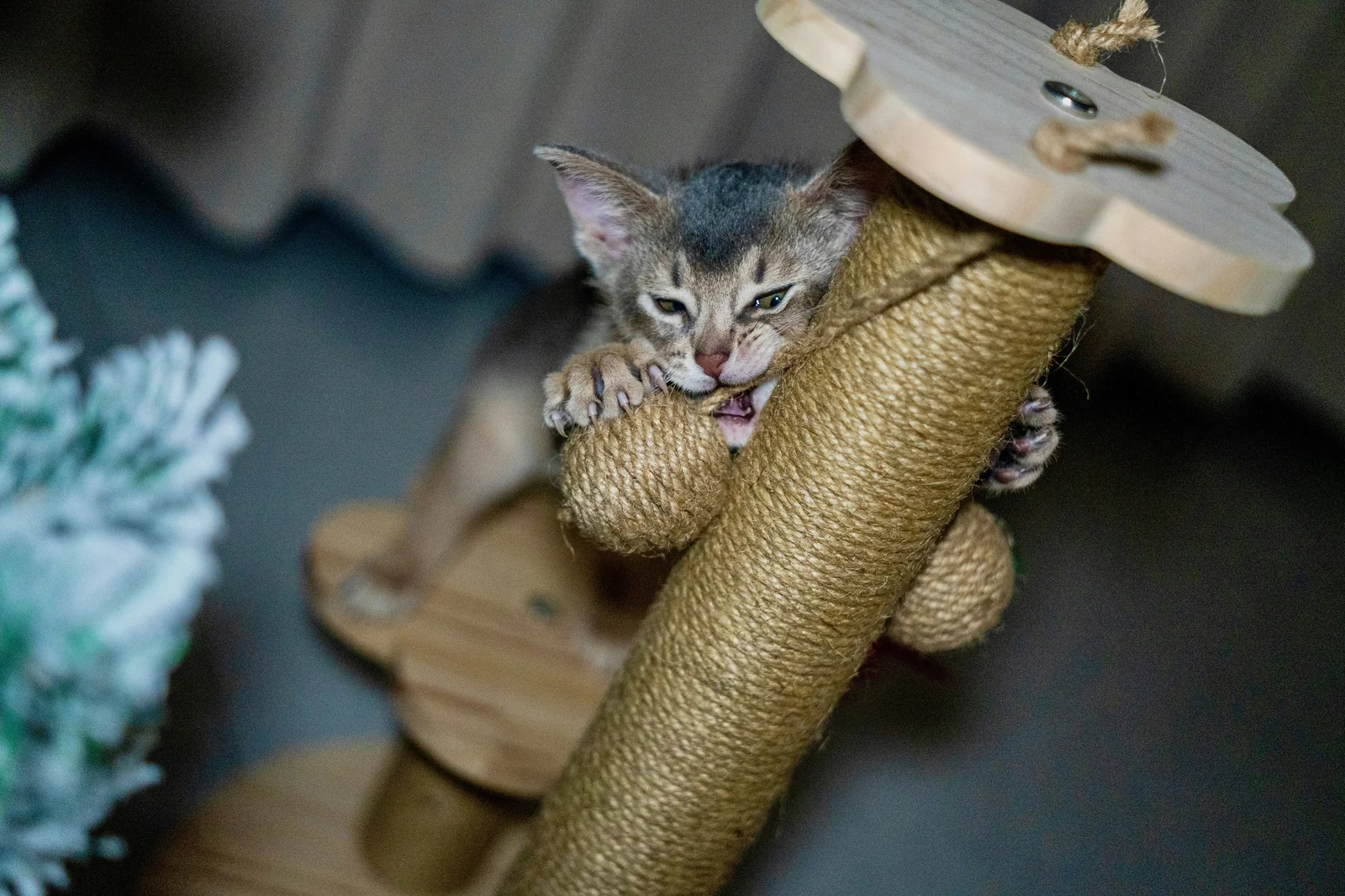
A cardboard scratcher should shed some paper as a cat uses it. The problem starts when the surface goes from normal wear to loose, airborne scraps almost immediately.
In one reported case, tracked here as PGH-CASE-SVSD3, the board was described as unusually flimsy, with the user suspecting that a thicker sheet had effectively been cut down. The cat destroyed it quickly, while loose particles were associated with sneezing and coughing during use. That is a very different experience from a scratch pad that simply develops a worn surface over time.
Another reported product, PGH-CASE-Q47W, was said to have fallen apart and crumbled within about 24 hours. Once a scratcher reaches that point, the cat is no longer interacting with a dependable scratching surface; the surface itself is becoming the mess.
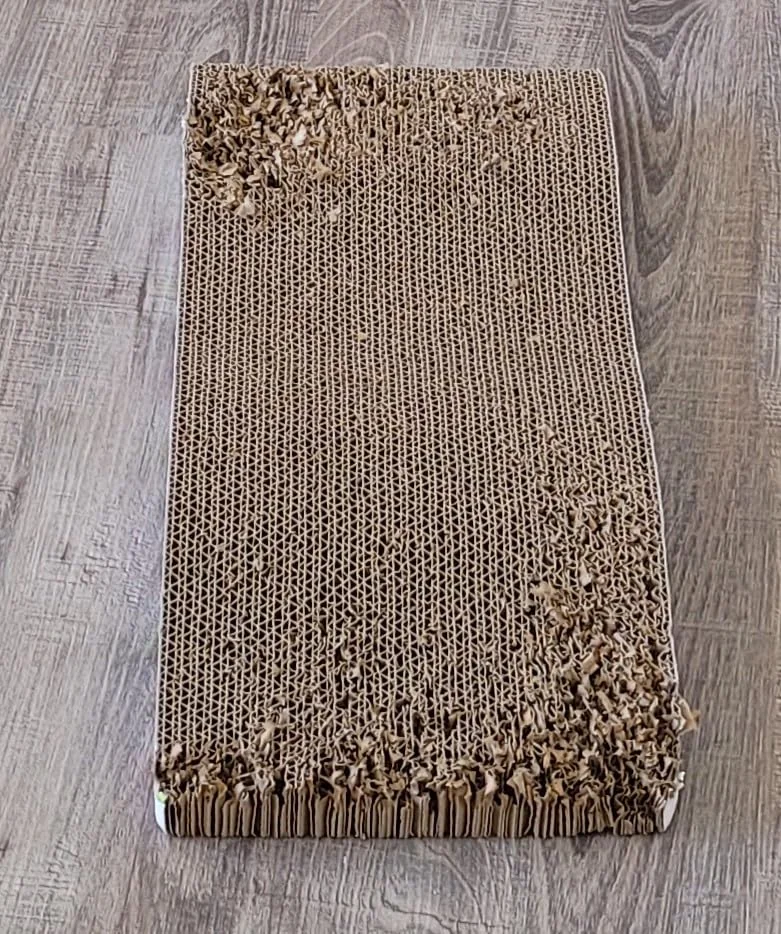
🧻 Rub the Scratching Surface Between Your Fingers
Before letting your cat spend another long session on a questionable board, lightly rub a small area with your fingertips. Look for a stream of loose fibers, tiny flakes, or layers separating with almost no effort.
If the surface produces a surprising amount of debris from a gentle touch, imagine what repeated clawing will do. For a cat that puts its face close to the board while scratching, rapidly shedding material is worth taking seriously, especially if coughing or repeated sneezing appears during or immediately after use.
The supplied Zhang & McGlone (2020) evidence compares cats' scratching preferences across different surface types and supports the broader point that the scratching surface itself matters to whether cats use a product. It does not, however, establish a specific safe particle size or prove that every loose cardboard fragment will deposit in a cat's airway.
That distinction matters when judging cheap cardboard. You do not need to assume every recycled board is unsafe; you can simply watch how quickly the particular product breaks down. A scratcher that starts crumbling almost immediately deserves a much lower confidence level than one that keeps its surface together through normal use.
How Hard or Slippery Surfaces Cause Cats to Reject Scratchers
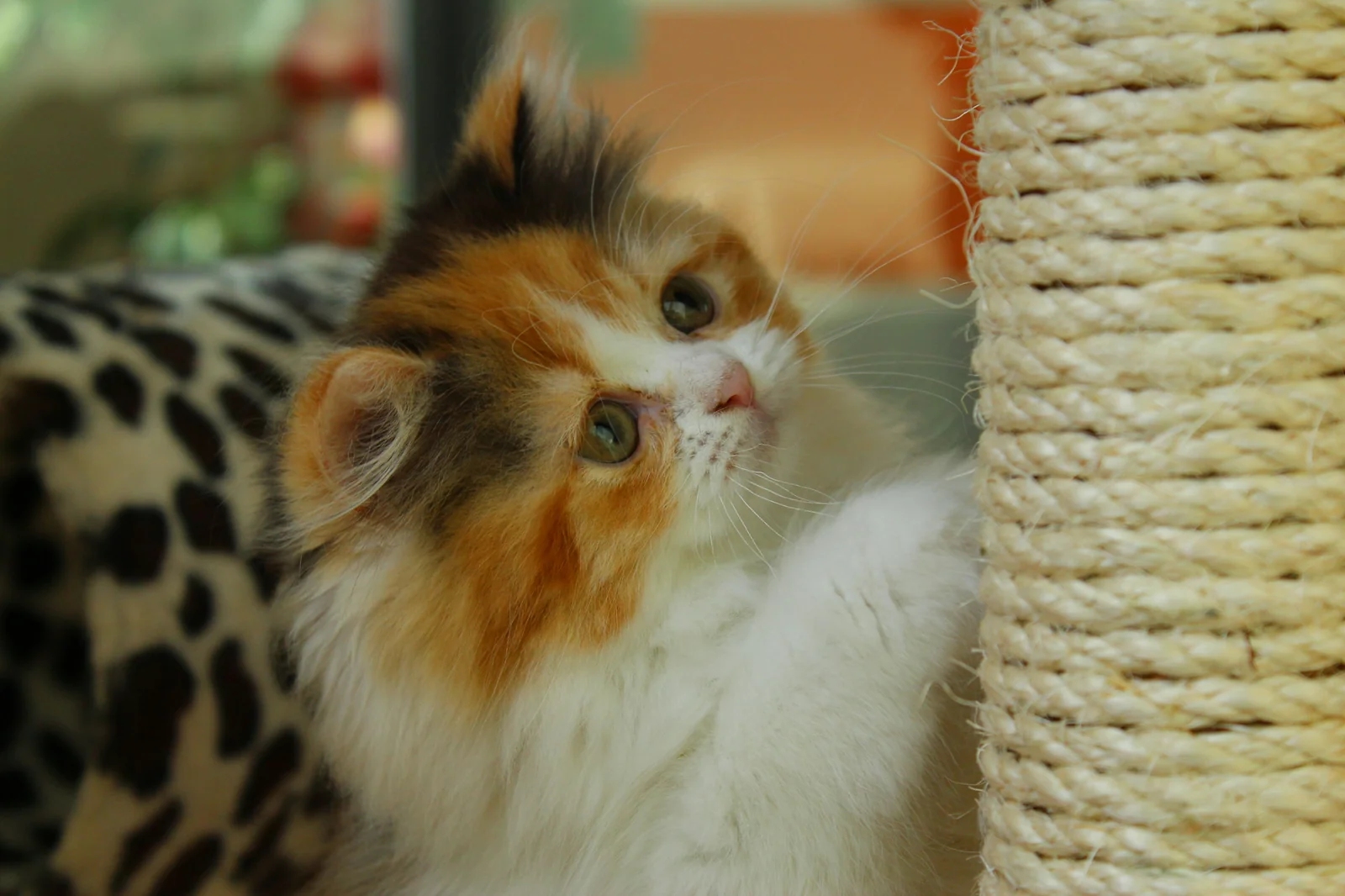
A cat can be perfectly willing to scratch and still reject a new scratcher if its claws cannot get a satisfying grip. When the surface feels too hard or simply does not catch the claws, the couch or carpet can remain the more appealing option.
One reported case, tracked here as PGH-CASE-D99Y, raised exactly that concern. The user suspected the advertised sisal was not genuine, describing a surface so hard that the cat could not get its claws into it; the lower section also began tearing after about two weeks.
That combination matters because a scratcher has to give the cat something to work against. If the paw slides across the surface instead of catching, the product may technically be a scratching surface while failing at the job the cat actually wants it to do.
🧵 Run Your Fingers Across the Rope
Feel a small section of the scratching surface with your fingertips. Natural sisal should feel fibrous and textured rather than slick and plasticky, while a surface that feels unusually smooth, rigid, or springy deserves a closer look.
But texture alone cannot prove that a product is genuine natural sisal. The supplied evidence supports the importance of material feel and scratching preference, while the reported case supports the concern about a surface that does not let claws engage properly.
Zhang & McGlone (2020) found that cats showed stronger scratching preferences for certain covered surfaces, reinforcing the practical point that what the claws and paws actually feel can influence whether a scratcher gets used. The supplied material does not establish that a particular fiber strength, including the cited 400 MPa figure, is a reliable at-home authenticity test.
So skip the marketing label and watch the cat's behavior. If claws repeatedly slide off the surface and the cat immediately goes back to carpet, the scratcher may be failing at the most basic part of its job.
Why Open-Bottom Cardboard Scratchers Scatter Catnip on Carpets
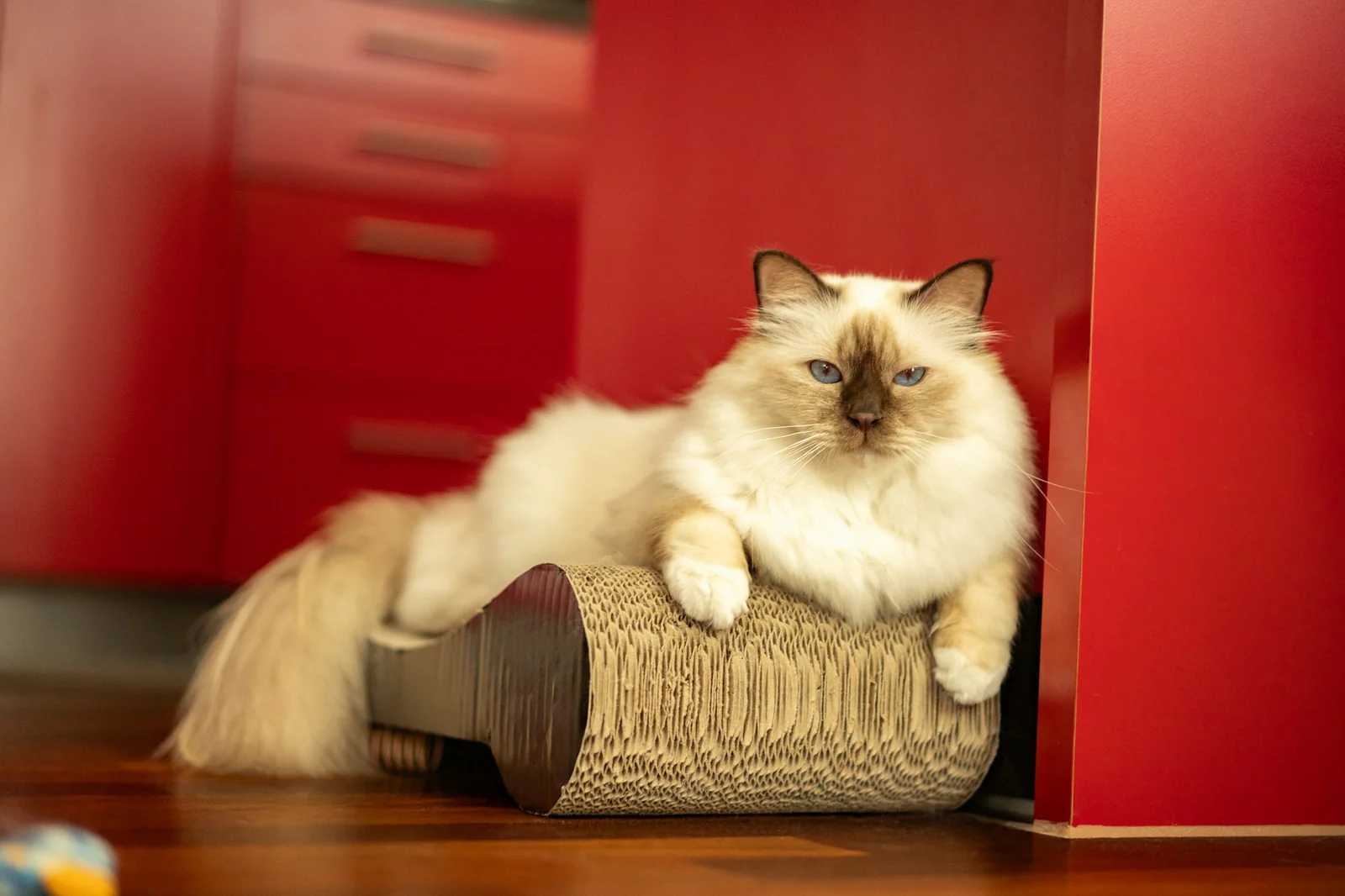
An open-bottom cardboard scratcher can create a frustrating little chain reaction: the catnip goes through the holes, the cat follows the scent, and the carpet becomes the real scratching target.
That is what users reported with the case tracked as PGH-CASE-Q47W. With no sealed tray underneath, catnip could fall through the corrugated openings and land directly on the floor or carpet, where the cat then redirected its attention.
A similar issue appeared in PGH-CASE-SVSD3, where the product was reported to have no bottom tray and a loose overall construction. Without something underneath to contain the material, there is little stopping loose catnip from ending up exactly where you do not want your cat encouraged to scratch.
🌿 Lift the Scratcher and Look Underneath
Pick up the board and check its underside before adding more catnip. If you can see open channels leading straight from the scratching surface to the floor, sprinkle a small amount of catnip and watch where it actually ends up.
The problem is not that catnip automatically causes destructive scratching. The supplied evidence points to a simpler behavioral sequence: a scent cue can draw the cat toward the place where the powder collects, and if that place is your carpet, the carpet can suddenly become part of the experience.
That makes the missing bottom tray more than a cosmetic omission. A scratcher that keeps the catnip on its intended surface gives you a much better chance of keeping the scratching activity there rather than accidentally decorating the carpet with the same cue you were using to attract the cat.
For this particular design, the user reports point to a straightforward weakness: when the bottom is left open, the product can send its own attractant onto the floor. A contained base is therefore the more sensible choice when the goal is to keep both the catnip and the scratching behavior where they belong.
CONCLUSION
A good cat scratcher should remain useful after your cat starts pulling, clawing, and moving around on it. For larger cats, the base deserves special attention. A wider base that stays planted is a better choice than a lightweight design that rocks or tips when pushed.
The scratching surface also matters. Some shedding is normal with cardboard, but a board that produces lots of loose pieces from a light touch or falls apart very quickly is worth avoiding. With rope surfaces, feel the material rather than relying only on the product label. A surface that feels unusually smooth or hard may not give the claws enough grip.
Finally, check the underside of cardboard scratchers before adding catnip. Open channels can let the powder fall directly onto the floor or carpet. Keeping the attractant on the scratcher helps keep the scratching activity there too.
THE ULTIMATE BUYING VERDICT
| Verdict | Key Consideration | Recommendation |
|---|---|---|
| 🔴 Significant concerns | Light bases, rapidly crumbling cardboard, poor claw grip, or open bottoms that let catnip fall onto the carpet | Avoid designs that show these problems during a simple hands-on check, especially for active adult cats. |
| 🟡 Acceptable with limitations | A scratcher may have some normal surface wear or a material that needs closer checking before use | Watch how quickly the surface wears and whether the cat can grip it comfortably during normal scratching. |
| 🟢 Meets long-term expectations | A firmly planted base, durable scratching surface, useful claw grip, and contained catnip | Look for a stable, well-supported design that keeps its scratching surface together and keeps attractants on the intended area. |