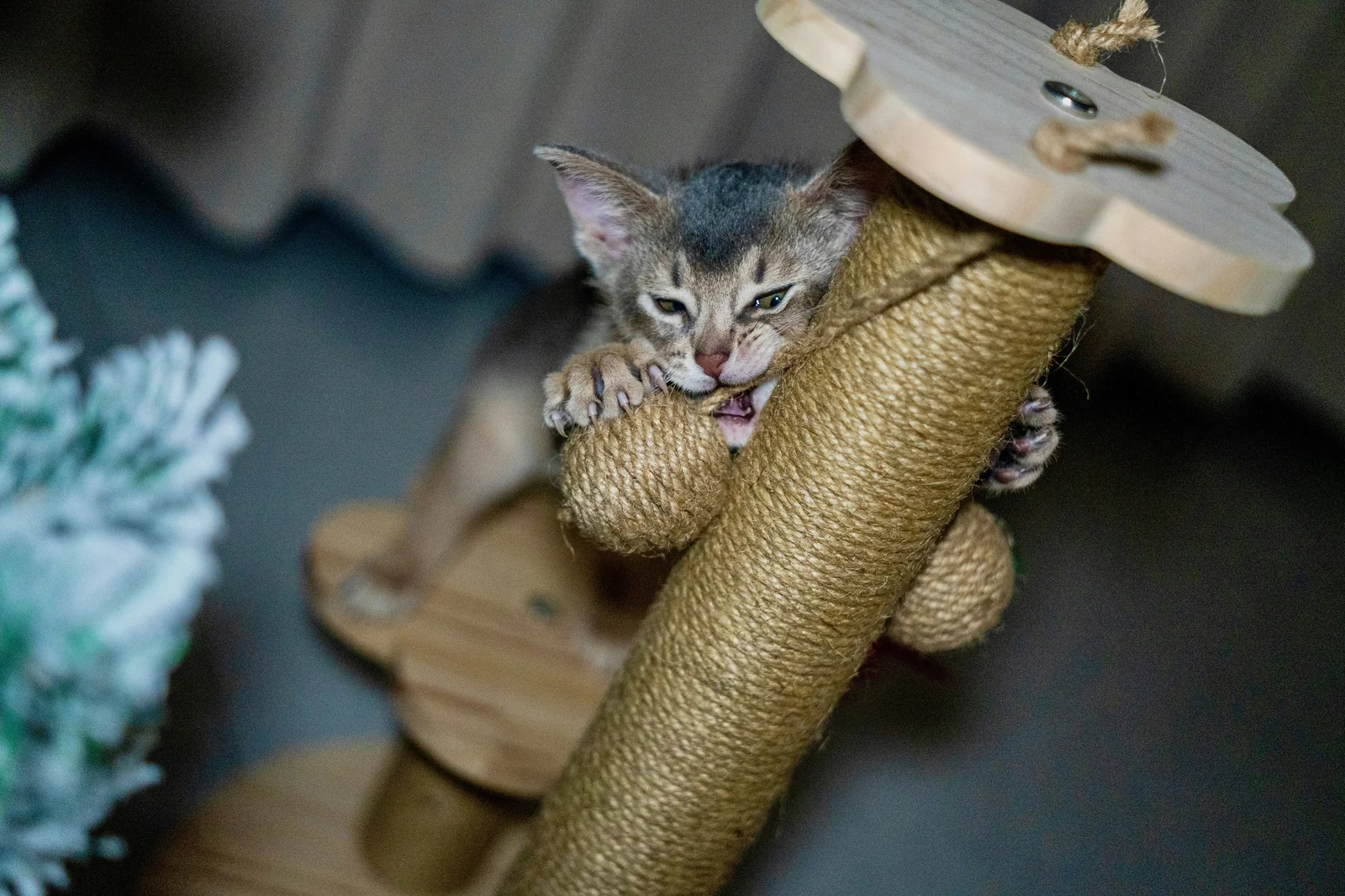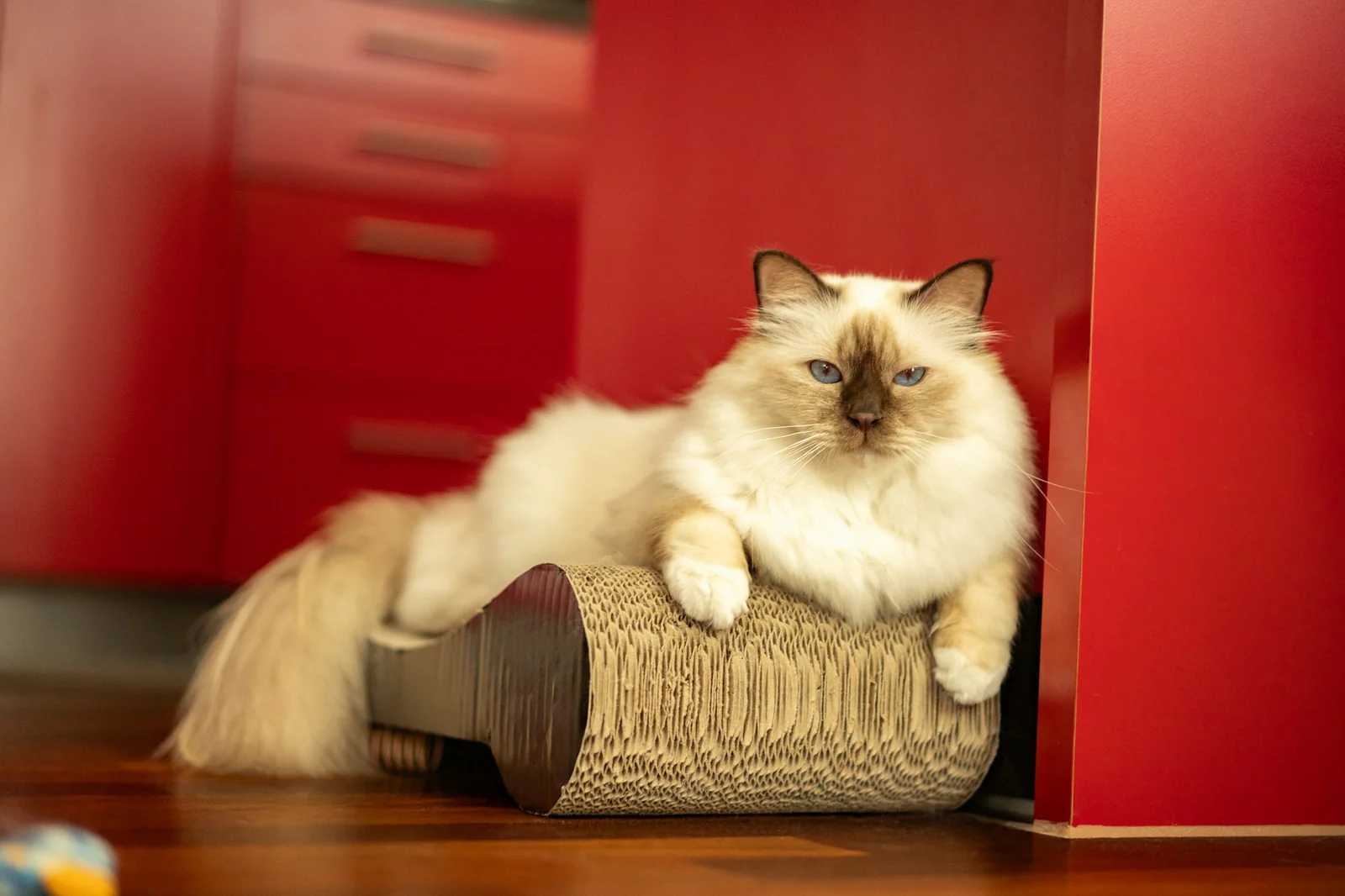
You buy a new scratcher, put it beside the couch, add catnip, and expect the furniture problem to be over. Instead, your cat walks past it and goes straight back to the sofa arm. Then the replacement scratcher may create its own headaches: it slides across the floor, falls over, breaks into cardboard crumbs, or leaves sticky residue when you try to protect the furniture.
The pattern across these cases is simple: a scratching solution has to fit how the cat actually uses it. Cats may want a tall, steady surface that lets them stretch and pull. They may also ignore a scratcher that sits too far from their normal route. Meanwhile, thin cardboard, weak bases, and difficult-to-remove adhesive can turn a small furniture problem into a new cleanup or replacement problem.
The better approach is to judge the whole setup—not just whether the product is labeled as a cat scratcher.
CONSUMER EVIDENCE OVERVIEW
| Product Area | Common Problems | Why It Matters |
|---|---|---|
| Scratching posts | Too short, narrow, unstable, or poorly placed | Cats may ignore the post or return to furniture |
| Cardboard scratchers | Thin material breaks apart and sheds crumbs | Creates mess and may leave loose pieces around the cat |
| Furniture protection | Adhesive can leave residue or pull surface material | Protection may create additional furniture damage |
Why Cats Prefer Scratching Couch Fabric Over New Scratching Posts
You bring home a brand-new scratcher, sprinkle on catnip, place it right beside the couch—and your cat walks past it like you just bought another piece of furniture. Then comes the familiar clawing of the sofa arm, because that surface gives the cat something the bargain scratcher may not: a tall, firm place to lean into while stretching.
That pattern shows up clearly in customer reports. In one anonymized case, PGH-AUDIT-D99Y, the cat ignored the scratcher even after catnip and repositioning, then went straight back to the couch. Another case, PGH-AUDIT-54L6, involved three cats that reportedly ignored the product for months.
The frustrating part is that this can look like stubbornness when it may simply be a mismatch between the scratcher and what the cat wants to do. A low, flimsy surface can leave the cat with nowhere to put its body weight, while a couch arm offers height, resistance, and a familiar angle all at once.
There is another clue in the surface itself. The supplied research notes that cats scratched upholstered furniture fabrics 3.2 times as often as smoother alternatives, suggesting that the feel of the material can strongly influence where they choose to scratch.
🛋️ Stand Beside the Couch and Compare the Height
Put the new scratcher next to the exact section of furniture your cat keeps attacking. Then watch one normal stretch: if your cat can extend its front legs upward and pull its body against the couch, but has to crouch or fold itself around the scratcher, you've found an obvious reason for the rejection.
For a vertical setup, the supplied behavioral guidance puts the target at at least 90 cm (35 inches) so an adult cat can stretch its body fully.
This is why simply buying "a cat scratcher" is not necessarily enough to stop cats from scratching furniture. The replacement has to recreate the physical experience that made the couch attractive in the first place—not merely occupy the same room.
So if a cat keeps choosing the sofa while ignoring a new post, don't assume the cat is being difficult. The post may simply be asking the cat to scratch in a position that feels wrong. For cats already committed to a couch arm, a taller, steadier scratching option placed directly beside the target is a much more sensible starting point.
How Post Height and Base Stability Affect Scratching in Large Cats
A large male cat does not need to be unusually aggressive to send a flimsy scratcher sliding across the floor. One hard pull can be enough when the post is too short, too narrow, or too easy to tip.
That is exactly what happened in the anonymized case PGH-AUDIT-D99Y: a somewhat larger male cat repeatedly flipped the scratcher over during use. Once the surface moves underneath the cat, the whole scratching experience changes—the cat gets startled, loses confidence in the spot, and may simply return to the couch.
The other failure is less dramatic but just as telling. PGH-AUDIT-Q47W was described as narrow and thin, leaving too little room for an adult cat to use it comfortably. A scratcher can technically be present in the room and still be practically useless if the cat cannot stretch and pull against it without running out of space.
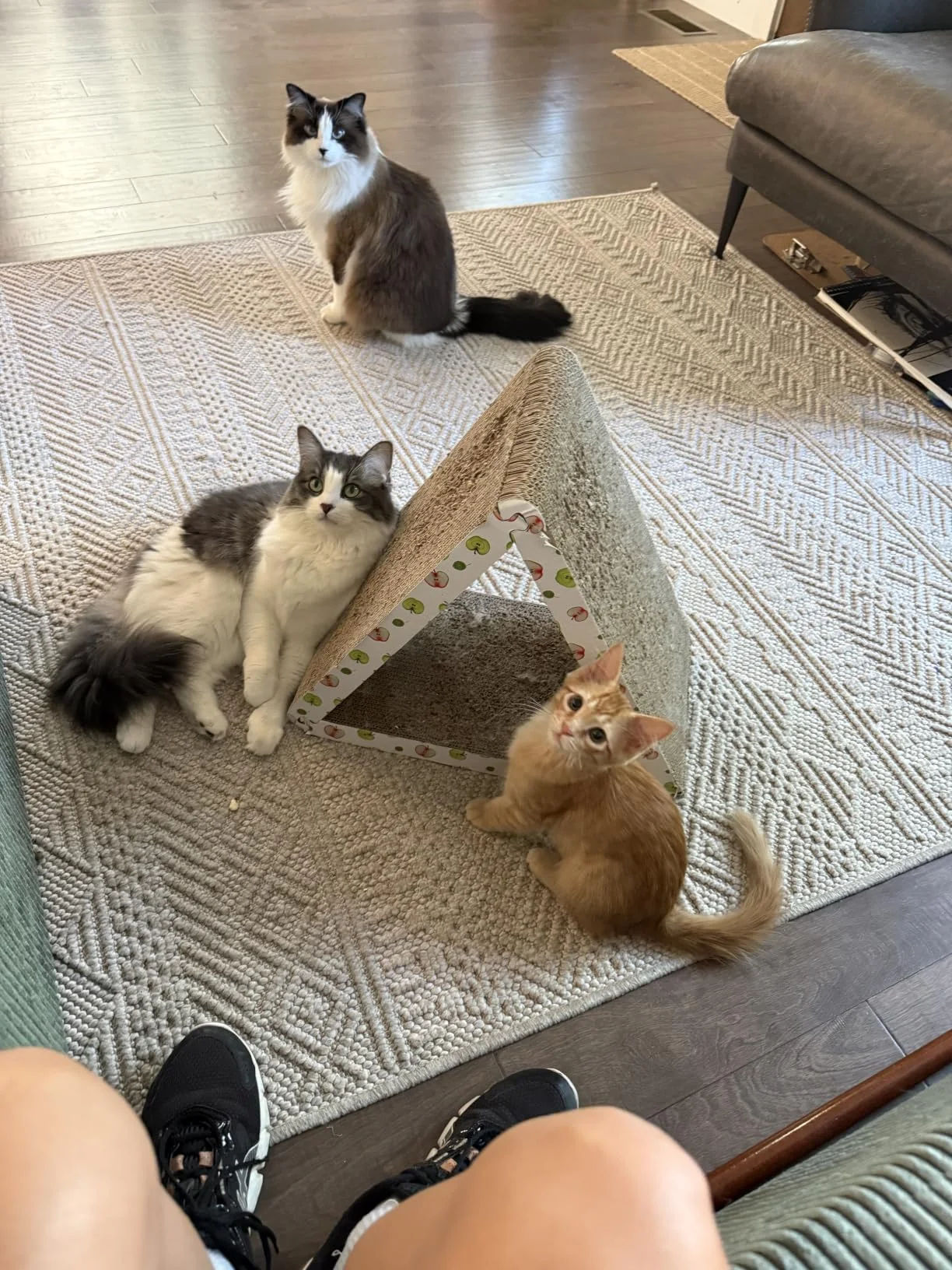
The height matters because scratching is a full-body movement, not just a paw exercise. The supplied research cites a 2023 Pereira study in which providing a stable post at least 90 cm tall was associated with a 71.4% reduction in destructive scratching among cats with persistent inappropriate scratching.
The same source gives a useful physical target for the bottom: about 50 cm wide to help prevent tipping during vigorous use.
🔎 Push the Post From the Side
Before trusting a tall scratcher, give it a firm sideways push with one hand, then press down on the scratching area. It should stay planted rather than rocking, walking, or threatening to topple.
If your cat can overturn it with a normal stretch, the problem is not that your cat "needs training." The furniture-sized scratching target has simply been replaced with something that cannot stay put.
For larger cats, look for a post tall enough to allow a full-body stretch and a broad enough bottom to remain planted while the cat pulls against it. A small, narrow scratcher may save a few dollars at checkout, but if it ends up upside down after the first serious use, it has not really solved the furniture problem.
Current customer reports tied to these products point to that exact mismatch, so shoppers with larger cats should treat height and a wide, steady base as basic requirements, rather than optional upgrades.
Cardboard Dust from Thin Scratchers and Respiratory Irritation Risks
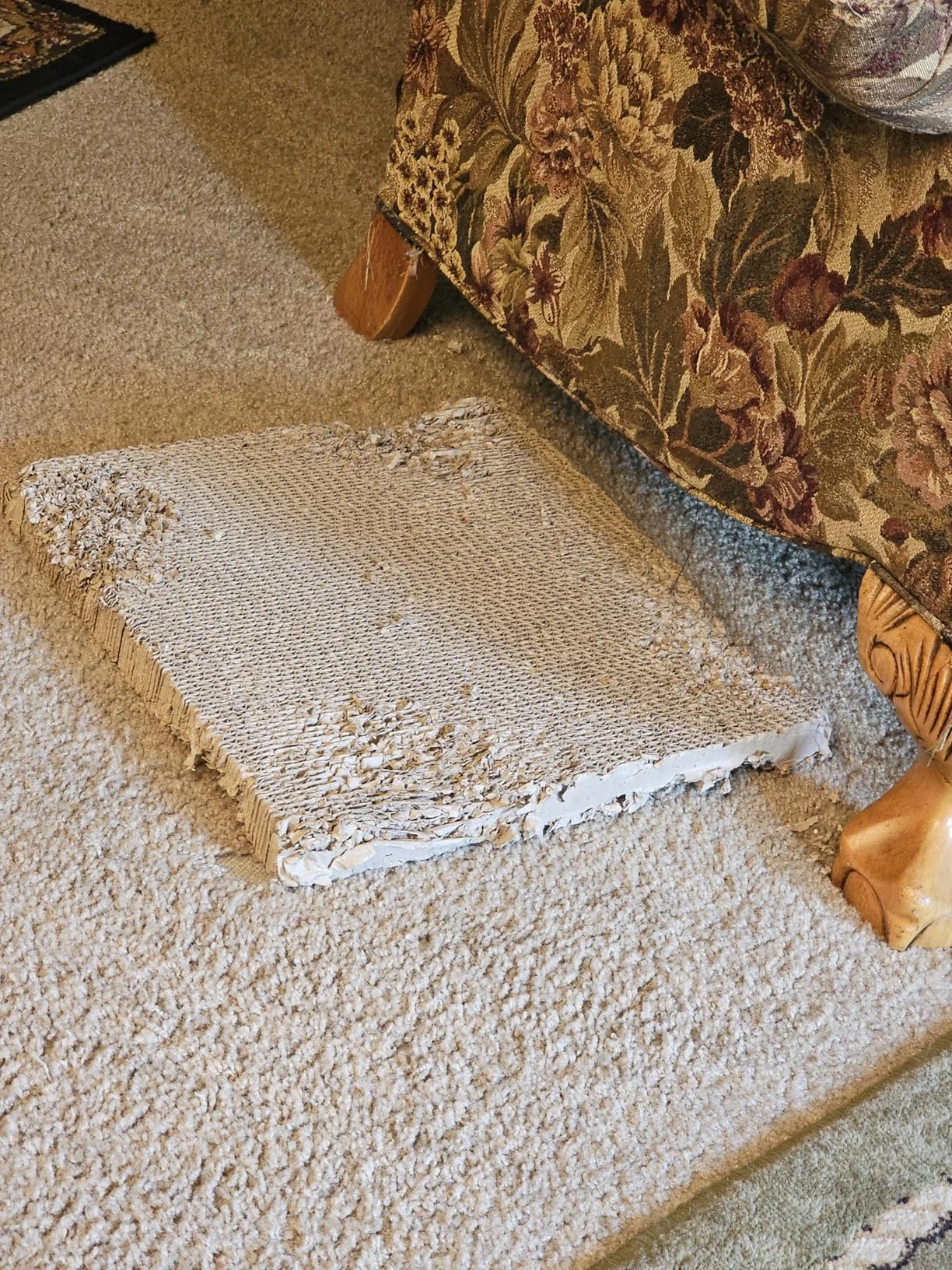
A cardboard scratcher can start out looking perfectly usable and then turn into a pile of loose paper surprisingly fast. In one reported case, PGH-AUDIT-SVSD3 became so fragile that pieces broke away during scratching, while the cat reportedly began coughing and sneezing after inhaling the debris.
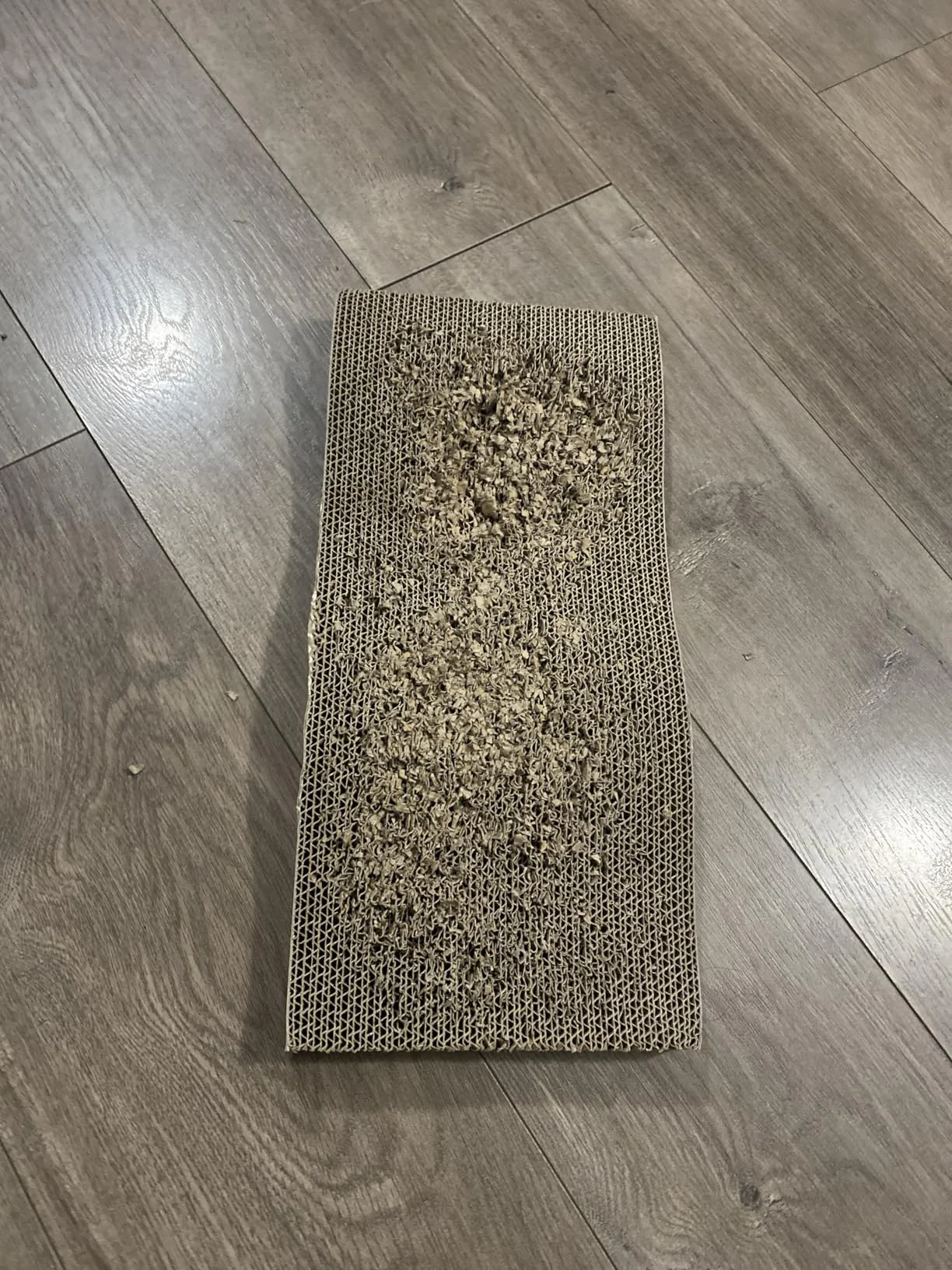
That is more than a cosmetic mess. When a scratcher sheds particles while the cat is actively digging, biting, and pawing at it, those loose fragments can end up around the cat's face and breathing area.
Another report, PGH-AUDIT-Q47W, described a scratcher that lasted only about 24 hours before being reduced to crumbs. When the usable surface disappears almost immediately, the owner is left cleaning up debris instead of providing a dependable scratching outlet.
The underlying problem is easy to miss when shopping from a product photo. A very thin cardboard layer may look substantial on the screen while having little material left to withstand repeated scratching. The supplied evidence also flags concerns about products allegedly being cut from a thicker board into thinner sections, leaving the finished scratcher unusually flimsy.
👀 Rub the Surface Before Your Cat Does
Run your fingers across the cardboard and gently press the scratching area. If flakes or loose pieces come away immediately, pay attention to what happens after a few minutes of normal scratching rather than assuming the surface will hold together.
The supplied material links the concern to cardboard that breaks apart rapidly and notes that cats may ingest or inhale particles from a disintegrating product.
That does not mean every cardboard scratcher is inherently problematic. The practical issue is how quickly the particular product breaks down during ordinary use.
If a scratcher starts producing a cloud of fragments, leaves crumbs around the cat's paws, or breaks apart within a day or two, replacing it is more sensible than trying to make the cat tolerate it. Current reports tied to these products show enough uncertainty around thin, rapidly disintegrating cardboard that owners should be cautious with products that cannot stay intact through normal scratching.
Sticky Residue and Fabric Peeling from Adhesive Furniture Protectors
A furniture protector is supposed to create a simple trade: save the couch, sacrifice the scratching spot. But when the adhesive becomes harder to remove than the cat is to redirect, the protection can end with another repair bill.
One reported case, PGH-AUDIT-KJHN, involved a protector that was used on expensive furniture and later left behind sticky, rough, hardened residue. The reported damage was not limited to an ugly patch—the adhesive became something the owner had to work at removing from the furniture.
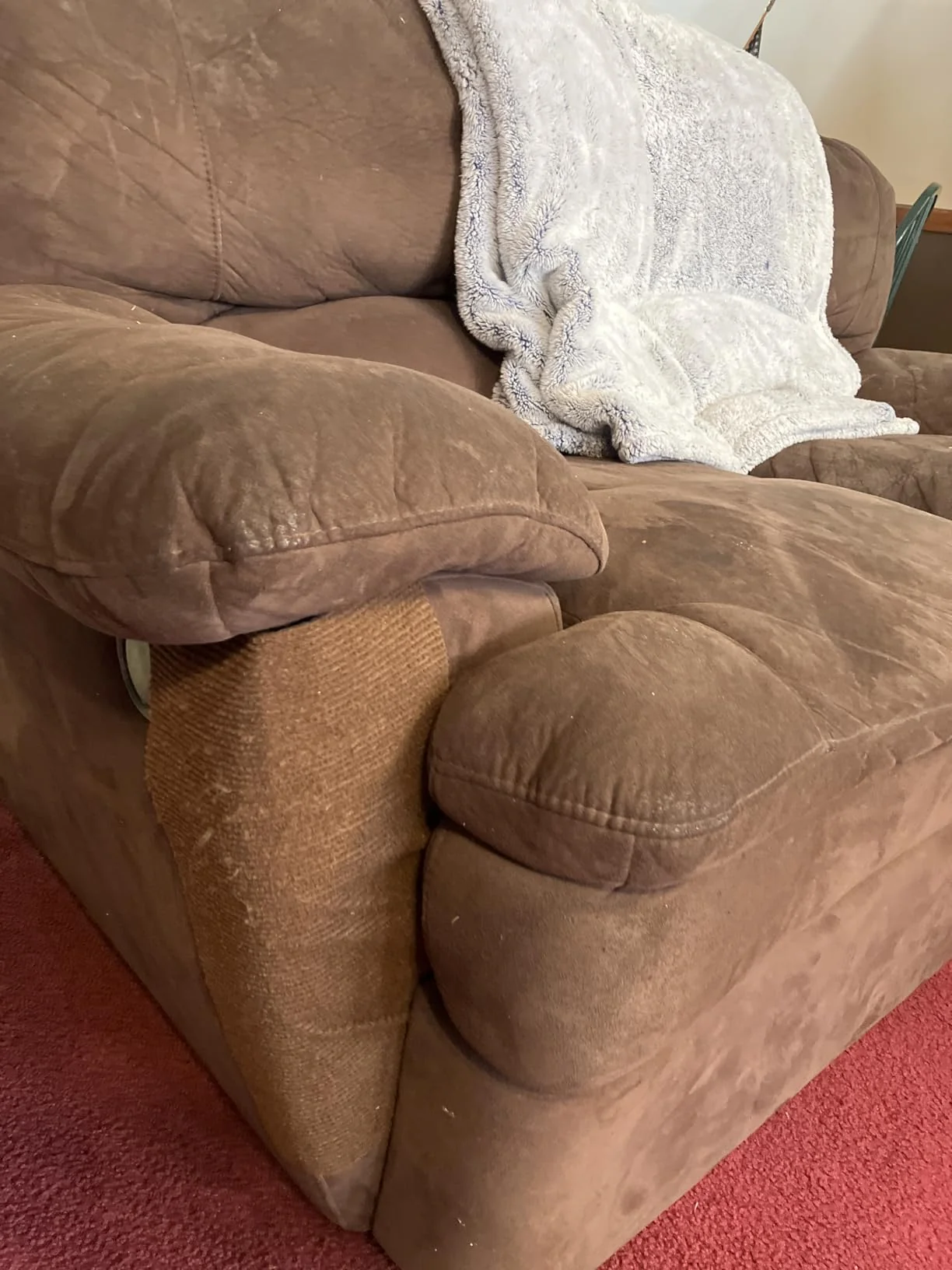
Another case, PGH-AUDIT-RPTL, describes a similar problem during removal, with the adhesive pulling paint from a wall. That matters because the failure may only become obvious after the protector has already done its job—or failed to do it.
There is also a behavioral catch. Blocking access to one surface does not automatically remove the reason a cat wants to scratch. The supplied evidence describes scratching as a natural behavior tied to stretching, marking, and stress relief, so simply putting a barrier over the preferred target may leave the cat searching for another acceptable—or unacceptable—surface.
🧤 Peel One Corner Before Committing the Whole Couch
If you're testing an adhesive protector, start with a small, inconspicuous section rather than covering the entire sofa. After removing it, look closely for sticky patches, rough spots, lifted fibers, or changes in the surface.
The reported furniture case specifically involved residue that was described as sticky, rough, and difficult to remove, while another product report describes adhesive removal damaging painted surfaces. That makes the cost calculation less attractive: a protector that damages the surface underneath is not really protecting it.
For valuable upholstery, a non-adhesive approach can be easier to reverse. More importantly, pair furniture protection with a substantial scratching alternative rather than expecting a sticky sheet alone to change the cat's preferred behavior.
The current reports do not mean every adhesive protector will damage every surface. They do show enough removal-related problems to justify testing a small area first—especially when the furniture itself is worth far more than the protector.
Where to Place Scratching Posts to Stop Unwanted Furniture Damage
A scratcher can be perfectly usable and still become invisible if it is parked in the wrong corner. Cats do not necessarily walk across the house to find their designated scratching spot when the couch they already use is right in front of them.
That placement problem shows up in the anonymized case PGH-AUDIT-54L6, where three cats reportedly ignored the product for months. Another reported case, PGH-AUDIT-Q47W, involved a cardboard design that let the added catnip fall through onto the floor, with the cat then turning its attention toward the carpet instead.
So the first question is not "Which scratcher should I buy?" It is "Where does my cat already want to scratch?"
The supplied behavioral guidance gives a practical starting point: place the scratching post within roughly 1–2 meters of where the cat sleeps or eats. In the cited evidence, stable vertical posts with appropriate placement were associated with much higher adoption, while adding a feline scent cue was reported to increase scratching on the target post by 73% in the tested cats.
📍 Move It Into the Furniture Zone
Take the scratcher out of the forgotten corner and place it close to the furniture your cat actually targets. If the couch arm is the favorite spot, position the legal scratching area nearby rather than expecting the cat to abandon its established route.
Then watch what happens over the next few scratching opportunities. If the cat ignores the post while continuing to use the furniture, distance may be part of the problem—not a lack of interest in scratching itself.
The placement lesson also matters when choosing a cardboard scratch pad. If loose catnip falls straight through the surface and ends up on the carpet, as reported for PGH-AUDIT-Q47W, the product can accidentally make the floor more interesting while failing to create a reliable scratching destination.
A better setup creates a simple route: preferred furniture → nearby scratching post → rewarding scratching surface. The goal is not to make the cat search for the "correct" corner of the room; it is to put the acceptable option directly where the existing habit already happens.
For cats that have ignored a scratcher for weeks, moving it closer to the action is a low-cost change worth trying before buying yet another replacement.
Recognizing Infection Signs and Proper First Aid for Cat Scratches
A scratch received while moving a cat away from furniture is usually a small household injury, but a broken skin barrier can provide a route for infection. The important point is not to panic over every red mark, but to know what changes deserve medical attention.
Cat-scratch disease is associated with Bartonella henselae. The supplied medical material describes the bacteria entering immune cells and notes that localized lymph-node swelling is a common feature; the cited Murakami cohort reported lymph-node enlargement in 80% of cases.
The usual pattern is not necessarily immediate. CDC material describes a small bump or irritated spot appearing around 3–10 days after a scratch or bite, followed by nearby lymph-node swelling roughly 1–3 weeks later. Fever can accompany the illness, while less common cases can involve the eyes, nervous system, heart, liver, or spleen.
For the wound itself, the first response is straightforward: wash the scratch promptly with soap and clean running water. CDC guidance specifically recommends cleaning animal scratches immediately and seeking medical advice, particularly when infection or rabies exposure could be a concern.
The supplied material also references antibiotic treatment and specific pediatric drug restrictions, but those decisions belong to a clinician rather than a home first-aid routine. Do not use an antibiotic dose from an article as a substitute for medical evaluation, especially for a child.
One useful threshold from the supplied material is lymph-node enlargement greater than 1 cm as a clinical sign that should prompt evaluation when it occurs with the appropriate exposure history and other symptoms. Diagnosis is not made from size alone; clinicians consider the overall pattern, exposure, examination, and testing when needed.
A scratch therefore does not need to become a reason to fear the cat or punish the animal. Clean the wound, watch how it changes over the following days, and seek medical care when concerning symptoms develop. That approach protects the person without turning a normal feline behavior problem into a breakdown in the human-cat relationship.
CONCLUSION
A careful buyer should start with the cat's existing habit rather than the product packaging. If the cat scratches a couch arm, compare the new scratching surface with that exact area. A vertical option should allow a full stretch, while the base needs to stay firmly in place when the cat pulls against it. For larger cats, height and a broad, steady base are especially important.
Placement matters just as much. A scratcher hidden in another corner may be ignored even when the cat clearly wants to scratch. Moving it close to the furniture target gives the cat an easier alternative without requiring a complete change in routine.
Material quality deserves the same attention. Cardboard that quickly turns into crumbs is not a dependable scratching outlet, and adhesive protectors should be tested on a small area before being used across valuable furniture.
Finally, scratches from redirecting a cat should be cleaned promptly with soap and running water. Watch for changes such as worsening irritation, fever, or nearby swollen lymph nodes, and seek medical advice when concerning symptoms appear.
THE ULTIMATE BUYING VERDICT
| Verdict | Key Consideration | Recommendation |
|---|---|---|
| 🔴 Significant concerns | Unstable posts, rapidly disintegrating cardboard, or adhesive that damages the surface underneath | Avoid products showing these problems during normal use, especially when protecting valuable furniture |
| 🟡 Acceptable with limitations | A scratcher may work despite placement, size, or material limitations if the cat uses it comfortably and it remains stable and intact | Test the setup in a small area, place it near the cat's preferred scratching spot, and watch how it performs |
| 🟢 Meets long-term expectations | Tall, steady scratching surfaces placed near the existing furniture target and made from material that holds together during normal use | Look for a full-stretch setup, a wide stable base, durable scratching material, and a placement that matches the cat's established habit |