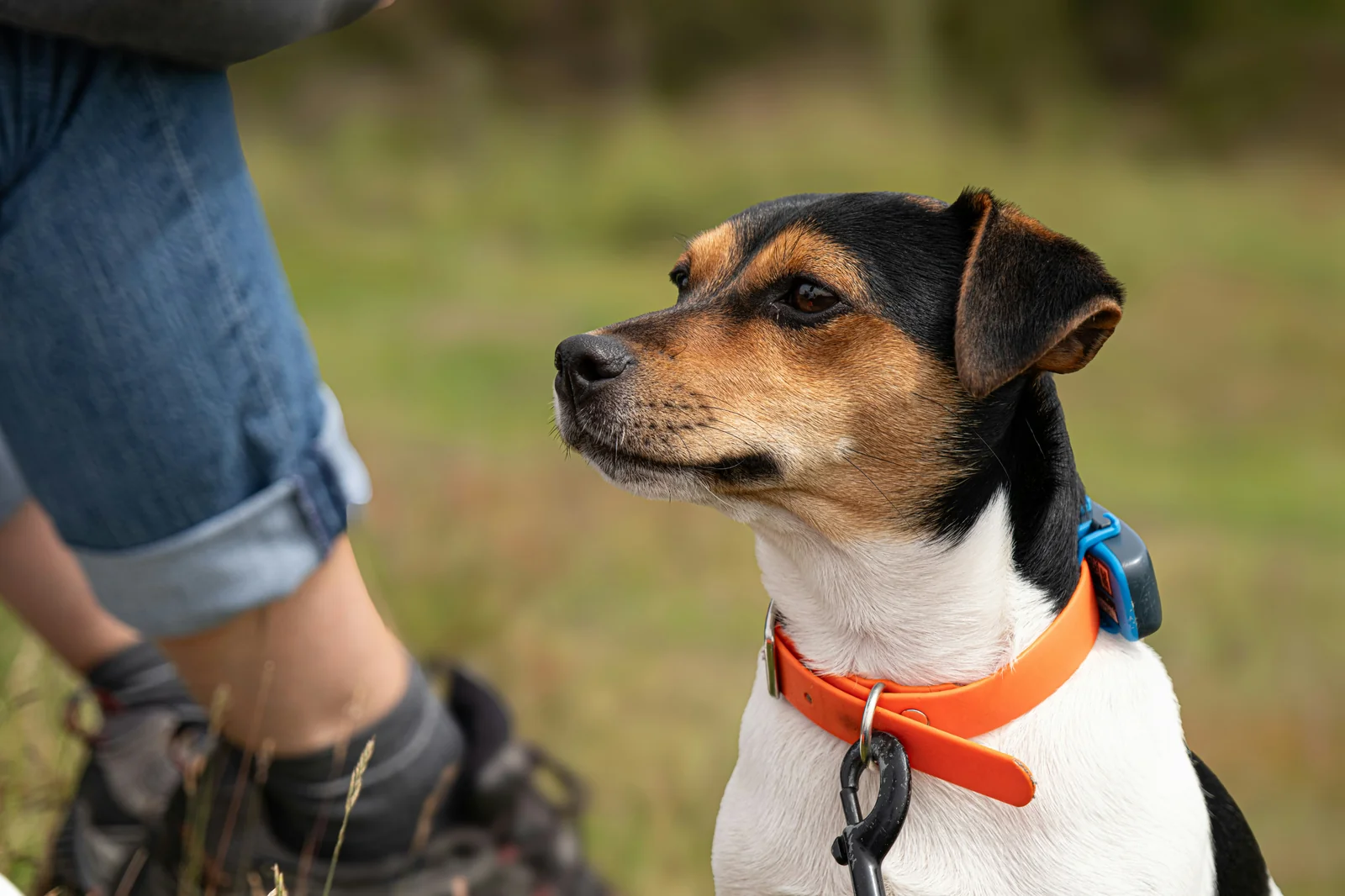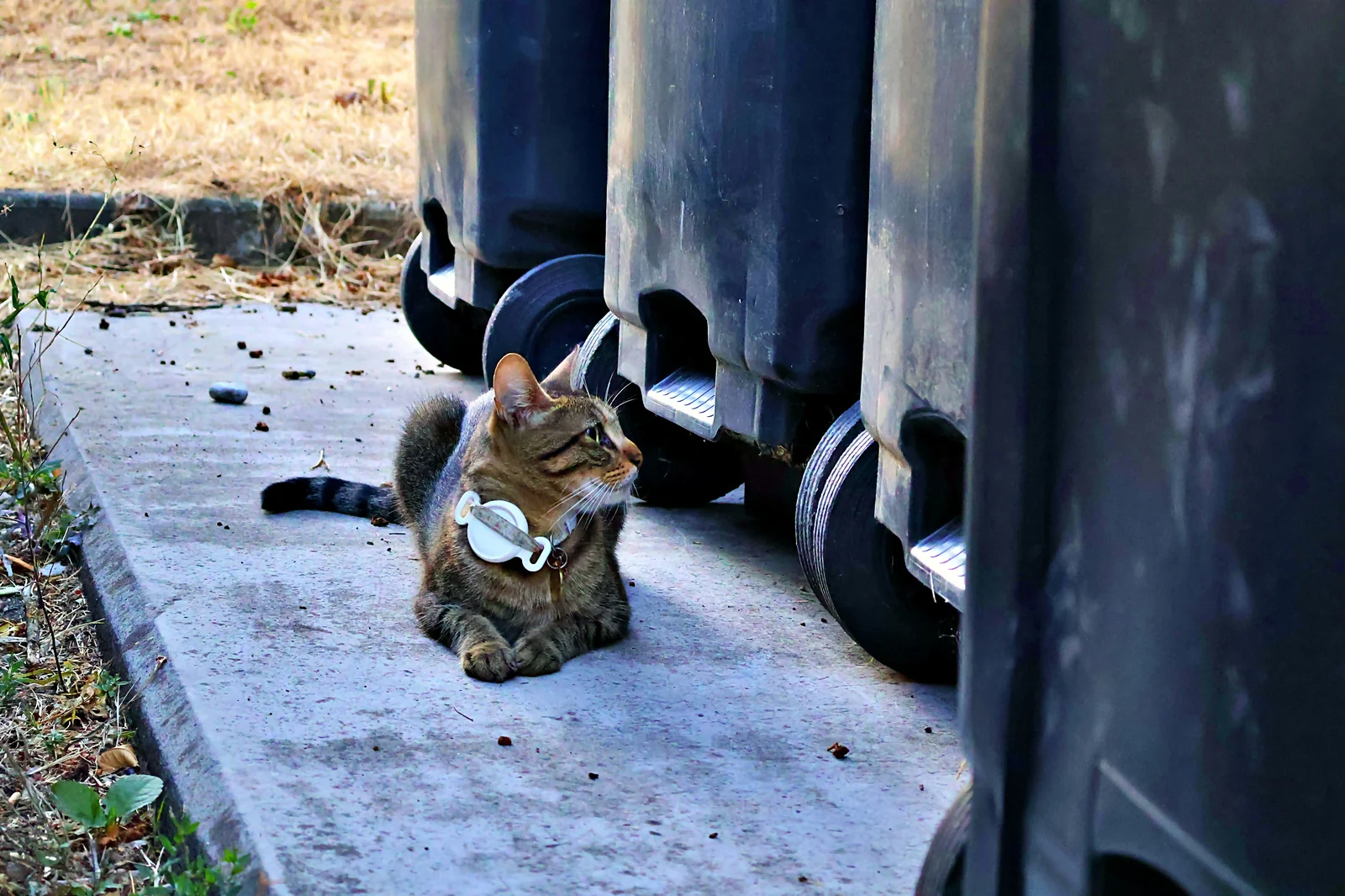
A tracker can seem like an easy way to feel safer when your cat goes outside. But once the device is attached to a collar, small problems can become much more significant. A tracker that feels too heavy may affect how freely your cat moves. A bulky attachment may press against the neck or make it harder for a breakaway collar to work. Even the collar itself can become a concern if scratching causes loose threads that catch around the mouth, or if the material leaves the skin red and irritated. Then there is the tracking system itself: false boundary alerts can make you stop trusting notifications, while delayed location updates can leave you searching with outdated information. These concerns do not mean every tracker or collar is unsafe. They do mean the complete setup deserves attention before daily use, especially for an outdoor cat.
Collar Weight Guidelines for Cats: Why Devices Should Stay Under 30 Grams
A cat collar can look perfectly harmless in a product photo and still become a bulky little brick once the tracker is attached. That matters because cats are built for light, flexible movement, not for carrying a device sized as though it belongs on a much larger pet.
One reported listing used cat photos even though the actual device was far too large for a cat collar. The same product also had an exposed opening, leaving owners with a tracker that looked convincing online but raised obvious concerns once it was in hand.
As one real-world example, the anonymized case PGH-AUDIT-V2PT involved a tracker accessory advertised as suitable for cats despite its oversized form. The mismatch is easy to miss when shopping from a polished image: the cat looks tiny and comfortable, while the actual device tells a very different story.
Here's the practical number to remember: 30 grams. The supplied research cites Coughlin and van Heezik (2015), where cat collars at or below 30 g—less than 1% of body weight—did not produce a statistically significant change in daily distance or outdoor time. By comparison, a 130 g collar was associated with a 37% reduction in median daily distance.
👀 Hold the Tracker Next to the Collar
Before attaching a device, simply weigh it and compare its size with the collar and your cat's neck. If the tracker alone pushes well beyond 30 g, it deserves a much closer look before becoming an everyday accessory.
The point is not that every heavier device will automatically injure a cat. It is that extra weight can change how freely a cat moves, while an oversized design can create a poor fit from the start.
Based on the current evidence and reported product mismatch, this particular case warrants caution rather than confidence. A genuinely cat-focused tracker should keep its footprint and weight proportionate to the animal instead of borrowing a much larger-pet design and hoping the product photo does the selling.
Managing Fit and Safety Risks with Oversized Collar Attachments
A cat squeezing through a narrow gap or climbing a tree does not get the luxury of stopping to negotiate with a bulky collar attachment. When an oversized device catches on a branch or surrounding object, the collar can become the point of restraint, turning an ordinary outdoor adventure into a frightening struggle.
One reported product, anonymized as PGH-AUDIT-DJDH, was described as too large to work properly with a standard cat collar. The mismatch was not merely cosmetic: the oversized attachment was reported to create pressure around the cat's neck and raise a choking concern.
That is exactly why the collar and tracker have to be treated as one setup rather than two separate purchases. A tracker may be compact on its own, but if its housing is too large for the collar, the whole arrangement can behave poorly when a cat squeezes, climbs, or catches the attachment on something outside.
🛑 Pull the Collar Before Heading Outdoors
With the tracker attached, gently pull the collar against your hand and check whether the setup can still move naturally without the device digging into the neck. Then check the safety release: a cat collar should be able to open when enough force is applied, rather than leaving the tracker and collar hanging on the animal.
The supplied safety guidance sets the release threshold at roughly 2–3 kg of force. The practical idea is simple: if a branch catches the collar during a climb, the collar should release instead of continuing to hold the cat in place.
The breakaway feature matters especially when the attachment itself is rigid and bulky. A large housing gives the collar more to catch on, so relying on the tracker being "secure" is not enough; the safety release needs to remain functional after the device is fitted.
For PGH-AUDIT-DJDH, the reported size mismatch is a clear reason to pause before outdoor use. A tracker that fits the cat only by making the collar harder to release is solving the tracking problem while creating a different one, and owners should be cautious with any setup whose breakaway function cannot be demonstrated with the device installed.
Signs of Fabric Fraying and Skin Sensitivity Under Daily Cat Collars
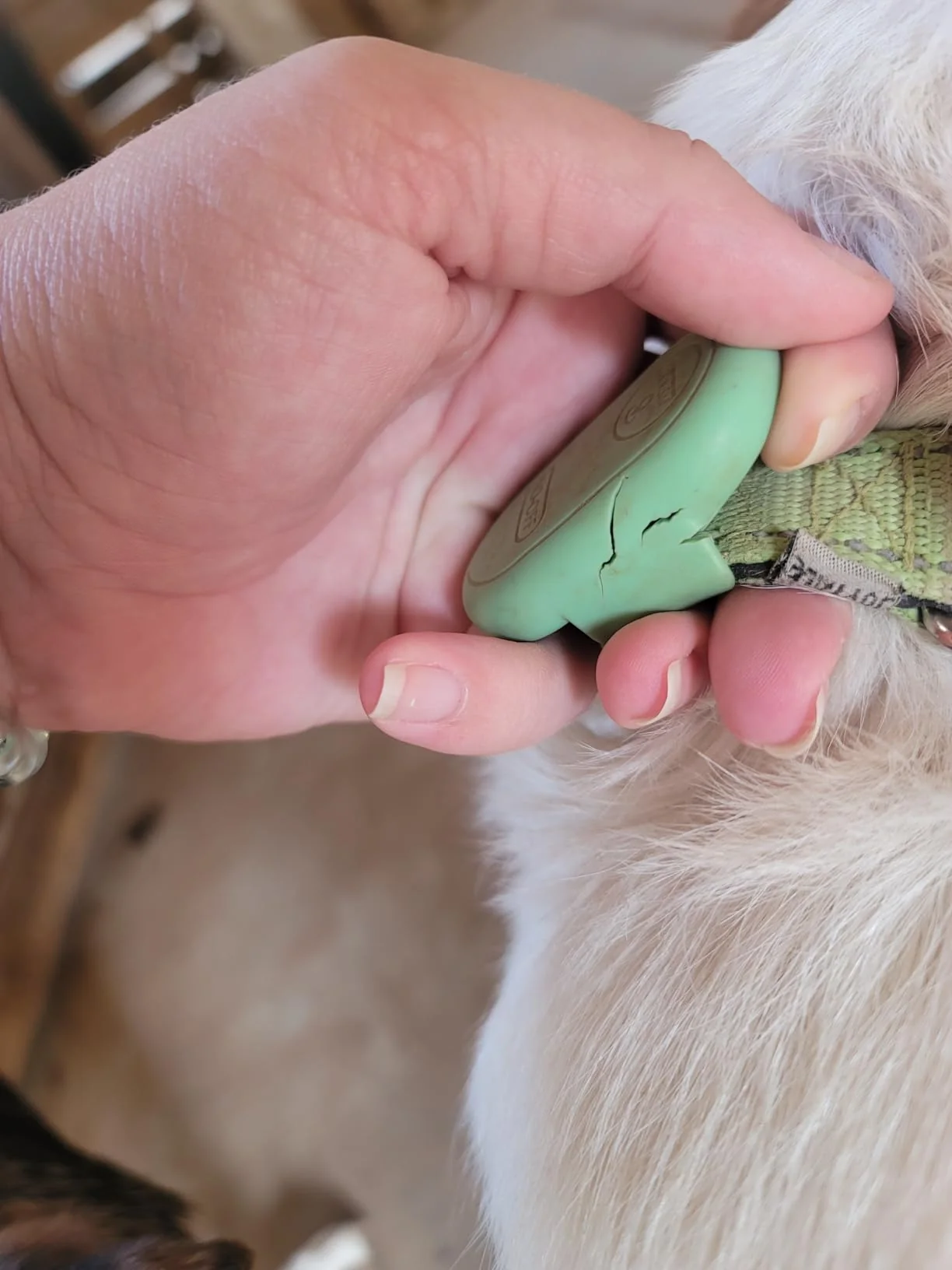
A collar should not start falling apart simply because a cat scratches at it. Yet one reported case, anonymized as PGH-AUDIT-3KXY, describes a collar that began breaking down within days after repeated scratching with the hind legs. Loose fibers then became a much bigger problem: one strand caught around the cat's lower jaw, leaving the mouth stuck and making an ordinary drinking session suddenly dangerous.
The same report described red, bumpy skin beneath the collar on both cats using the product. That combination matters because owners are not dealing with just an unsightly frayed edge; they are seeing material deterioration alongside visible skin irritation.
🧵 Feel the Collar Edge Before It Goes Back On
Run your fingers along the collar, especially around the stitched edges, after your cat has worn it for several days. If threads are already lifting, separating, or forming loose loops, stop and examine the collar rather than waiting for the fabric to finish coming apart.
Pay attention to your cat, too. Repeated scratching, redness, bumps, or obvious discomfort under the collar are practical warning signs worth taking seriously. The reported case included suspected material-related irritation severe enough that both collars were discarded.
The supplied evidence also raises concern about rough fabric and possible chemical residue, but it does not establish a specific ingredient as the cause. What it does clearly document is the combination of rapid fraying, loose threads around the mouth, and visible skin reactions.
For this reported case, those observations are enough to justify caution. A cat collar used every day should remain intact during normal scratching and should not leave loose fibers where a cat can catch them with its mouth; once either problem appears, continuing to use it is difficult to justify.
Understanding False Boundary Alerts and Delayed Notifications on Small Devices
A tracker that repeatedly says a cat has left home while the cat is sitting one foot away can train an owner to ignore the very alert they are counting on. That becomes a much bigger problem when the cat actually bolts through the door and the location stops updating when every minute matters.
One reported product, anonymized as PGH-AUDIT-QJRG, produced frequent false "left area" alerts even when the device was extremely close to its paired location. The same report describes the tracker becoming effectively unusable after a real escape, with location updates failing when the owner needed them most.
The supplied guidance points to a useful design benchmark: a dynamic boundary should use a radius of at least 10 meters, while frequent updates help reduce unnecessary alerts. The same material notes that updates delayed beyond five minutes can make the search area expand dramatically as a moving cat continues traveling.
📍 Watch What Happens Before You Trust the Alert
With the cat safely indoors, move the device only a short distance away and watch whether the app repeatedly announces that it has crossed the boundary. If an alert fires while the tracker is still essentially at home, treat that as a reliability warning rather than something to casually dismiss.
That distinction matters during an actual escape. A cat can cover meaningful ground while an owner is still looking at an old location, especially when the device does not refresh promptly. A delayed pin can turn a manageable search into a much wider one.
The reported case also included failures to power on, connection problems, delayed location updates, and false alerts, so the concern extends beyond one annoying notification.
For this reported case, the combination of false boundary alerts and unreliable updates deserves caution. A tracker should make an escape easier to respond to—not teach you to second-guess every alert before the real emergency arrives.
CONCLUSION
Choosing a cat tracker should start with the whole collar setup, not just the tracking features shown on the box. Keep the device light and reasonably sized, with 30 grams as a useful reference point from the supplied evidence. Check that the attachment does not press into the neck or interfere with the collar's breakaway function. Inspect the collar regularly for loose threads, fraying, redness, bumps, or signs that your cat is uncomfortable. It is also worth testing the tracking system at home before relying on it outdoors. Repeated false alerts, connection problems, or location updates that arrive too late are warning signs that should not be ignored. A careful buyer should look for a tracker and collar that work together comfortably, stay intact during normal use, and provide alerts and location information that can be trusted when a cat actually leaves home.
THE ULTIMATE BUYING VERDICT
| Verdict | Key Consideration | Recommendation |
|---|---|---|
| 🔴 Significant concerns | Oversized or heavy attachments, pressure around the neck, failed breakaway function, rapid collar fraying, skin irritation, false alerts, or delayed location updates can create meaningful problems. | Avoid setups showing these warning signs, especially when the tracker interferes with collar safety or cannot provide dependable location updates. |
| 🟡 Acceptable with limitations | A tracker may be usable when its weight and size are reasonable, but owners still need to check the fit, collar condition, breakaway function, and alert reliability. | Test the complete setup before outdoor use and keep checking it as the cat wears and scratches at the collar. |
| 🟢 Meets long-term expectations | A suitable setup stays reasonably light and compact, works with a functional breakaway collar, remains intact during daily wear, and provides dependable alerts and timely location updates. | Look for a cat-focused tracker and collar combination that remains comfortable, secure enough for normal use, and reliable when the cat actually moves away from home. |