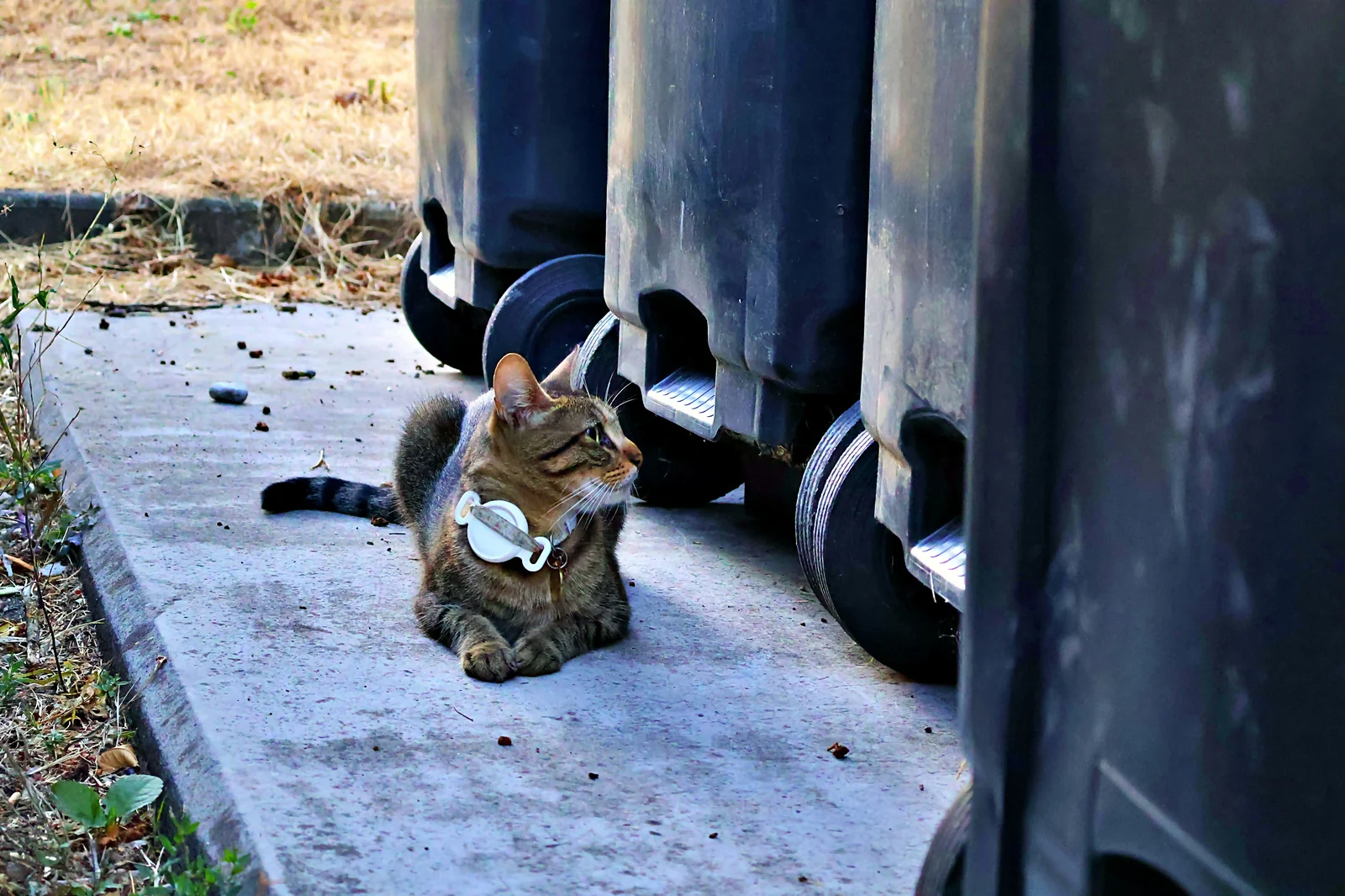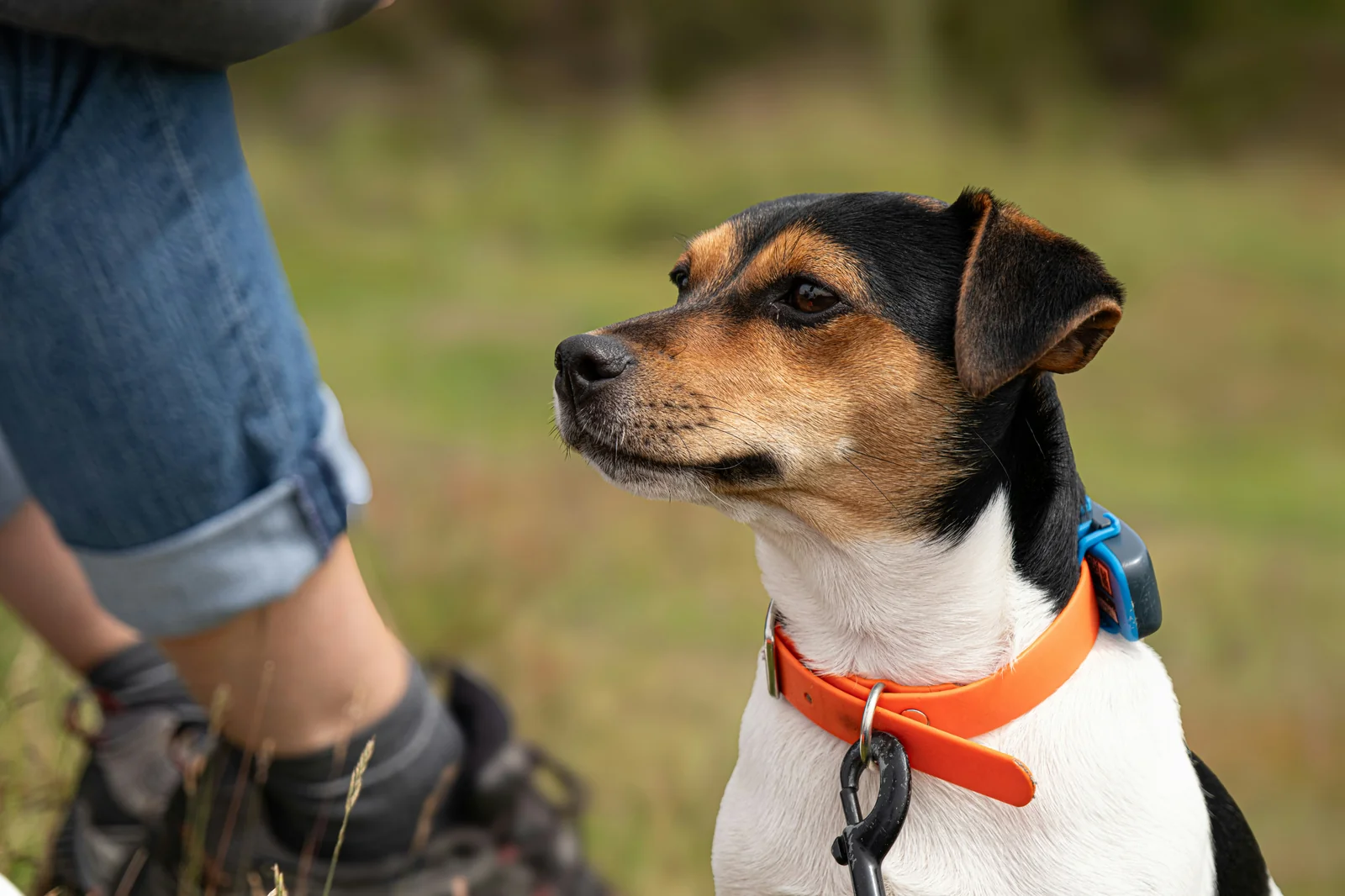
A tracker can work perfectly and still fail when the part holding it to the collar gives way. A loose clip may let an expensive tracker fall off during an ordinary walk, while a broken holder can leave the device exposed to water. Other problems appear when the tracking method itself is misunderstood. A Bluetooth finder may stop providing useful information when there are no nearby compatible phones, while GPS updates can become less reliable around tall buildings or heavy tree cover.
The collar matters too. Fraying fabric and loose threads can become caught around a cat's mouth, while rough or irritating material can cause visible skin problems. These failures show why buying the tracker alone is not enough. The attachment, tracking method, holder design, location conditions, and collar material all deserve a close look before they are trusted for everyday use.
DEFECT AUDIT OVERVIEW
| Product Area | Common Problems | Why It Matters |
|---|---|---|
| Tracker attachments | Loose clips, stretched rubber, broken sections, and poor fit | The tracker may fall off during normal activity or become difficult to protect from water. |
| Tracking systems | Limited Bluetooth range, slow updates, and weaker GPS performance around buildings or trees | A displayed location may not show where the pet is now or may be less precise than expected. |
| Collars | Fraying fabric, loose threads, rough edges, and skin irritation | Damaged collar material can become uncomfortable or create problems during everyday wear. |
Why Incompatible Aftermarket Clips Can Cause Trackers to Fall Off Collars
A tracker can be working perfectly and still become useless if the clip holding it to the collar keeps loosening. That is the frustrating part: the expensive electronics may be fine while the cheap attachment quietly becomes the weak link during a walk, a game of fetch, or a simple roll in the grass.
One anonymized customer case, PGH-AUDIT-DSB3, describes a silicone holder that became so loose that the owner resorted to wrapping it with tape just to keep the tracker attached. The reported result was repeated detachment—around 2–3 times a day during normal activity.
But the tape itself is the real clue here. When a collar accessory needs a homemade fix to stay in place, the problem is no longer cosmetic; the tracker can disappear from the collar while the owner assumes it is still there.
The failure pattern is consistent with what users reported from this particular product: the material felt thinner and less resilient than the original bands, while the attachment became looser with use. Another complaint described the rubber sections snapping during ordinary play, turning a small accessory failure into the loss of the tracking device itself.
🫳 Pull the Clip Before the Next Walk
Hold the tracker firmly, then gently pull the attachment in several directions by hand. If the clip shifts noticeably, feels floppy, or the rubber stretches without springing back, do not treat that movement as harmless. A clip that already feels loose at home has even less margin when a dog is running, jumping, or rolling around.
For small dogs, the tracker and its attachment also need to stay within a sensible weight range: the supplied guidance places the device at no more than about 35 g and 5% of the dog's body weight. That makes a secure, properly fitted holder especially important for smaller collars.
The practical takeaway is simple: saving a few dollars on a replacement clip is not much of a bargain if the clip leaves an expensive tracker somewhere on the trail. Current feedback on this particular aftermarket attachment shows enough uncertainty around fit and durability that owners who rely on tracking for escape recovery should approach it cautiously.
Bluetooth Pet Finders vs. Real-Time GPS: Practical Range and Tracking Limits
A Bluetooth tag can look like a GPS tracker on a product page, but the two solve very different problems. If the device cannot determine and send its own location, it cannot independently tell you where your pet has gone once the nearby connection disappears.
One anonymized case, PGH-AUDIT-JRG, shows why battery claims and tracking claims need to be judged separately. The device was advertised with months of battery life, yet the reported experience was closer to two weeks, followed by connection failure after the cat escaped; location updates were already too slow to help during the search.
That distinction matters most when a pet leaves a neighborhood and enters an area with few compatible phones nearby. A Bluetooth-based finder may depend on another device coming within range to relay its position, while a GPS-based system is designed to determine its location and send that information through its available connection.
The supplied technical evidence puts the difference plainly: GPS plus connected data systems can shorten recovery time, while a Bluetooth tag without a GPS component cannot independently provide outdoor location updates. The cited ICDECS 2024 material reports a 68% reduction in pet recovery time for GPS/IoT approaches compared with microchip-only methods.
🔎 Walk Past the Tracker Once
Leave the finder in one place and walk away with your phone until the connection becomes unreliable or disappears. If the product has no GPS function of its own, losing the nearby connection does not magically turn it into a long-range location beacon.
That is why the phrase "real-time tracking" deserves a closer look before you trust it during an escape. A device that mainly depends on nearby phones can behave very differently in a crowded neighborhood than on a quiet trail, behind dense shrubs, or far from other connected devices.
For an owner searching for a missing pet, that gap is more than a technical footnote. The moment the surrounding network disappears, the difference between "find my tag" and "show me my pet's location" can become the difference between useful information and an empty map.
Can Implanted Pet Microchips Track Real-Time Location?
An implanted pet microchip is an identification tool, not a live location beacon. Its job is to provide an ID number when a compatible reader scans the chip; it does not continuously send your pet's position to a phone or map.
The distinction is easy to miss because both devices can be described as "pet tracking" technology. A typical passive RFID microchip operates around 134.2 kHz, but that signal is used for identification when the chip is read at very close range—not for broadcasting latitude and longitude.
The practical limit is straightforward: the supplied evidence places successful reading at roughly 10 cm or less from a compatible reader. There is no independent location signal being transmitted from the implanted chip while your pet is wandering outdoors.
This is the key difference between "Can my pet be identified?" and "Can I find where my pet is right now?" A shelter or veterinary professional may be able to scan the chip and retrieve its registered ID, but the chip itself cannot tell you whether your pet is behind the next house, across town, or somewhere in the woods.
The cited ACM 2015 work explicitly distinguishes passive microchips from real-time tracking, while the supplied IEEE 2023 evidence likewise treats microchips as identification or verification tools rather than location devices. For actual movement monitoring, the evidence points to a separate GPS-based device with an active way to transmit location data.
How Snap-On Holder Designs Affect Water Resistance During Outdoor Use
A snap-on holder can look secure on a dry kitchen counter and still become a liability once a dog starts rolling through wet grass. The real question is not whether the listing says "waterproof," but whether water has an easy path into the holder when the dog is moving, splashing, or twisting against it.
One anonymized case, PGH-AUDIT-WF4X, involved a holder built around a half-covered plastic shell rather than a fully closed enclosure. In the reported case, the rubber attachment broke when the dog rolled in grass, and the exposed design then allowed water to reach the tracker, leaving it unusable.
That failure matters because a loose snap-on design creates two problems at once: the tracker can be exposed, and the holder may no longer keep water away from it. A dog does not need to go swimming for this to matter; ordinary outdoor play can put the attachment through repeated movement and moisture.
💧 Look Behind the Holder Before Going Outside
Remove the tracker and look closely at every opening, edge, and uncovered section. If you can see a direct path toward the device, or the holder relies on a small rubber section that already looks stretched or cracked, treat that as a warning sign rather than assuming the advertised water rating covers the whole setup.
The supplied guidance calls for a genuinely closed IP67/IP68-rated enclosure when water exposure is expected. More importantly, an advertised rating cannot compensate for a holder that leaves gaps or loses its closure during use.
For outdoor owners, the practical takeaway is simple: a holder should remain closed when the dog rolls, runs, or gets wet—not merely look sealed while sitting unused. The reported failure of this particular case gives reason to be cautious with similar open snap-on designs, especially when protecting a costly tracker from water is part of the purchase decision.
What Causes Positional Drift in Dense Neighborhoods and Wooded Areas?
GPS can become less dependable when buildings or heavy tree cover interfere with the signals needed to establish a position. That means a tracker can appear to be working while the location shown on your phone is already behind the pet's actual position.
One anonymized case, PGH-AUDIT-JYVT, illustrates how frustrating that gap can become. A cat went missing in central Philadelphia, yet the reported location was already more than an hour old; during a camping and hiking trip, the same device was reported to lose tracking altogether.
Dense neighborhoods create one problem, while wooded areas create another. The supplied evidence notes that GPS error can exceed 30 meters in urban canyons, while tree cover above roughly 70% can also cause signal loss. In other words, the map may still show a dot, but that dot does not necessarily mean "your pet is right here."
🌲 Look at the Map Before You Trust the Dot
When your pet is somewhere with tall buildings or heavy tree cover, compare several location updates rather than assuming the newest-looking dot is exact. If updates are arriving slowly or the position suddenly jumps between places, treat the displayed location as an estimate, not a pinpoint.
The supplied technical guidance also notes that a usable GPS fix requires four or more satellites, while combining GPS with other connection methods can help reduce location drift. That matters because an owner searching through streets or woods has little use for a location that is already tens of meters—or much more—away from the animal.
The central lesson is simple: "GPS" does not automatically mean precise everywhere. The reported delay and signal loss in this particular case show why owners who regularly travel through dense neighborhoods or wooded trails should pay close attention to how a tracker behaves when its surroundings become difficult, rather than judging it only by clear-sky performance.
Material Safety and Weave Quality Concerns for Everyday Pet Collars
A collar can look perfectly normal when it first comes out of the package, yet become a completely different problem once the fabric starts fraying. For cats especially, loose threads are not just an appearance issue—they can become something the animal can catch with its mouth or claws.
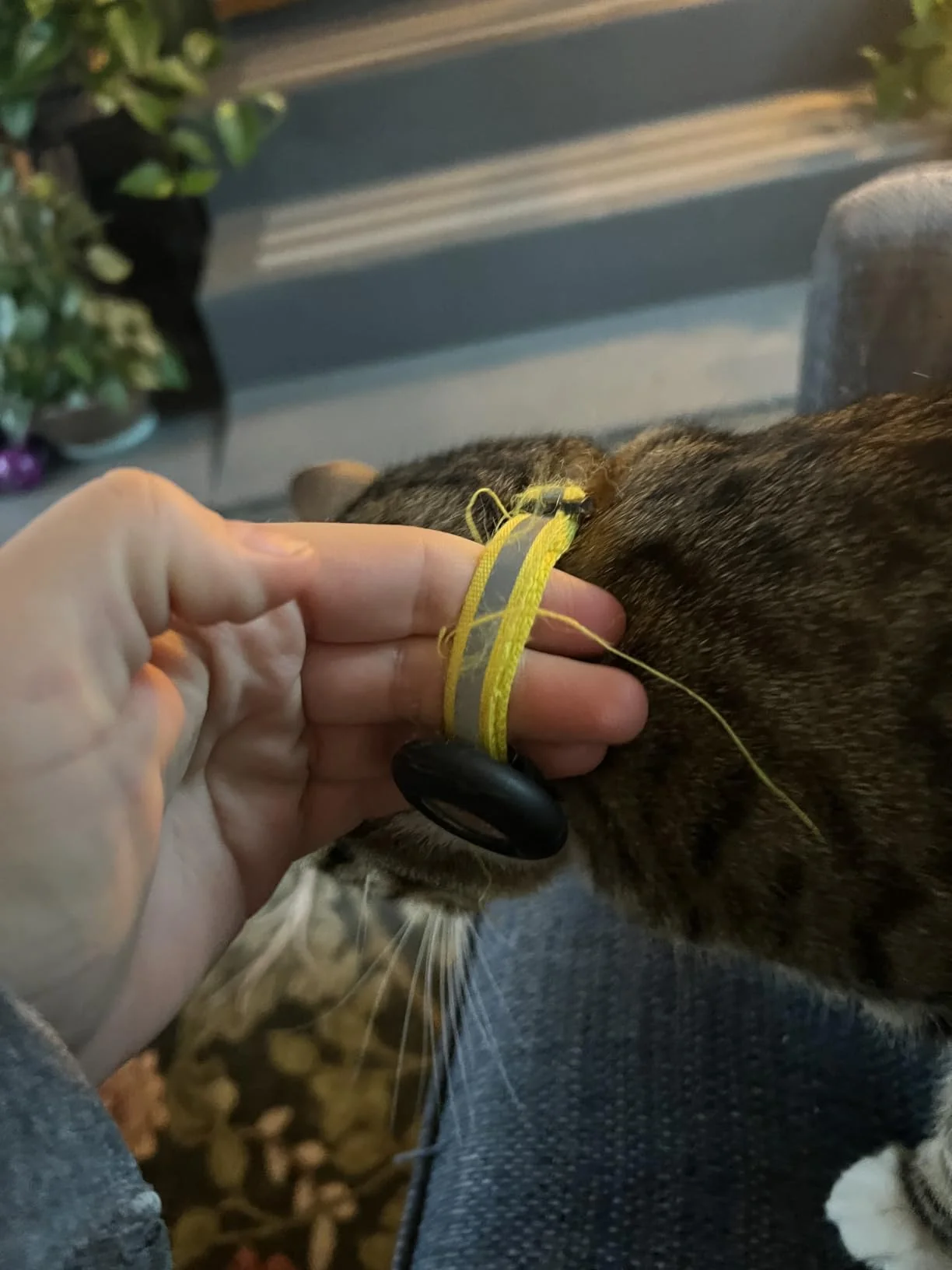
One anonymized case, PGH-AUDIT-3KXY, involved a collar that began coming apart within about a week. The reported loose material became caught around the cat's mouth while drinking, creating a situation where the collar had to be removed quickly.
The same case also described red, bumpy skin reactions beneath the collar. That combination is worth taking seriously: a collar that is falling apart and irritating the skin has already failed at the basic job of staying comfortable and intact during everyday wear.
The reported experience included fabric disintegration, loose threads, and severe skin reactions in both cats using the collars. Those observations make the construction and finish of the collar just as important as whether it fits around the neck in the first place.
🧵 Run Your Fingers Along the Edges
Before putting a collar back on your pet, slowly feel around the seams and edges. If you can pull out loose strands with your fingers, see fibers separating, or find rough sections that catch on your skin, stop and inspect the collar rather than waiting for the material to deteriorate further.
For everyday wear, the supplied safety guidance also flags the importance of appropriate materials and avoiding prolonged exposure when a pet develops irritation. A collar should not become a source of loose strings, persistent rubbing, or visible skin problems simply because it is being worn normally.
The practical lesson is straightforward: a cheap collar becomes expensive when its fabric starts creating problems around your pet's neck. This particular reported case warrants caution around collars that show early fraying, difficult-to-manage loose threads, or signs of skin irritation.
CONCLUSION
A careful buyer should inspect the entire setup instead of judging a tracker by its electronics or advertised features alone. The attachment should stay firmly in place when gently pulled in different directions, and rubber parts should not feel loose, weak, or overly stretched. Holders used outdoors should remain closed during running, rolling, and wet conditions rather than relying only on a waterproof claim.
It is also important to understand the tracking method. Bluetooth finders can depend on nearby devices, while GPS performance can suffer in dense neighborhoods or wooded areas. A slow or jumping location should be treated as an estimate rather than an exact position.
For collars, check seams and edges regularly. Loose fibers, separating fabric, rough areas, or visible skin irritation are good reasons to stop using the collar and inspect it more closely. These simple checks can prevent small product problems from becoming much bigger ones.
THE ULTIMATE BUYING VERDICT
| Verdict | Key Consideration | Recommendation |
|---|---|---|
| 🔴 Significant concerns | Loose attachments, broken rubber, exposed holders, unreliable tracking updates, severe fraying, or visible skin irritation | Avoid products showing these problems, particularly when reliable tracking and safe everyday collar use are important. |
| 🟡 Acceptable with limitations | Bluetooth depends on nearby connected devices, GPS can be less reliable in difficult surroundings, and some holders need careful inspection before outdoor use | Consider them only when their limitations fit the pet's normal environment and activity. |
| 🟢 Meets long-term expectations | Secure attachment, suitable tracking capability, a holder that stays closed outdoors, and collar material that remains intact and comfortable | Look for a firm fit, durable construction, appropriate outdoor protection, and clean, intact collar edges. |