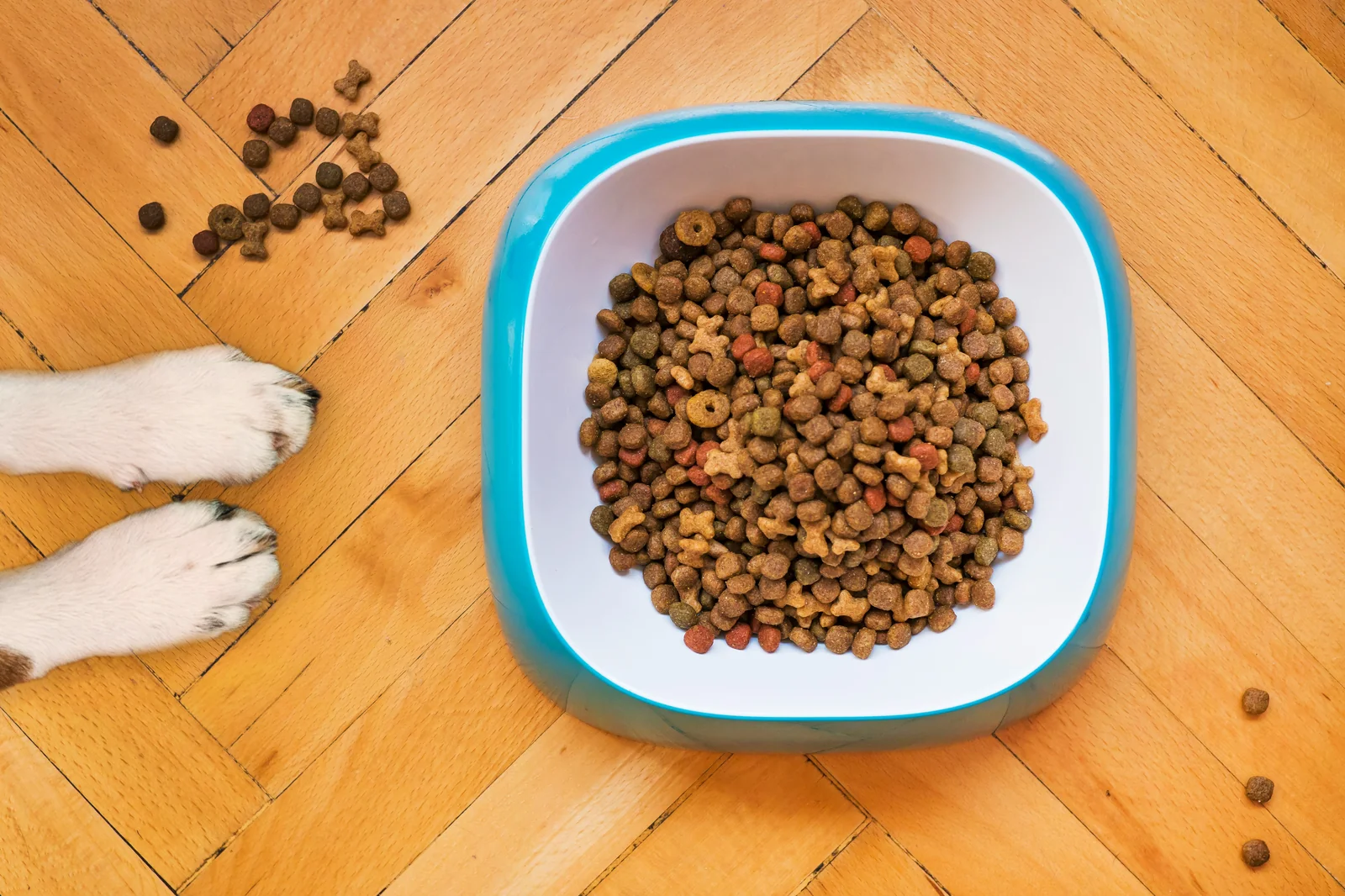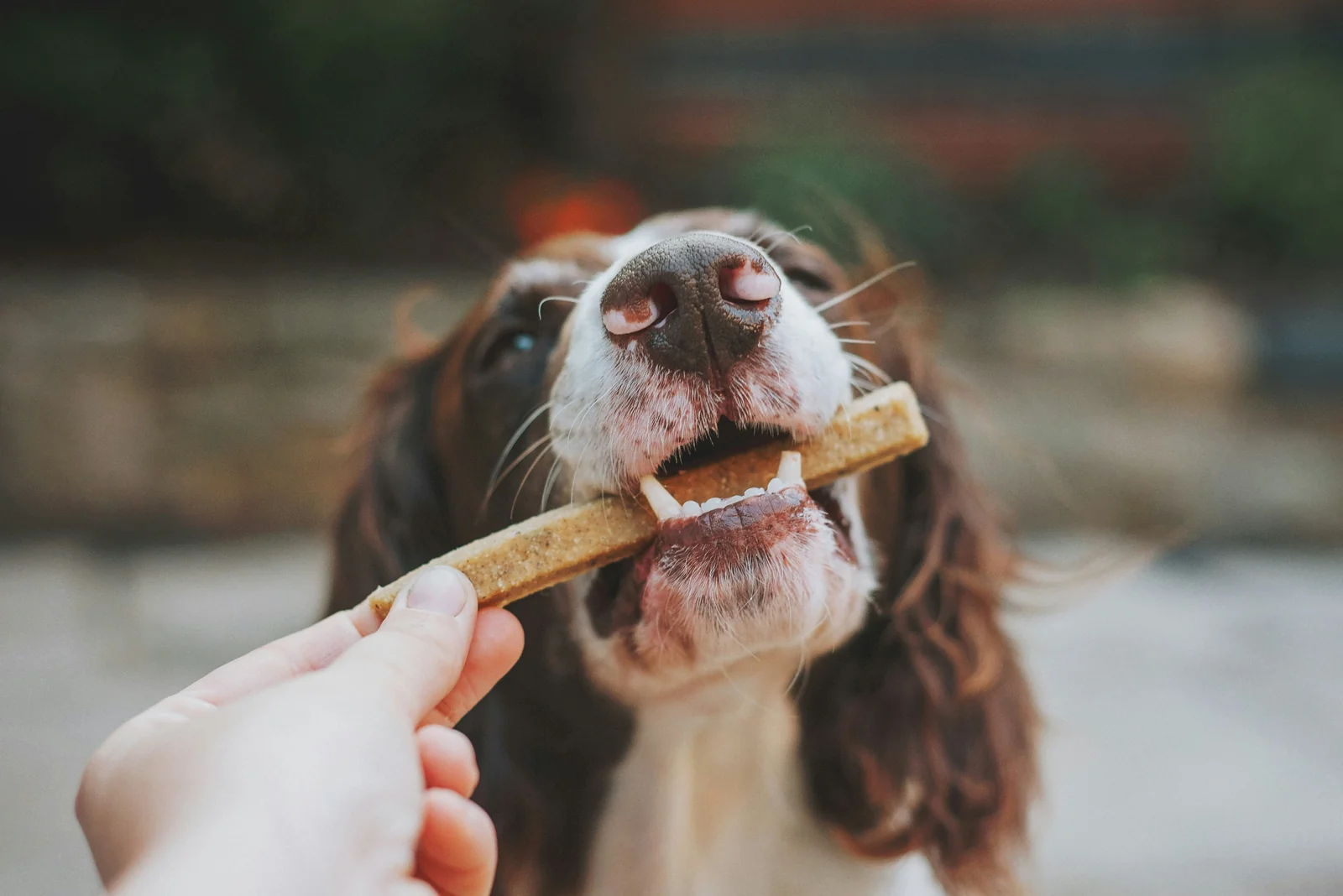
A new bag of dog food can look perfectly normal until you check what is actually inside. A bag may carry a "complete and balanced" claim while leaving batch-level testing unclear. A wet food tray may look fine from the outside but have a weak seal, a leak, or no readable expiration date. Even a dry food bag can arrive with an unusual amount of powder, broken pieces, discoloration, or a rancid smell.
These problems do not all mean the same thing, and a single complaint does not prove that every package is unsafe. What they do have in common is that the label alone cannot answer every quality question. The useful checks are more specific: match the lot number to a recall, look for actual batch testing records, compare species-specific nutrition, inspect the food itself, and examine every wet food seal before opening.
CONSUMER EVIDENCE OVERVIEW
| Product Area | Common Problems | Why It Matters |
|---|---|---|
| Recall and batch information | Chemical or bacterial contamination tied to specific lots | A normal-looking bag can still belong to an affected batch, so the lot number and recall reason matter |
| Nutrition and food condition | Missing batch-level testing, heavy-metal or bacterial results, excessive powder, discoloration, or unusual odor | A nutrition claim does not verify the condition or testing results of the food that arrived |
| Wet food packaging | Leaking trays, broken seals, foul odors, and missing expiration dates | Damaged packaging makes exposure and shelf life harder to judge before feeding |
What to Check in Dog Food Recalls When Chemical or Bacterial Contaminants Exceed Safety Limits
A dog food recall is not automatically a story about a bad smell or visibly spoiled kibble. In one reported case, dogs became seriously ill even though the food did not smell obviously rancid; another household described violent vomiting and diarrhea after opening a new bag that had previously been tolerated for years. The consumer-facing identifiers are PGH-AUDIT-KQ2Y and PGH-AUDIT-KS4O, keeping the focus on the batch evidence rather than the brand name.
That distinction matters because a premium label can tell you what a product is supposed to be, but it cannot tell you whether every batch avoided a contamination problem. A 2024 review of U.S. pet food recalls from 2003–2022 found that 68% of Class I recalls involved chemical contaminants or pathogenic bacteria, while 92% were linked to failures involving supplier verification or inadequate heat processing.
🔎 Read the Recall Notice, Not Just the Front Label
When a recall appears, look for the specific contaminant, affected lot numbers, and stated safety limit. The referenced safety data puts aflatoxin B1 at 20 ppb for dog food and describes finished pet food as having a zero-tolerance threshold for Salmonella; a Class I recall can involve contamination serious enough to pose a health risk.
That gives you a more useful question than "Is this a famous brand?" Ask: What exactly failed, and does my bag match the affected batch?
The uncomfortable part is that contamination is not always something a dog owner can identify at home. A bag can look ordinary while the relevant problem sits below what your eyes or nose can detect.
So when a recall involves bacteria or chemical contaminants, brand reputation is not the deciding evidence—the affected lot and the reason for the recall are. A product may have passed earlier checks, yet a later batch can still expose a gap in supplier screening or processing.
How to Verify If Commercial Dry Dog Food Meets Nutrient Guidelines Without Heavy Metal Contamination
"Complete and balanced" sounds reassuring until you look at what that phrase does not tell you about a particular batch. A senior dog in one reported case lost weight and declined while eating the same food, then improved after the household switched foods. Another set of complaints described a sharp quality difference between batches, making the label alone a poor substitute for checking what actually arrived in the bag.
That is the uncomfortable gap between a nutrition claim and batch-level evidence. The commercial-food testing referenced for this section found that only 14 of 30 dry dog foods met all of the tested micronutrient guidelines. Seven samples exceeded the cited limits for lead or cadmium, with lead reaching 3.8 ppm, while 3 of 30 samples contained Enterobacteriaceae above 10³ CFU/g.
🧾 Turn the "Balanced" Claim Into a Paper Trail
Before treating a complete-and-balanced label as the end of the investigation, look for something much more specific: batch-level testing records. The useful documents are the ones that identify the lot and show what was actually checked for minerals, heavy metals, and bacterial contamination.
This matters because a recipe can remain unchanged on the package while the ingredients entering that recipe vary. The referenced testing evidence is a reminder that meeting broad nutritional expectations does not automatically mean every tested product met every micronutrient or hygiene measure.
For a brand making strong quality claims, a reasonable transparency question is simple: Can you provide the COA for my production lot, including heavy-metal and bacterial results? If the answer only points back to the ingredient panel, that still leaves the actual batch unverified.
The same distinction helps explain why batch-to-batch complaints deserve attention without automatically proving that every bag is unsafe. A reported decline after a food change can have several possible explanations; what turns suspicion into something more useful is a traceable lot number paired with actual testing records.
In other words, "balanced" describes the intended formula; a batch-specific COA tells you what was checked in the food you actually received. For owners trying to reduce uncertainty, that second piece of information is far more revealing than another reassuring claim on the front of the bag.
Can Dogs Safely Eat Cat Food, and What Digestive Differences Make It Risky?
A bowl of cat food left on the floor can look like an innocent shortcut in a multi-pet home. The problem is that dog and cat foods are built around different nutritional requirements, so treating the two bowls as interchangeable turns a convenience into a dietary mismatch.
One reported case linked a new fish-containing formula with vomiting and digestive upset in two dogs that had previously tolerated the same brand without fish. The complaints also described a severe reaction after another new batch, showing how quickly a food change can become a household problem. The anonymized case identifier for that evidence is PGH-AUDIT-KS4O.
The important point is not that every bite of cat food will automatically make a dog sick. It is that the two species do not have identical nutritional targets, so regular substitution is difficult to justify from the evidence provided.
🐕 Compare the Two Bowls Before You Share Them
Look at the guaranteed analysis and nutritional statement on both packages. The referenced data lists adult-dog minimums of 18% protein and 5.5% fat, while the corresponding cat-food figures are higher at 26% protein and 9% fat. The same source specifically describes species-specific formulation as necessary rather than treating one food as a universal option.
There is another wrinkle: the digestive tract does not simply process every food at the same pace. The cited research reports mean canine gastrointestinal transit of 12.4 hours, compared with 24.1 hours in humans, supporting the broader point that digestive handling differs across species.
And ingredients can matter just as much as the food category. The referenced evidence reports cross-reactive IgE responses to soy in 37–38% of allergic dogs, meaning an ingredient tolerated by one animal is not automatically neutral for another.
So the useful takeaway for a multi-pet household is simple: cat food is not a drop-in replacement for dog food. A dog repeatedly eating the other bowl is a different situation from an occasional stolen mouthful, and the evidence here does not establish that every brief exposure causes illness. What it does establish is that species-specific nutrition and individual ingredient tolerance matter enough to make routine cross-feeding a poor shortcut.
What Happens to Protein Quality and Kibble Texture When Dog Food Is Processed at High Temperatures
A bag can promise rich meat content and still arrive looking nothing like the food pictured on the package. One reported batch of freeze-dried treats had darkened pieces, white film, blood spots, dust, and a rancid smell, while another dry-food purchase was described as so pulverized that roughly one-third of the bag had turned into dust and broken fragments. The anonymized cases are PGH-AUDIT-WXN3 and PGH-AUDIT-YYVW. That is more than an annoying presentation problem. When a product that was expected to contain recognizable pieces instead arrives as a bag of crumbs, the owner loses the ability to judge what happened before the food reached the bowl.
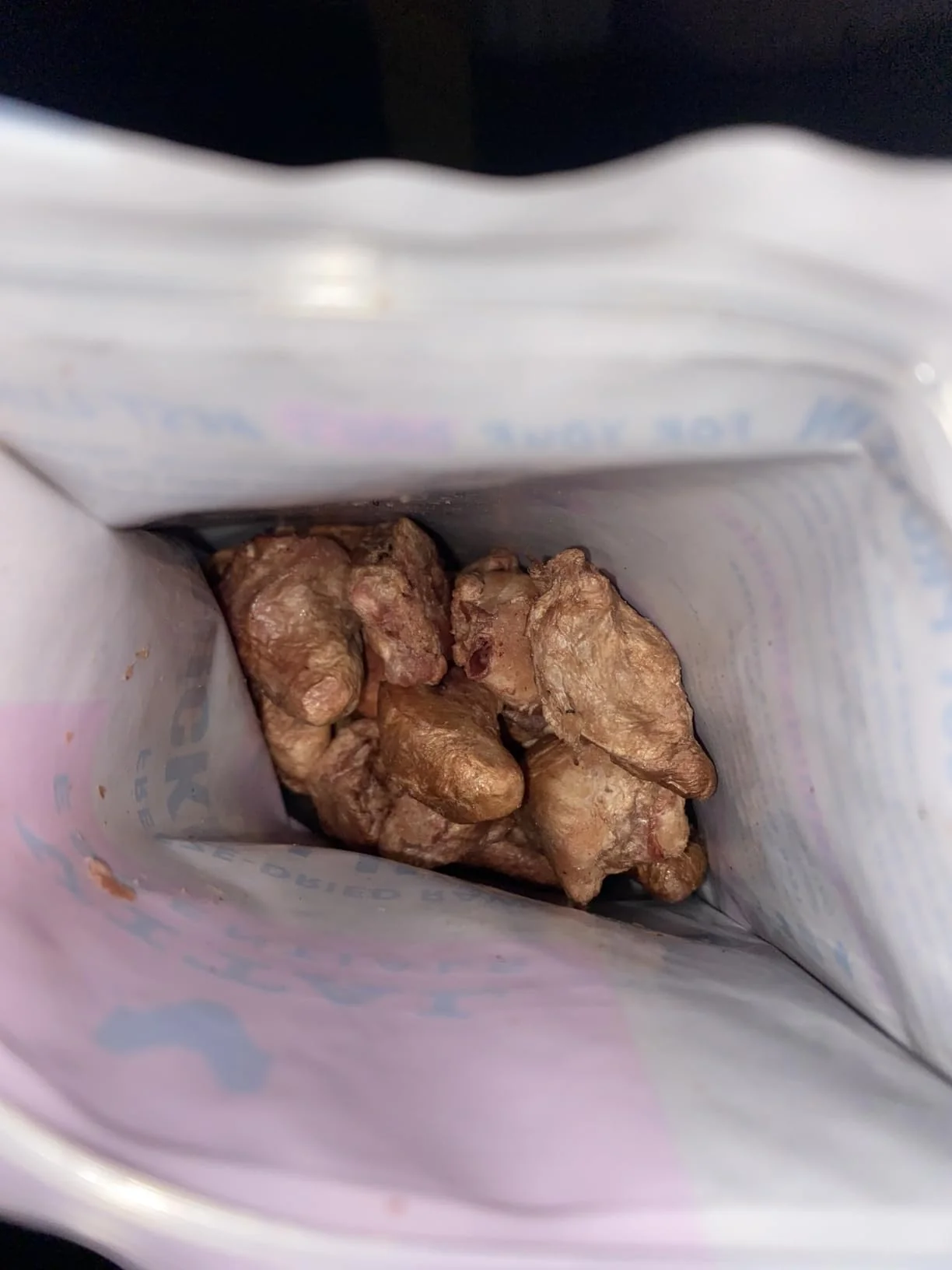
The smell is another clue worth taking seriously. In the reported freeze-dried case, the food developed a rancid odor alongside discoloration and a powdery texture, prompting the dog to reject it.
🖐️ Tilt the Bag and Look at What Settles
Open the package and gently tip a small amount onto a clean surface. Look at how much intact food remains versus powder, tiny fragments, or visibly discolored pieces, then notice whether the smell is noticeably different from what you normally expect from that product.
A little breakage is one thing; a bag dominated by dust tells a different story. In the reported dry-food case, the owner described manually sifting a large quantity because so much of the bag had broken down.
And if the food has an unmistakably rancid smell or unusual coating, feeding through the bag just because the label says "high protein" makes little sense. The available complaints support concern about that specific product condition, but they do not establish that high-temperature processing caused every reported defect.
The practical takeaway is simple: protein claims belong on the label; the food in your hand still needs to look and smell like a product you are comfortable feeding. When the bag arrives mostly as powder or carries an abnormal rancid odor, that particular batch deserves a much closer look before it becomes dinner.
Why Unsealed Wet Food Trays and Missing Expiration Dates Cause Immediate Spoilage
A wet food tray is supposed to arrive as a sealed little package of confidence. Instead, one reported case involved 5 leaking containers out of a 12-pack, with foul odors strong enough to linger in the pantry, while the packaging reportedly lacked a usable expiration date. The anonymized case is PGH-AUDIT-HCN6.
That changes the buying decision completely. A dented outer box is annoying; a tray that has already lost its seal is a different problem because you have no reliable way to know how long the contents have been exposed.
The same household reported bloody diarrhea and vomiting in multiple dogs after eating the same batch, while other users described having to abandon the food and return to alternatives after their dogs became ill.
🫙 Press the Tray Before You Open It
Take an unopened tray and gently look around the entire seal. Check whether the lid sits flat, whether any corner appears lifted, and whether the package feels unusually loose or swollen. Do not treat a bad seal as a cosmetic defect.
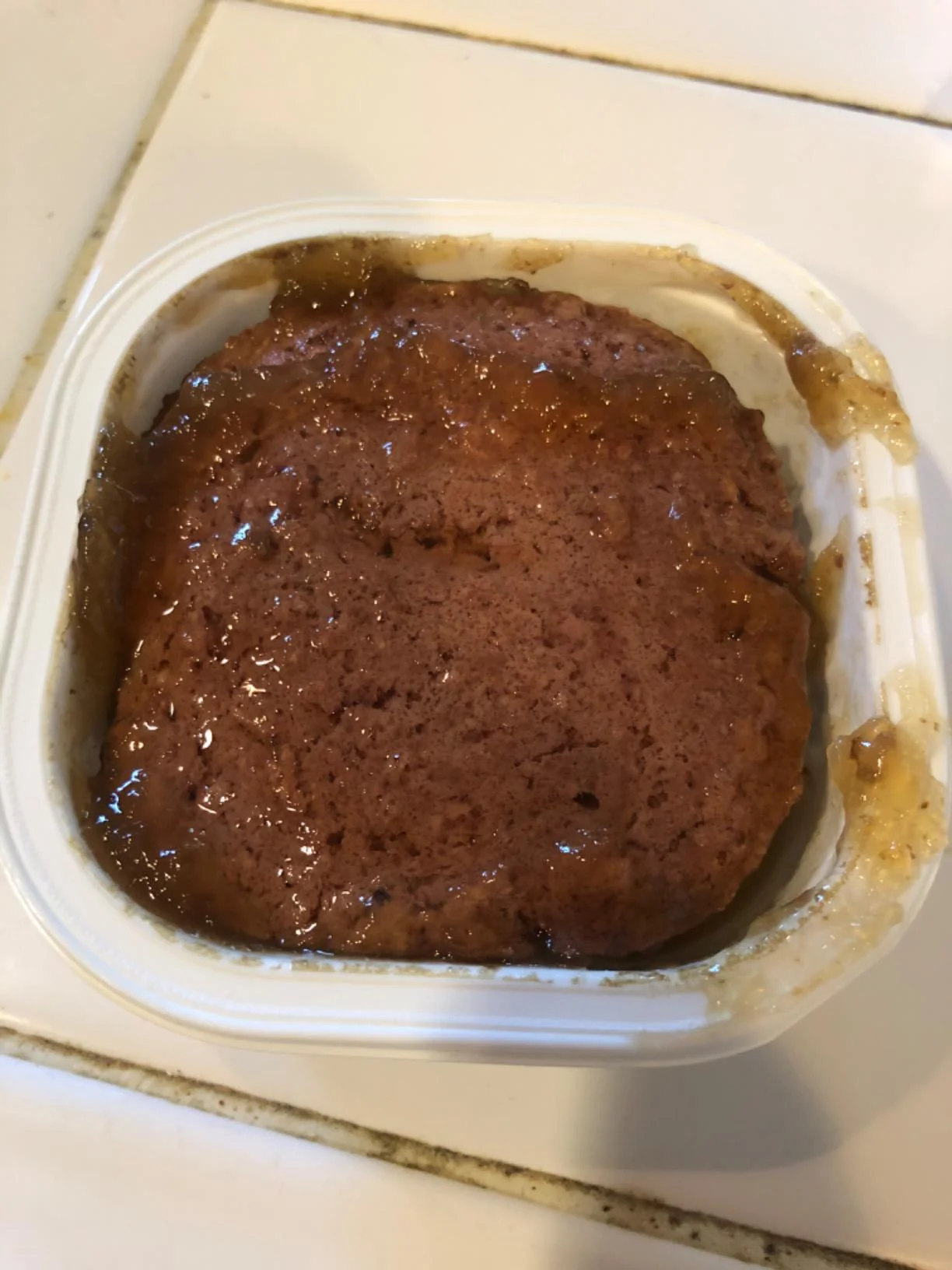
If the tray is leaking, smells foul before opening, or has a seal that clearly does not look intact, the physical condition itself is enough reason to set that container aside. You do not need to taste or "test" questionable food to prove something is wrong.
The missing date creates a second headache. Without a clear expiration or shelf-life reference, the owner loses an important piece of information when deciding whether a damaged or questionable package is still within its intended use period. The reported case specifically noted difficulty locating expiration dates.
A bad seal also makes the storage story harder to reconstruct: you cannot tell from the bowl whether the problem began at manufacturing, during handling, or after the package was compromised.
For this kind of complaint, the safest purchasing signal is transparency: intact individual seals, readable dates, and packaging that arrives without leaks or unexplained odors. When several trays in one case fail those basic checks, that particular shipment deserves a much closer look before another portion reaches the dog's bowl.
CONCLUSION
Careful dog food buying starts with checking the product in front of you rather than relying only on the front label. If a recall has been issued, the affected lot number and contaminant are more useful than brand reputation. If a product makes strong quality claims, batch-specific testing records provide more useful evidence than a general "complete and balanced" statement. For households with both dogs and cats, species-specific nutrition also matters because the foods are not designed around identical nutritional targets.
Physical condition deserves the same attention. Excessive powder, unusual discoloration, a rancid smell, leaking wet food, damaged seals, or missing dates are practical reasons to pause and examine a particular package more closely. None of these checks proves a broader product problem by itself, but together they give a buyer a clearer way to judge the actual food, package, and batch before it reaches the bowl.
THE ULTIMATE BUYING VERDICT
| Verdict | Key Consideration | Recommendation |
|---|---|---|
| 🔴 Significant concerns | A package matches a recalled lot, lacks an intact wet-food seal, is leaking, has a foul or rancid odor, or arrives with unusual discoloration or heavy powder | Set that particular package aside and verify the lot, packaging condition, recall information, or available testing records before feeding |
| 🟡 Acceptable with limitations | The package is intact and the food appears normal, but batch-level testing or detailed quality records are not available | A careful buyer can recognize that the label provides useful formula information but does not verify every quality measure for the individual batch |
| 🟢 Meets long-term expectations | Clear lot identification, intact packaging, readable dates, normal-looking food, species-appropriate formulation, and transparent batch-level testing information | Look for products and sellers that make these details easy to verify before purchase and when a new batch arrives |