A senior dog may have some stiffness, but a sudden change after starting a new joint chew is different. In the reported cases behind this article, owners described dogs that became extremely tired, struggled to stand, lost hind-leg movement, stopped eating, or developed other serious changes within hours or days of starting a supplement. Other dogs developed intense itching, hives, breathing trouble, or skin damage after taking a chew that also contained added ingredients such as brewer's yeast.
The reports also raise a separate concern about dosing. One owner increased the serving as directed on the label but saw little lasting improvement while spending substantially more. These accounts do not prove that the supplements caused every reported illness. They do show why a new product should be watched closely, especially when an older dog changes suddenly after taking it.
Signs of Acute Lethargy and Mobility Loss in Senior Dogs After Starting New Supplements
A senior dog taking a joint chew should not suddenly go from walking normally to barely responding, collapsing, or being unable to stand. Yet one reported 13-year-old dog became severely lethargic and unresponsive within 24 hours of the first dose and required emergency care.
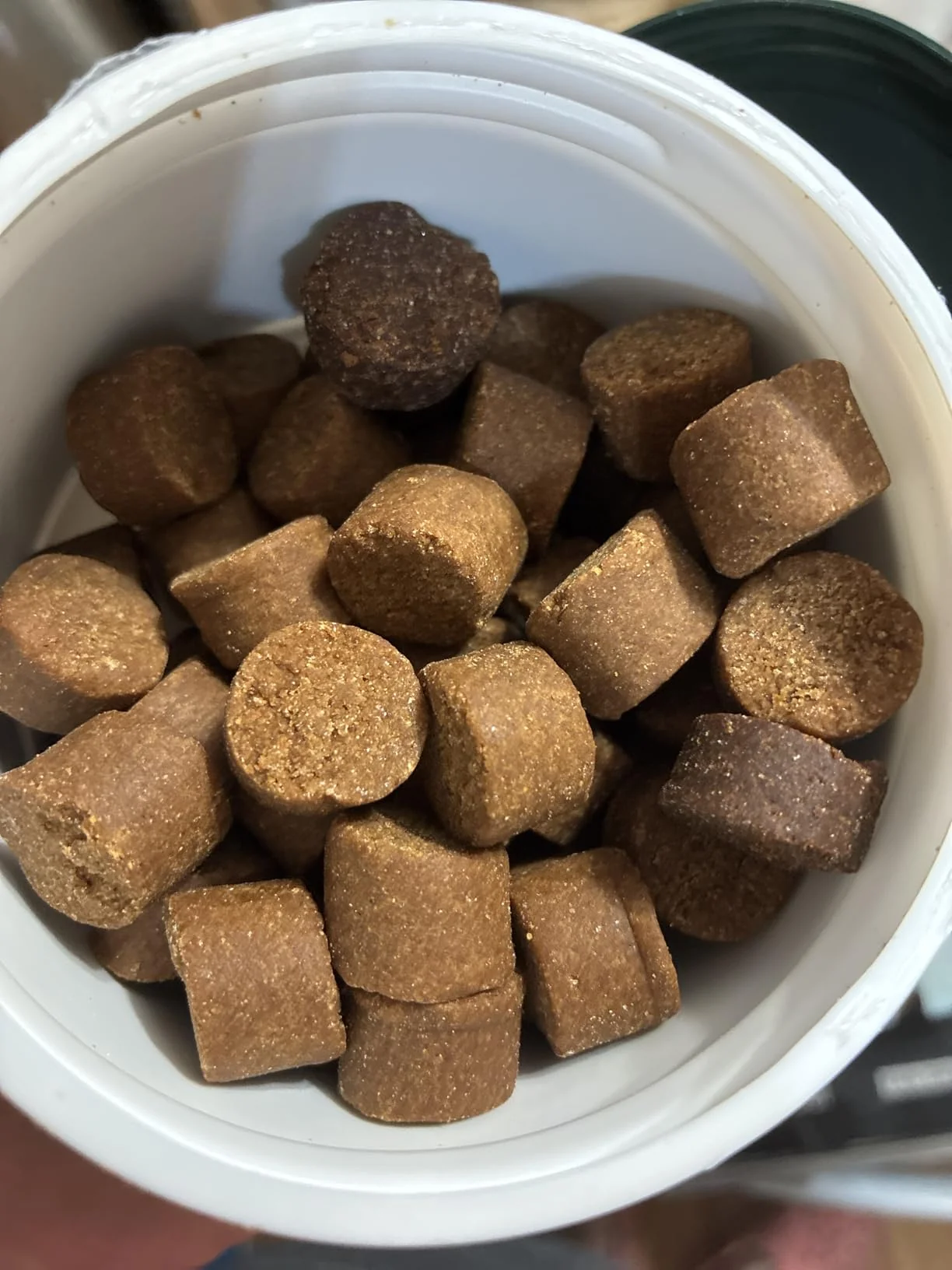
The more troubling reports involve two senior dogs that developed apparent strokes within hours of dosing, with both eventually euthanized. Another 9-year-old Australian Shepherd reportedly lost hind-leg movement, stopped eating, developed severe abdominal swelling within five days, and died on day nine.
One particularly useful clue is what happened after stopping the product. A 14.5-year-old dog reportedly deteriorated with falls, panting, pain, and inability to stand, then improved after discontinuation; another senior dog regained mobility after two days off the product but deteriorated again after being given it again. Those reports do not prove causation, but the timing is difficult for an owner to ignore.
🧍 Watch How Your Dog Gets Up Tonight
Have your dog walk a few steps, turn around, and stand back up while you watch quietly. New wobbling, repeated falling, unusual weakness, inability to rise, marked lethargy, or sudden loss of coordination after starting a supplement deserves prompt veterinary attention rather than another dose.
The product identifier tied to these reports can be tracked as PGH-AUDIT-6XC8. The reported cases include neurological changes, severe weakness, vomiting, appetite loss, and mobility failure across several older dogs.
There is also a separate safety question around contamination: the supplied research material notes that pet-food safety programs screen for contaminants including heavy metals, with lead limits cited at low parts-per-million levels. However, that material does not establish that heavy metals caused these particular neurological events, so the reports should not be presented as proof of that mechanism.
For an older dog, a sudden collapse after introducing a new supplement is not something to normalize as "just aging." These reports justify treating an abrupt change in alertness or mobility as a warning sign and pausing before giving another dose until the situation has been assessed.
Can Common Inactive Ingredients Like Brewer's Yeast in Joint Chews Cause Severe Itching?
A dog can start a joint chew because its owner wants a little help with stiff hips, only to spend the next few days scratching, chewing, and tearing at its own skin. That is what makes the ingredient list matter: the problem may not be the glucosamine or chondroitin the owner actually went looking for.
One reported long-haired Chihuahua-Terrier developed relentless itching, scabs, bleeding, hair loss, and self-mutilation while taking a supplement. The owner reported that the skin problems cleared within about 10 days after the supplement was stopped.
Another dog reportedly developed golf-ball-sized hives and breathing trouble within hours after receiving two pills. That reaction required medication and continued treatment for more than two days.
The supplement in these reports contained brewer's yeast, even though the owners were specifically looking for joint-support ingredients. That creates a frustrating mismatch: you think you're buying a simple joint chew, while your dog may be reacting to something added for taste or formulation.
👃 Smell the Chew, Then Read the Back
Before giving another serving, turn the package around and read every listed ingredient, not just the large words on the front. Look specifically for brewer's yeast or other added protein sources, especially if itching began soon after the product was introduced.
The supplied dietary-elimination material describes removing suspected ingredients for 8–13 weeks, followed by controlled reintroduction; it also notes that symptoms can return during a challenge period. That supports using ingredient removal and careful reintroduction to identify a suspected food trigger, but it does not prove that brewer's yeast caused every reaction reported here.
The reports associated with PGH-AUDIT-L1NQ therefore raise a practical concern: when a dog develops sudden, severe itching, hives, or breathing difficulty after a new chew, don't assume it is simply an age-related skin problem. Stop treating the ingredient list as fine print and treat it as part of the product itself.
Evaluating Glucosamine Dosage Labels and Double-Dosing Guidelines for Aging Dogs
When an aging dog is already moving stiffly, "take more for better results" sounds reassuring—until the extra servings produce more cost without a meaningful change in mobility. One reported 14-year-old Lab mix showed no improvement after six weeks, even after following the label's doubled-dose instructions, while the owner estimated roughly $200 in added expense over two months.
The same reports raise a more basic question: what exactly are you getting for that extra dose? A customer alleged that the chew contained far less glucosamine than expected after comparing it with third-party testing, while also reporting that increasing the amount produced only a brief improvement before the limp returned. These are customer-reported findings, not independent proof that every package was mislabeled.
And then there is the case that makes casual "more is better" thinking especially uncomfortable. A 12-year-old Goldendoodle with previously stable congestive heart failure reportedly became lethargic and developed diarrhea after starting another joint supplement; the report says platelet levels later fell to essentially zero, followed by death within 24 hours of diagnosis. The available account does not establish that the supplement caused the platelet collapse, but the timing was serious enough to warrant attention.
🥄 Count the Servings Before You Double Them
Take the container and compare the recommended amount with how quickly the supply disappears at the higher serving. Then check whether the actual ingredient amounts are clearly stated rather than assuming that a bigger chew or a bigger daily serving automatically means more useful joint support.
There is another reason not to treat "double the dose" as a harmless shortcut. The supplied material notes that curcumin showed antioxidant activity at 100 mg/kg in one feeding trial, while also flagging excessive mineral amounts as a potential problem; iron above 300 mg/kg was specifically associated with gastrointestinal upset or more serious effects.
That does not prove that either of these reported products contained excessive iron, nor does it establish that doubling a glucosamine chew causes organ failure. What it does reinforce is the need to separate the advertised serving size from the actual ingredient quantities instead of assuming that taking twice as much is automatically safer or more effective.
For the reported cases tied to PGH-AUDIT-6XC8 and PGH-AUDIT-L1NQ, the combination of poor reported results, escalating expense, and a serious adverse-event report makes aggressive redosing a questionable strategy. If a senior dog is worsening rather than improving, increasing the serving should not substitute for figuring out what is actually happening.
CONCLUSION
The most useful lesson is to watch the dog, not just the promise on the package. A senior dog that becomes unusually weak, falls repeatedly, cannot get up, loses coordination, becomes extremely lethargic, or suddenly stops eating should not simply be assumed to be getting older. A new supplement should be part of the timeline considered by the owner and veterinarian.
The same careful approach applies to itching and other reactions. Read the entire ingredient list rather than focusing only on glucosamine or chondroitin. If severe itching, hives, breathing trouble, or other unusual symptoms appear soon after a new chew, giving another serving without assessing the situation can make it harder to understand what is happening.
Finally, do not treat a larger serving as an automatic solution when the first amount is not helping. Check the actual ingredient amounts, track how the dog responds, and pay attention to whether the product is costing more without producing a lasting benefit.
THE ULTIMATE BUYING VERDICT
| Verdict | Key Consideration | Recommendation |
|---|---|---|
| 🔴 Significant concerns | Reported senior dogs experienced severe weakness, mobility loss, neurological changes, serious itching, hives, or breathing trouble after starting supplements. | If a dog develops a sudden or severe change after a new chew, pause before giving another dose and seek veterinary assessment. |
| 🟡 Acceptable with limitations | Some reported problems may involve added ingredients or an ineffective serving rather than the intended joint-support ingredients alone. | Read the complete ingredient list, check the stated ingredient amounts, and watch closely for changes after introducing the product. |
| 🟢 Meets long-term expectations | A more suitable choice is one with clear ingredient amounts and a response that remains useful without aggressive redosing. | Look for transparent labeling and judge the product by the dog's actual response rather than assuming that larger servings will produce better results. |