A harness may feel secure when you first put it on, then start telling a different story once the walk gets moving. A few pulls can loosen an adjustment slide, a stiff front edge can rub against the legs, or weak stitching can begin to separate. In the reported PGH-AUDIT-6FT6 experience, these were not just small annoyances. The harness reportedly tore after about 12 light uses, while a second harness reportedly had a similar problem. A husky also reportedly slipped free within minutes even after a trainer fitted the harness.
That makes the details worth checking before trusting a harness with a strong or energetic dog. The leash connection, strap adjusters, front shape, stitching, and overall fit all affect how secure the harness feels during a normal walk. A harness does not need to be complicated to work well, but it does need to stay in place, leave the front legs room to move, and hold together when the dog pulls.
Why Harness Webbing and Seams Tear During Regular Daily Walks
A dog harness can look perfectly fine hanging by the door, yet a few ordinary walks can tell a very different story. When a dog gives a light pull and the straps or stitching suddenly give way, the problem is no longer about comfort—it can leave you grabbing for a leash while your dog is already moving.
That is what makes the reported experience tied to PGH-AUDIT-6FT6 worth paying attention to. The harness reportedly tore after no more than 12 light uses, without chewing and without unusually hard pulling; a replacement reportedly failed in the same general area as well.
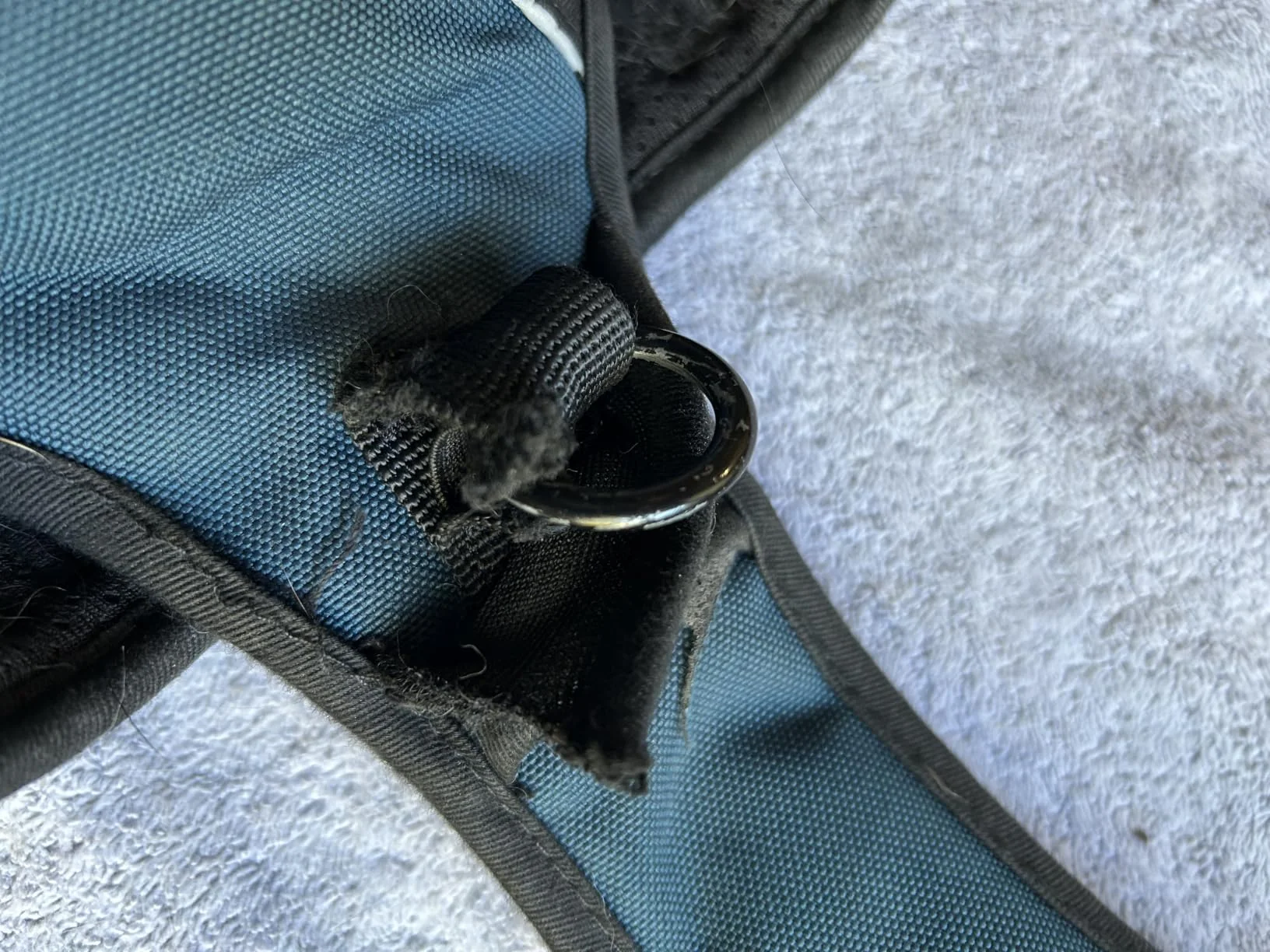
The practical headache is obvious: a product sold for controlling a dog during walks is supposed to stay together during exactly those routine moments. If it starts coming apart during a normal neighborhood loop, the leash can become the only thing between your dog and a busy road, another animal, or a sudden dash into traffic.
There is also a useful number behind this concern. The supplied safety benchmark places the minimum at 1,500 N for a harness intended for medium and large dogs. Put simply, a walking harness should have enough holding power to cope with a strong pull instead of leaving the owner discovering its limit in the middle of a walk.
🚗 Pull the Straps Before the Next Walk
Hold the harness firmly in both hands and give the main straps a few short, controlled pulls, then look closely at the stitching. If threads are already separating, the strap shifts noticeably, or the stitched area opens under light hand pressure, do not wait for your dog to provide the real-world version of that test.
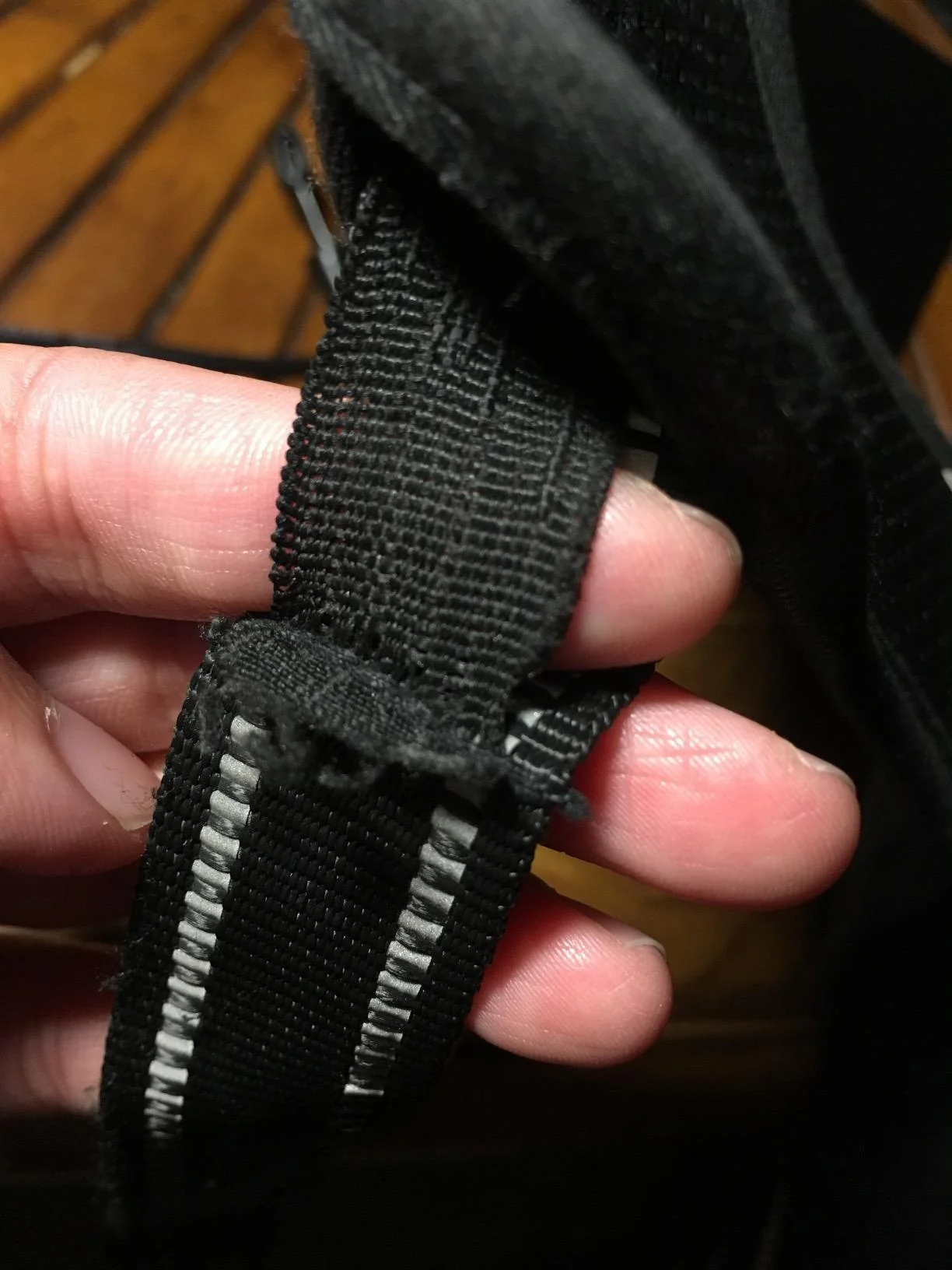
For the reported case, the repeat failure matters more than a single bad day. A second harness showing a similar tearing problem makes the complaint harder to dismiss as simple wear from chewing or unusually rough use.
A harness does not need to survive an extreme adventure to earn confidence; it needs to remain dependable through ordinary walks first. The current feedback leaves enough uncertainty around this particular product experience that cautious buyers may want to give the stitching and straps a much closer look before trusting it with a strong or energetic dog.
How a Front-Clip Leash Attachment Redirects Pulling Without Choking
When a big dog suddenly spots something interesting and launches forward, a traditional neck collar can turn that split-second burst into a painful tug for both sides. Your wrist takes the hit, while the dog may cough, gag, or fight against pressure around the neck as everyone tries to regain control.
A front-clip attachment changes where that leash pressure begins. Instead of letting the pull run straight through the neck, the front connection guides the dog back toward the handler, making a forward charge harder to sustain and easier to redirect.
That distinction becomes especially important with PGH-AUDIT-6FT6. A reported husky was able to slip out of the harness within minutes despite following the sizing instructions, while the harness also failed to provide dependable chest-directed control.
The underlying comparison is notable. In Shih et al. (2021), dogs pulling against a chest harness produced a peak leash force of about 38.7 N, compared with 102.4 N with a neck collar—a reduction of roughly 62%. The study supplied for this section found no reduction in stride length or front-leg movement with properly fitted Y-shaped harnesses.
🐕 Tug the Front Connection, Not the Neck
Stand beside your dog and hold the leash close to the front attachment. Give it a gentle, controlled forward tug, watching whether the chest connection naturally turns the dog back toward you rather than pulling directly against the throat.
If the harness shifts, loosens, or lets your dog back out when that pressure changes direction, the front clip is not giving you much practical control. The reported husky escape shows why simply having a front attachment on the label is not enough—the harness still has to stay securely positioned on the dog.
For owners dealing with powerful pullers, the useful takeaway is straightforward: where the leash connects can change how a sudden pull is felt and redirected. A properly fitted front-guiding harness may reduce the peak force reaching the handler and avoid concentrating that pull around the neck, while an insecure fit can undermine the benefit entirely.
Y-Shaped vs. Step-In Harnesses: Comparing Shoulder Clearance and Movement
A harness can stop a dog from pulling without making every step feel like a fight. The important difference is where the front of the harness sits while the dog is actually moving, because a rigid or poorly positioned section can press into the chest and upper legs instead of leaving those areas room to work naturally.
That concern shows up in the reported experience linked to PGH-AUDIT-6FT6. The harness was described as stiff and difficult to adjust, with its lower edge pressing into the dog's front chest and thigh area during use.
A Y-shaped design generally leaves a more open path around the front of the body, while a straight-front or step-in style can place a wider section across the chest. The label alone does not guarantee comfort, though; fit and clearance still decide whether the dog can move freely.
The supplied Knights & Williams (2021) findings make that distinction easier to understand. Properly positioned Y-shaped harnesses reduced peak shoulder torque by 23% while preserving about 98% of natural stride length; poorly positioned designs produced greater changes in elbow movement, including a reported 14° increase in elbow flexion.
👀 Feel the Front Edge Before Walking
Put the harness on your dog and slide your fingers around the front edges near the chest and upper legs. You should be able to identify whether a hard edge is pressing directly into the moving area instead of sitting clear of it.
Then watch your dog take several normal steps. If the front edge repeatedly rides into the upper leg, forces the dog to shorten a step, or shifts sharply when the leash becomes tight, that is a practical reason to reconsider the fit rather than simply tightening another strap.
For a dog that pulls, the goal is not to make movement uncomfortable enough that the dog stops moving. A better harness should give the handler control while still leaving the shoulders and front legs enough room to move naturally.
The reported failure of PGH-AUDIT-6FT6 is therefore less about whether one harness style is universally good or bad, and more about whether the particular design leaves usable clearance. Current evidence supports giving properly fitted Y-shaped designs serious consideration, while any harness that repeatedly presses into the dog's moving front-leg area deserves caution.
Why Harness Adjustment Slides Slip and How to Keep Straps Secure
You can spend serious money on training, get the harness fitted by a professional, and still have a problem if the straps slowly loosen while the dog keeps pulling. Instead of staying where you adjusted them, the harness can gradually open up until a few minutes of walking turns into an escape attempt.
That is especially concerning in the reported case of PGH-AUDIT-6FT6. Even after professional fitting by a trainer, the adjustment system was described as very loose and difficult to secure, and a husky reportedly slipped free within minutes.
The practical lesson is easy to miss: a correct fit at the front door is not enough if the straps cannot hold that position during movement. Every pull, turn, and sudden change of direction gives a loose adjustment point another opportunity to move.
The supplied Dowdeswell (2024) benchmark gives this concern a measurable frame: after 500 dynamic pulling cycles, movement at the adjustment point should be no more than 2 mm. In everyday language, the strap should not keep creeping farther away from the position you carefully set.
🐕 Tug the Adjuster Before You Leave
With the harness fitted, hold the body of the harness steady and give the adjustable strap several firm hand pulls. Watch the slide rather than the strap itself: if the buckle visibly creeps along the webbing with each pull, your carefully measured fit may not stay measured for long.
Then walk your dog for a few minutes and check the same point again. A harness that has visibly loosened can become much easier for a determined dog to back out of, particularly when the dog is already reacting to something and pulling in another direction.
For the reported PGH-AUDIT-6FT6 experience, the combination of a loose adjustment system and a rapid escape after professional fitting is the part worth remembering.
A secure harness should hold the adjustment you set instead of making you repeatedly tighten it during the walk. The available evidence gives this particular case enough cause for caution, especially for owners of strong or escape-prone dogs.
CONCLUSION
The biggest lesson from these reported problems is that a harness should be judged while it is being used, not only when it is sitting neatly on the dog before a walk. Check the stitching and main straps for early separation. Test the adjustment slides to see whether they creep under repeated pulling. Pay attention to whether the front edge presses into the chest or upper legs as your dog walks. Also check whether a front attachment actually redirects pulling without allowing the harness to shift.
The supplied evidence favors a properly fitted Y-shaped harness that keeps the shoulders and front legs reasonably free while maintaining a secure adjustment. But the shape alone is not enough. A good fit can be undermined if the straps loosen or the dog can back out of the harness.
For future purchases, look beyond appearance and basic features. A careful buyer should focus on secure adjustments, durable stitching, usable front-leg clearance, and a fit that stays stable during ordinary movement.
THE ULTIMATE BUYING VERDICT
| Verdict | Key Consideration | Recommendation |
|---|---|---|
| 🔴 Significant concerns | Reported tearing, loose adjustment slides, and a dog slipping free despite professional fitting raise serious concerns about dependable use. | Be cautious with harnesses showing similar strap movement, stitching separation, or escape problems, especially for strong or escape-prone dogs. |
| 🟡 Acceptable with limitations | A front attachment and Y-shaped design can help redirect pulling and preserve movement, but only when the harness stays securely fitted. | Consider these features when the harness remains stable during walking and does not press into the dog's front legs. |
| 🟢 Meets long-term expectations | Secure adjustment points, durable stitching, stable positioning, and enough shoulder and front-leg clearance are the most desirable qualities supported by the evidence. | Look for a harness that holds its adjustment, stays comfortable during movement, and remains secure through ordinary pulling and changes of direction. |