A litter box can look fine when you first open the bag, then become a daily headache once your cat actually uses it. Fine dust may rise into the air during pouring. A urine clump may smear across the pan instead of lifting cleanly. Hard crystal pieces may make a cat avoid the box, while moisture collects underneath. Even a pleasant-smelling litter can become sticky when a scented additive gets wet.
The consumer evidence cases in these sections show how different litter types can fail in very different ways. PGH-AUDIT-V87N, PGH-AUDIT-HMQL, and PGH-AUDIT-SKTG were linked to heavy dust and cleanup concerns. PGH-AUDIT-KM4 involved hard masses that interfered with an automatic litter system. PGH-AUDIT-E3MA and PGH-AUDIT-WDFY raised concerns about crystal comfort and moisture handling. Other reports involved scented additives and pine pellets that arrived partly broken down.
DEFECT AUDIT OVERVIEW
| Product Area | Common Problems | Why It Matters |
|---|---|---|
| Clay litter | Heavy dust, weak clumping, wet residue, hard masses | Dust can spread around the home, while poor clumping can make daily cleaning harder |
| Crystal and scented litter | Rough crystals, moisture collecting underneath, confusing color changes, sticky scented additives | Cats may avoid the box, and owners may face extra cleanup or misleading signals |
| Pine pellets | Premature crumbling, paste after use, strong odors, unexplained debris | A bag that arrives damaged or contaminated may not provide the expected easy cleanup |
How Heavy Dust in Clay Litter Affects Cats and Owners with Sensitivities
Pouring a supposedly low-dust clay litter into the box should be a boring chore. Instead, some owners describe a visible cloud rising straight out of the bag, coating nearby surfaces and leaving both people and cats coughing, sneezing, or dealing with irritated eyes.
One reported case tied to PGH-AUDIT-V87N described a mushroom-like dust cloud during pouring, followed by heavy chest discomfort and coughing in someone already vulnerable to breathing problems. Another case, tracked as PGH-AUDIT-HMQL, reportedly left so much fine residue behind that an air purifier filter was quickly covered, while the cat developed eye discharge. A third case, PGH-AUDIT-SKTG, was associated with gray nasal discharge and repeated coughing.
That pattern matters because the problem is not limited to the moment you pour the bag. Fine litter can become a household cleanup problem, settling on floors, furniture, and the area around the box before anyone has finished the job.
🫁 Pour a Small Amount Slowly
Take a small scoop and pour it back into the box from close range. Watch the air above the litter rather than the litter itself: if a visible plume rises immediately, that is a practical warning sign for a dust-sensitive household.
The reference material cited in this section points to clay litter becoming dustier when there is more bentonite and insufficient dust removal during production. It also notes that very fine airborne particles can irritate a cat's upper airway.
So the issue is fairly straightforward: a "dust-free" label does not tell you what happens when the bag is actually poured. The reported experiences around PGH-AUDIT-V87N, PGH-AUDIT-HMQL, and PGH-AUDIT-SKTG suggest that some products may perform very differently from the promise on the package.
For households already dealing with respiratory sensitivity, those observations make genuinely low-dust handling worth prioritizing rather than taking the marketing claim at face value.
Why Inconsistent Clumping Causes Wet Clay to Stick to Litter Pans and Paws
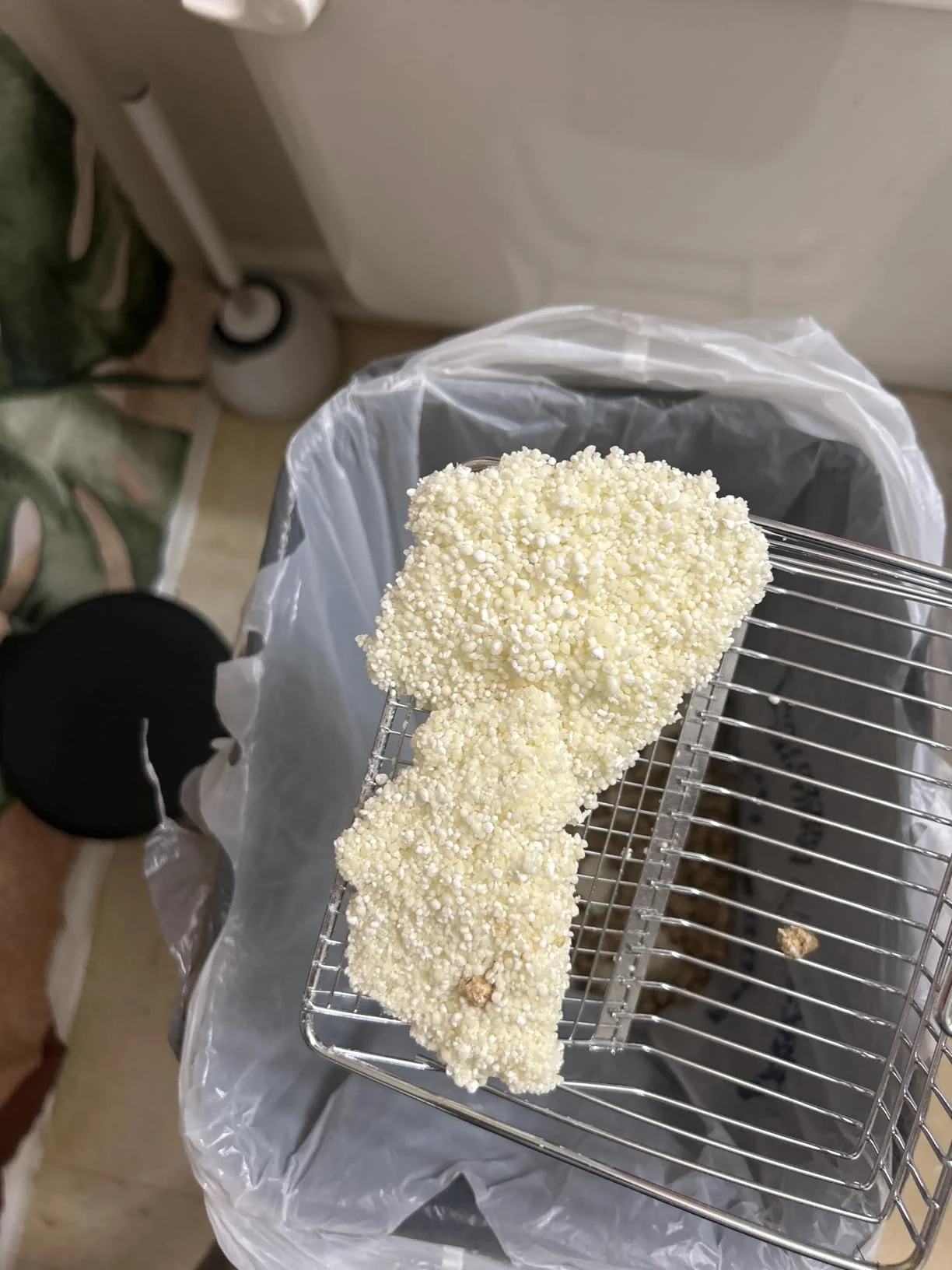
A good clump should make cleanup simpler: urine stays together, the scoop lifts it, and the rest of the box stays usable. When that balance fails, the litter can turn into wet sludge instead of a clean, removable clump, leaving owners scraping the pan while cats walk through the mess.
One reported case tracked as PGH-AUDIT-HMQL reportedly changed into a wet-mortar texture that was so stubborn an ordinary scoop could not remove it, forcing the owner to reach for a putty knife. Another case, PGH-AUDIT-SKTG, described broken clumps collapsing into paste that stuck between a cat's toes and later hardened, with the cat developing redness, inflammation, and limping.
And then there is the equipment problem. With PGH-AUDIT-KM4, users reported rock-hard masses forming in the box and becoming severe enough to interfere with an automatic litter system. The "easy scoop" promise becomes a scraping job instead.
🧤 Lift One Fresh Clump Before It Dries
Next time you scoop, pick up a fresh urine clump and look at what remains underneath. If the clump breaks apart immediately, leaves a wet smear, or has already glued itself to the pan, that is the part worth paying attention to—not how neat the unused litter looked in the bag.
The cited explanation describes good clay as taking up water and forming a more orderly gel-like mass. When the material contains poorer clay or too much filler, the same contact with urine can instead leave a loose, muddy mess that does not hold together properly.
That difference shows up where it matters most: on the pan, on the scoop, and sometimes on the cat's paws. The reported PGH-AUDIT-SKTG case is especially concerning because hardened residue between the toes turned a litter-box cleanup problem into a paw problem.
For this group of reported cases, the safer takeaway is simple: if clumps repeatedly crumble, smear, or harden into immovable chunks, the actual day-to-day performance may be a poor match for the promise of easy cleanup.
Crystal Litter Explained: Paw Comfort, Bottom Moisture, and Health Tracking Accuracy
Crystal litter can look impressively clean when it is fresh: bright granules, little dust, and a package that promises less frequent changing. The trouble starts when the crystals themselves become the thing your cat has to tolerate.
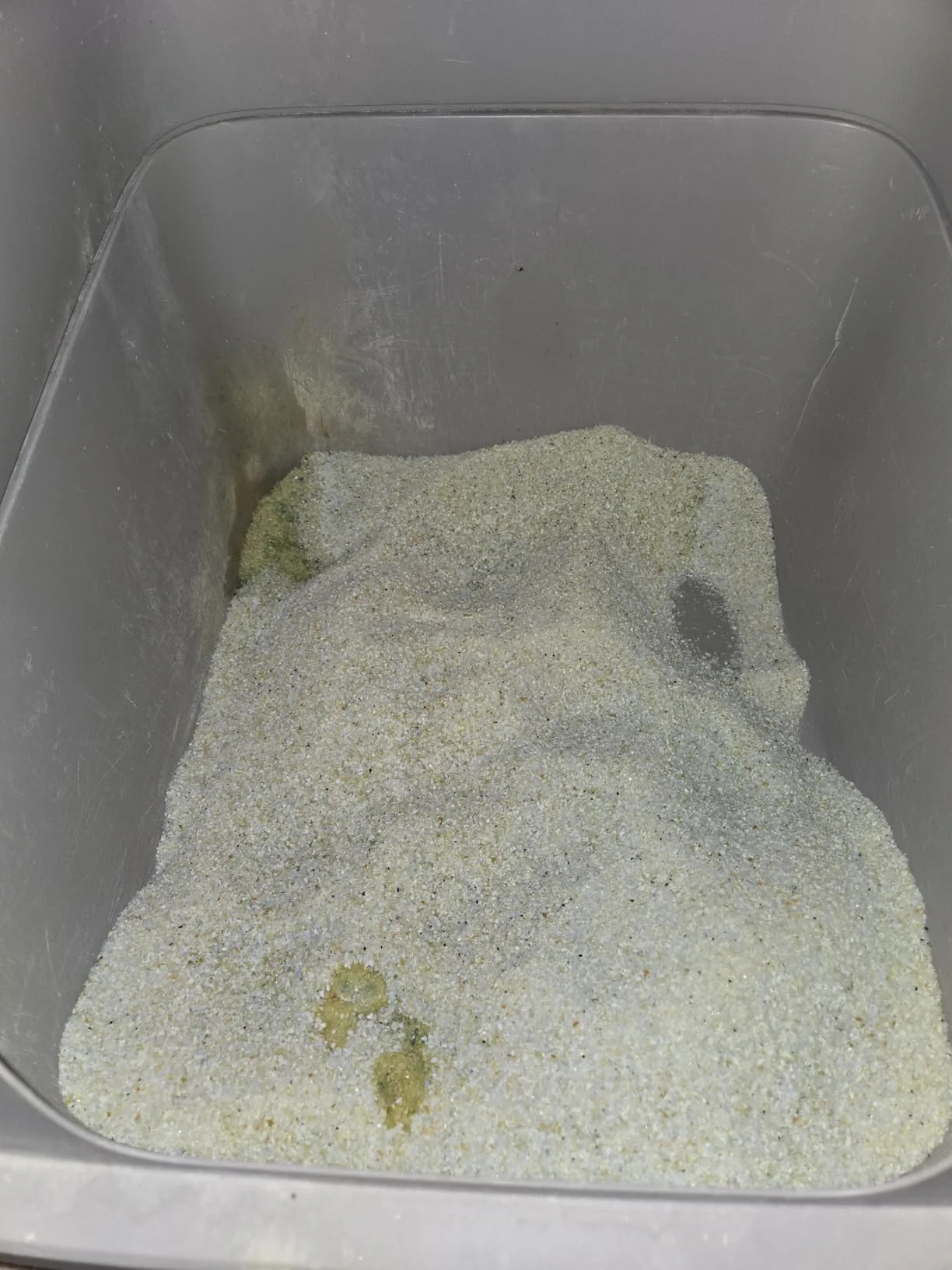
One reported case, tracked as PGH-AUDIT-E3MA, involved sharp-feeling crystals that a cat appeared to find painful underfoot, with the owner comparing the sensation to stepping on Legos. The cat eventually avoided the box and urinated elsewhere. The same case also described hardened residue forming at the bottom after urine collected there.
Another reported case, PGH-AUDIT-WDFY, performed poorly with a high-urine-output cat: within about three days, the litter had become saturated and muddy. Other reports tied this product experience to crystals sticking around a male cat's genital area, prompting repeated licking.
Then there is the color-changing promise. PGH-AUDIT-WDFY was associated with confusing color changes in humid conditions, creating concern that a signal could be mistaken for a urinary problem—or fail to appear when one actually exists. A changing color is not the same thing as a veterinary diagnosis.
💎 Feel the Crystals Before the Next Box Change
Take a few clean granules between your fingers and examine their shape and edges. Then look at the bottom of the box when the litter has been used: if moisture is collecting underneath rather than being removed with the waste, the "low-maintenance" setup is already becoming a very different proposition.
The cited material explains that crystal litter can lose its ability to take up more moisture once its available capacity is used. It also links the harder, rougher feel of some crystals with discomfort for sensitive paws.
That helps connect the reported experiences without turning the color indicator into a medical answer. A cat avoiding the box because the granules hurt, while urine is quietly collecting underneath, creates two separate problems at once.
For cats already being monitored for urinary problems, the reported false-warning and missed-warning experiences deserve particular caution. A color change can be useful as an observation, but it should not replace veterinary assessment when a cat shows urinary symptoms.
The experiences tied to PGH-AUDIT-E3MA and PGH-AUDIT-WDFY suggest that crystal litter should be judged by what happens after repeated use—not simply by how clean the crystals look when the bag is first opened.
Can Fragranced Litter and Scent Boosters Weaken Clumping and Repel Cats?
A litter box can smell "fresh" to a person and still smell completely wrong to a cat. Strong perfume does not necessarily mean better odor control, and the reported experiences become especially messy when a scent booster also changes what happens to the litter after it gets wet.
One reported case tracked as PGH-AUDIT-D3R48 described a deodorizing crystal additive turning into a gray, sticky gel after contact with moisture. The same report linked the scented product with cats developing irritated skin and refusing the box. Another case, PGH-AUDIT-SKTG, was associated with a strong artificial scent that triggered repeated sneezing in both cats and people.
There is a second problem hiding underneath the perfume: if the added product turns the litter into paste, odor control becomes a cleanup problem instead. A box that should produce scoopable waste can end up holding wet residue that spreads across the pan.
👃 Smell the Fresh Litter Before Adding Anything
Open the bag and smell the litter before adding a deodorizer or scent booster. Then add only the product you normally use and watch what happens when it contacts damp litter; if the material quickly becomes sticky, gray, or paste-like, you have a much more useful warning than the fragrance on the label.
The cited research notes that cats can react negatively to strong aromas, and Horwitz's 1997 study found scented litter type was associated with differences between cats with and without persistent house-soiling problems.
The odor-control evidence also points toward a different approach: the cited material describes activated carbon and baking soda as ways to address odor without relying entirely on a heavy masking scent. That fits the broader finding that litter-box odors and strong perfumes can influence how willing cats are to use the box.
The reported PGH-AUDIT-D3R48 experience therefore matters for two separate reasons: the scent may be unwelcome, while the wet additive may also leave the litter harder to manage.
For cats already showing litter-box avoidance or sensitivity to strong smells, a neutral-smelling box with predictable cleanup is the more sensible baseline. The reported cases do not prove that every fragranced litter will behave this way, but they are enough to justify caution when the perfume is doing more work than the litter itself.
Pine Pellet Breakdown: What Happens When Compressed Pellets Turn to Sawdust
Pine pellets are supposed to make cleanup easier: dry pieces go into the box, moisture breaks them down, and the waste can be separated. But when the pellets arrive already crumbling, the cleanup can start before the cat even uses the box.
One reported case tracked as PGH-AUDIT-K8ZM arrived with roughly a quarter of the bag already reduced to powder and crumbs. Once wet, the material reportedly turned into a paste that was difficult to remove, leaving owners with something closer to a pile of wet sawdust than usable pellets.
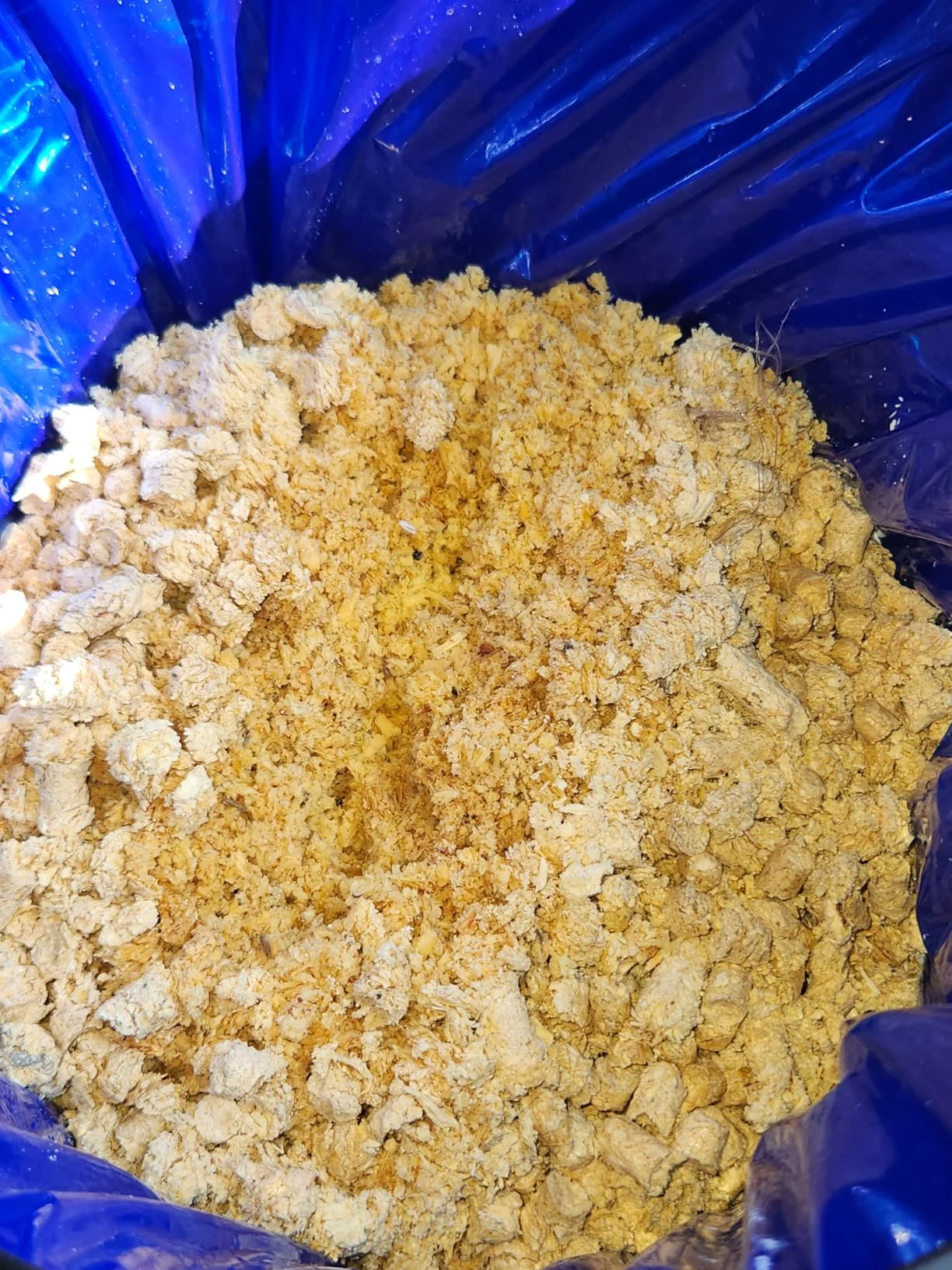
The more troubling part was what some owners reported finding mixed into the bag. The same product record described mouse droppings, dried peppers, and pieces resembling peanuts or sunflower seeds, along with a strong odor compared with fuel or bleach. For households using wood-based bedding around small animals, that is a very different problem from ordinary pellet breakdown.
🪵 Break One Pellet Before You Fill the Box
Take a dry pellet from the bag and press it gently between your fingers. If it crumbles immediately into powder instead of holding its shape, then open the bag and look through the remaining pellets for excessive crumbs, discoloration, or anything that clearly does not belong.
The intended pellet-to-sawdust transition is not automatically a defect; moisture is supposed to break these pellets apart. The problem is when a large portion has already disintegrated before use, or when the resulting material becomes difficult to separate and clean.
With PGH-AUDIT-K8ZM, the reported combination of premature crumbling, strong chemical-like odor, and foreign material makes simple "natural litter" expectations harder to accept. A product marketed as an easy plant-based option should not require owners to inspect a bag for obvious contamination before deciding whether it is usable.
If the pellets arrive mostly intact, clean, and consistent, their breakdown can be managed as part of the normal routine. When the bag already looks like sawdust and contains unexplained debris, though, the claimed convenience starts looking considerably less convincing.
CONCLUSION
The most useful way to judge litter is to watch what happens after opening the bag, pouring it, and cleaning a used box. A low-dust claim is less useful if a visible cloud appears as soon as the litter is poured. A clumping claim matters less if fresh waste breaks apart or sticks to the pan. Crystal litter should be checked for rough pieces and for moisture collecting at the bottom after repeated use. Scented products deserve attention not only for their smell, but also for how the added material behaves when wet.
Pine pellets are expected to break into sawdust after absorbing moisture, but a bag that is already mostly powder is a different situation. Look for intact, clean, consistent material before filling the box.
The reported cases do not show that every product of these types will have the same problems. They do show why careful buyers should judge actual handling, cleanup, comfort, and consistency rather than relying only on packaging claims.
THE ULTIMATE BUYING VERDICT
| Verdict | Key Consideration | Recommendation |
|---|---|---|
| 🔴 Significant concerns | Heavy dust, clumps that smear or harden, painful-feeling crystals, sticky scented additives, or pine pellets arriving largely broken down | Be cautious with products showing these problems during normal use, especially when the issue affects the cat's comfort or makes cleanup difficult |
| 🟡 Acceptable with limitations | Some litter may perform reasonably well but require closer attention to dust, moisture, scent, crystal condition, or pellet breakdown | Check a small amount before committing to a full routine and watch how the material behaves after actual use |
| 🟢 Meets long-term expectations | Low-dust handling, consistent clumping, comfortable granules, predictable moisture control, neutral and manageable odor, and clean intact pellets | Look for litter that remains consistent from the bag through repeated use and makes routine box cleaning straightforward |