A litter box can seem like a simple purchase until your cat starts missing the pan, jumping over the mat, or refusing to use an automatic cleaner. The problems described in these reports often come down to details that are easy to miss on a product page: usable floor space, moving parts, surface finish, tray strength, and whether a cat will actually walk across the mat. A box marked "XL" may still be too small inside, while a stainless-steel label does not guarantee good edges or a rust-free base. Disposable trays can also become a problem when they begin leaking much sooner than expected. These examples show why the advertised feature is only the starting point. Before buying, it helps to look at the parts your cat and your home will use every day, not just the size or convenience claims printed in the listing.
CONSUMER EVIDENCE OVERVIEW
| Product Area | Common Problems | Why It Matters |
|---|---|---|
| Litter box size and materials | Usable space may be much smaller than advertised; plastic can scratch or trap residue; metal may rust or have rough edges. | A cat may struggle to turn or step comfortably, while cleaning can become harder and residue can remain behind. |
| Automatic boxes and refill trays | Wet litter can jam moving parts; dust may affect sensors; trays may warp or leak sooner than expected. | Poor sensor response can affect safe operation, while leaking trays can leave urine on the floor and increase cleanup. |
| Litter mats | Cats may avoid hard surfaces; mats may slide, tear, crack, or let litter fall through large holes. | A mat that the cat avoids or that moves out of place cannot reliably contain tracked litter. |
How to Measure a Litter Box to Prevent Large Cats from Missing the Pan
A litter box can look "XL" on the listing and still leave a big cat with barely enough room to turn. That is when the mess starts: the cat backs into a corner, steps in waste, or simply decides the floor beside the box is a better bathroom. Reports tied to one undersized pan describe usable space of just 11.5" × 7", with 10–21 lb cats unable to turn comfortably.
One useful way to catch this before buying is to ignore the words Large and Jumbo and measure the actual inside space. PGH-AUDIT-9CXQ refers to the reported undersized pan, while PGH-AUDIT-7PYC identifies another XL box whose advertised 8-inch height was reported as only 6 inches at the stainless base. Large and long cats were repeatedly described as stepping into waste or urinating over the sides, with one owner comparing the size to an "airplane toilet."
🐈 Measure the Cat, Then Measure the Pan
Take your cat's body length from the nose to the base of the tail, leaving the tail out. For the box, aim for at least 1.5× that length, with width at least equal to the cat's body length. A size-preference study cited in the supplied research found that 82% of cats consistently selected the larger boxes meeting the 1.5× length guideline.
That number matters because using the box is not just about fitting the cat inside. Cats need enough room to turn, dig, posture, and choose where to eliminate without pressing against the walls. When the usable floor is much smaller than the advertised outside dimensions, a "large" label does not rescue the design.
So if your cat is pooping beside the pan or spraying over its edge, measure before blaming the cat. The current reports around these particular products make the advertised size worth treating cautiously, especially for long-bodied cats and multi-cat homes.
Automatic Litter Box Safety: Sensor Response Times and Anti-Pinch Protections
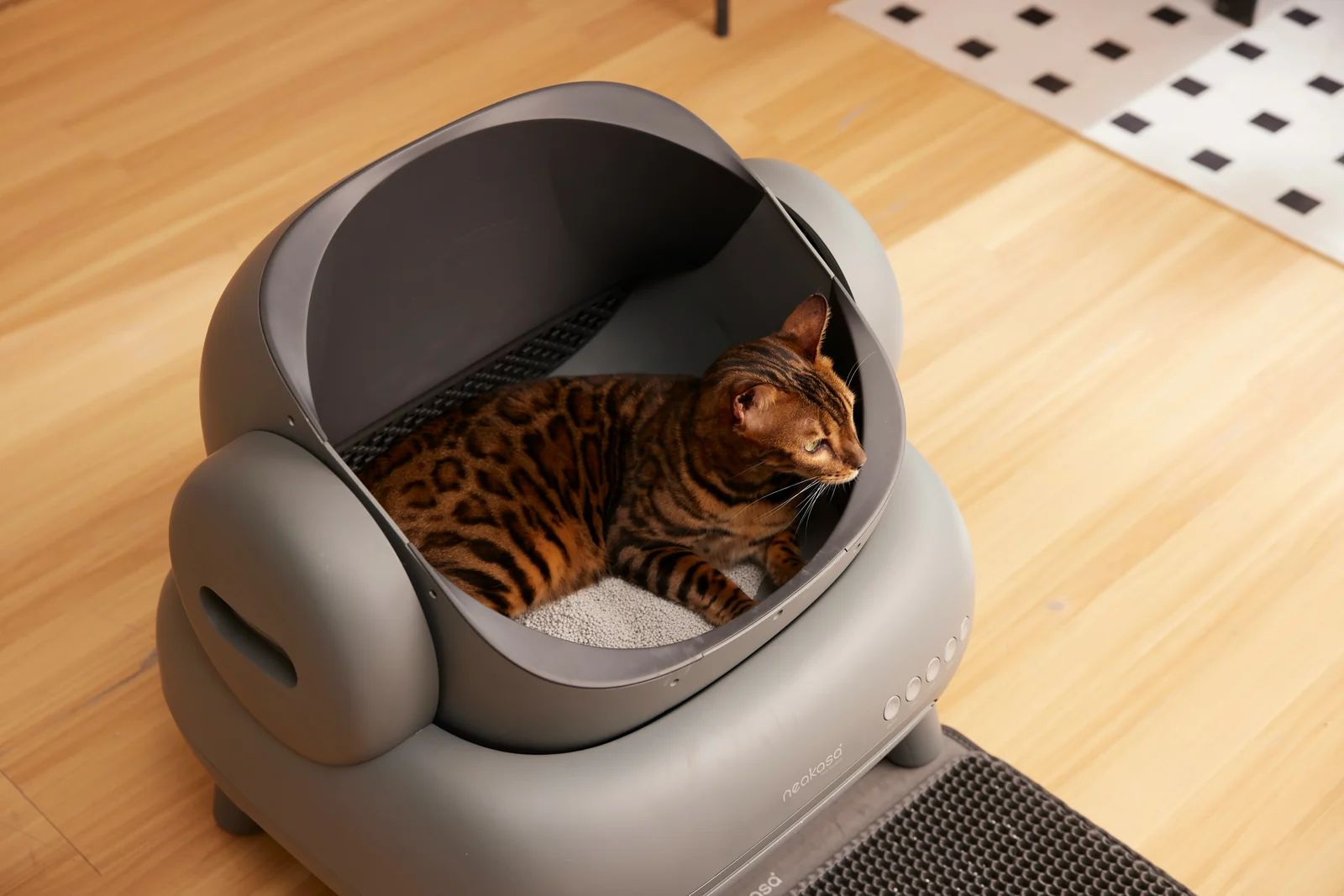
An automatic litter box is supposed to remove the chore, not turn midnight cleanup into a rescue mission. When a cat enters, the machine has one basic job: know that the cat is there, stop when something goes wrong, and leave enough room for the cat to get out.
The trouble starts when litter becomes wet sludge or hard clumps inside the moving parts. The supplied product reports describe litter buildup causing mechanisms to jam, while dust accumulation around sensors can interfere with detection. Once the machine starts behaving unpredictably, a cat may become frightened and refuse to use it.
There is a more concrete way to judge the marketing than simply looking for the word "smart." The supplied safety criteria specify a minimum internal clearance of 12 × 12 inches for a standard cat, along with a stop response when resistance exceeds 5 N. The same source gives a 0.8-second maximum motion-detection delay, intended to allow the cat to leave before the cleaning cycle begins.
🛑 Put the Safety Claim to the Test
Before buying, look for the actual safety behavior rather than a vague promise of intelligent sensing. Check whether the product documentation identifies a physical stop when resistance is detected and whether the enclosure leaves at least the stated clearance.
A prototype described in the supplied research used IR and PIR sensors with timed operation and reported a 94% waste-separation accuracy across more than 200 simulated visits. That is useful context, but it is not the same as proving that every commercial machine using the word "smart" has equivalent protection.
For a cat owner, the practical takeaway is simple: sensor marketing is not a substitute for a physical escape path and a clearly defined stop response. If those protections are vague or impossible to verify, this is one feature where a few extra minutes of scrutiny can matter far more than another convenience claim.
Stainless Steel vs. Plastic Litter Boxes: Odor Absorption and Scratch Resistance
A litter box can look spotless on day one and become a smell trap months later. Plastic can develop scratches and molded recesses that hold onto wet litter and residue, while a metal box can have its own problems if the finish or edges are poorly made.
One reported plastic pan measured only 11.5" × 7" inside and also had molded-in notches where wet litter and feces became difficult to remove. Users reported newer versions cracking after only a few cleanings, turning routine lifting into another reason to replace the box.
The stainless option is not automatically innocent, either. Reports for PGH-AUDIT-7PYC describe rust spots and small holes appearing in the bottom within 1–6 months, along with sharp, unfinished edges that cut users' fingers. The same reports also describe litter sticking to the bottom despite the stainless-steel claim.
🔍 Run Your Fingers Around the Pan Before You Buy
Look closely at the inside corners, seams, edges, and any molded grooves. If your scoop can catch on a ledge or your finger can feel a rough edge, that detail matters because those areas are where cleaning becomes awkward and residue can remain behind.
The supplied research points to the broader advantage of a non-porous, durable surface: such materials can reduce the places where residue remains attached and can better withstand repeated cleaning. It also gives a 15-inch minimum side-width reference from the cited feline-medicine literature.
That does not mean every stainless-steel box is better than every plastic one. The reported failures show why the actual finish, edges, shape, and construction matter more than simply seeing "stainless steel" in a product title. For the specific consumer evidence cases represented by these reports, buyers have reason to examine those details carefully rather than treating the material label as a guarantee.
Why Disposable Refill Trays Can Leak and Warp Sooner Than Expected
A disposable tray is supposed to make an automatic litter box easier: drop in a fresh one, let the machine handle the mess, and move on. But when the tray starts leaking after only a few days, the "hands-off" convenience quickly becomes floor cleanup by hand.
Reports tied to PGH-AUDIT-F10A describe a major change in tray performance. Users said trays that once lasted roughly 2–3 weeks began leaking urine through the bottom in only 5–7 days, leaving puddles underneath and forcing people to add rubber mats or tape just to contain the mess.
For older owners, that failure can be especially frustrating. The reported experience includes users in their 70s and 80s who depended on the system to reduce physical cleaning, only to end up wiping or scraping urine from the floor when the tray failed. A disposable insert that requires emergency floor protection is not exactly living up to the promise of low-maintenance cleanup.
🧻 Flip the Empty Tray Over Before You Trust It
Before installing a new refill, turn it over and inspect the bottom. Look for a thin, flexible base, weak corners, warped sections, or any area where the lining does not appear firmly attached.
Then compare an old tray with a new one if you still have both. The reported complaints around this product include reduced material volume, thinner moisture protection, and a much shorter usable life, with some users saying the newer trays lasted only a fraction of the advertised period.
The important distinction is simple: a refill tray does not fail only when it visibly collapses. Once urine reaches the floor, the disposable tray has already failed at its most basic job. For the particular reports represented by this case, buyers should treat unusually short tray life and repeated bottom leakage as reasons to be cautious about ongoing refill costs and floor protection.
What Makes Cats Jump Over a Trapping Mat Instead of Walking on It
A litter mat only works when a cat actually walks across it. If the surface feels hard or unpleasant under the paws, some cats simply jump over the mat, drag it aside, or avoid it completely—and the litter ends up traveling farther through the house instead of staying contained.
That is the problem reported with PGH-AUDIT-HJ6V. Users described a mat with holes that were too large and a surface that cats avoided stepping on, while the lightweight design could slide across hard floors. Other complaints included soft material being scratched or chewed apart within days or weeks, leaving the mat less useful with active cats.
The frustrating part is that a mat can look impressive beside the litter box while doing almost nothing in daily use. A cat that leaps from the box to the floor has effectively turned the mat into a decorative landing strip.
🐾 Watch Where Your Cat Actually Steps
Put the mat in its normal position and watch the next few trips to the litter box. Does your cat walk across the surface, step around it, or jump completely over it? If the cat repeatedly avoids the mat, a larger mat will not necessarily solve the underlying problem.
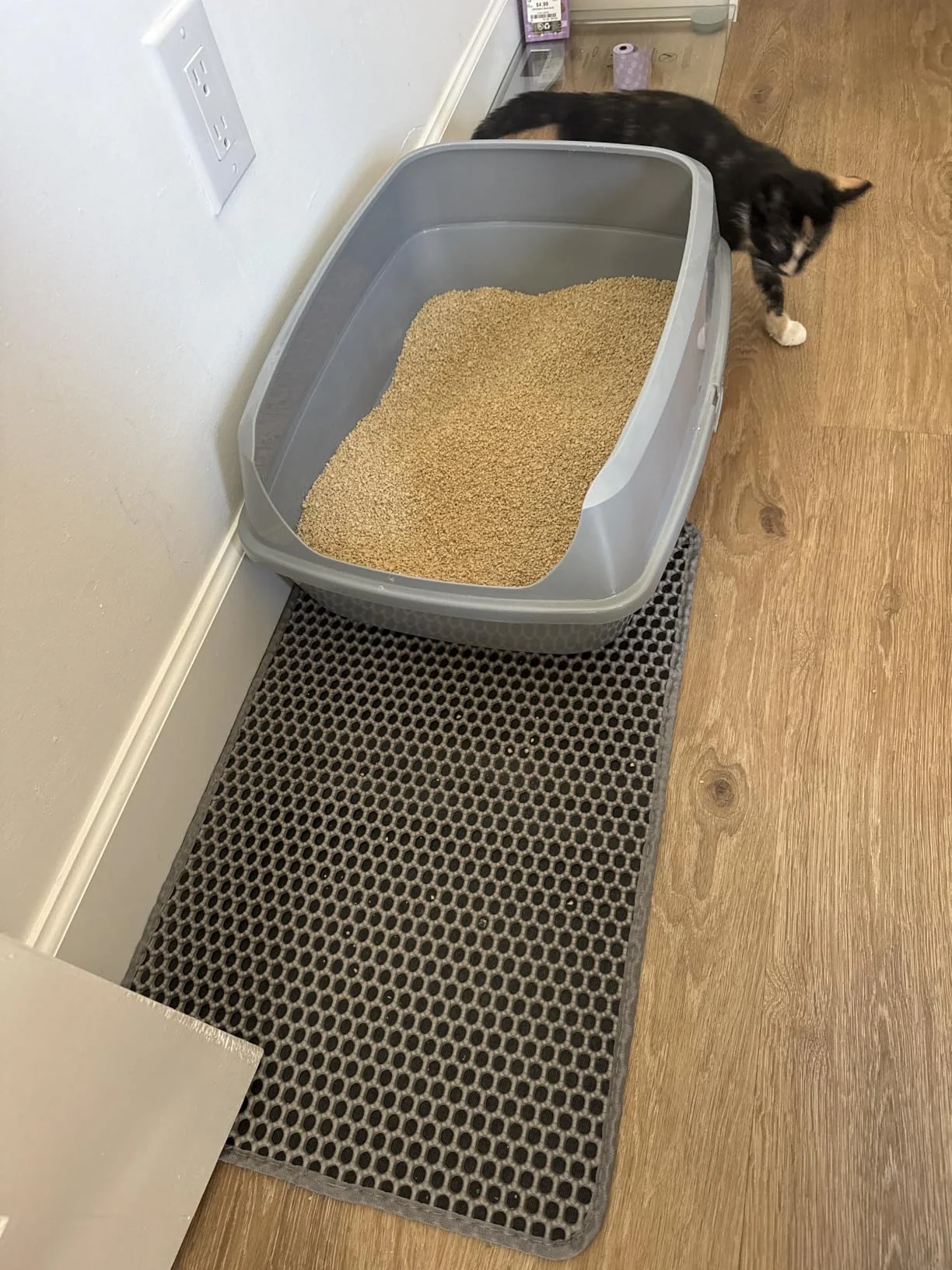
Also push the mat lightly across the floor with one hand. If it slides easily on tile or hardwood, the cat can shift it farther during ordinary use, leaving the area around the box exposed.
For this particular reported product, users also described holes that allowed litter to fall through rather than staying captured, along with material that could crack, tear, or break during use.
A useful litter mat therefore needs to be comfortable enough that the cat willingly crosses it and stable enough to stay where you put it. When the current reports show cats avoiding the surface and the mat moving underneath them, the product is not solving the tracking problem—it is simply moving the problem somewhere else.
CONCLUSION
The safest approach is to judge a litter product by the space, surfaces, and parts your cat will actually use. Measure the inside of the pan instead of relying on words such as "Large" or "Jumbo," especially if your cat is long-bodied or weighs more than a typical cat. For automatic boxes, look for clearly described stopping behavior, enough internal clearance, and a physical escape path rather than relying on the word "smart." Check corners, seams, grooves, and edges on any pan, because these details affect cleaning and everyday handling. Refill trays deserve the same attention: inspect the bottom before use and watch for early leaks or changes in tray quality. Finally, observe whether your cat willingly walks across a litter mat and whether the mat stays in place. These simple checks can reveal problems that a product listing may not make obvious.
THE ULTIMATE BUYING VERDICT
| Verdict | Key Consideration | Recommendation |
|---|---|---|
| 🔴 Significant concerns | Reports include undersized usable space, early tray leakage, rust and sharp edges, automatic mechanisms affected by litter buildup, and mats that cats avoid or that move easily. | Be cautious when these problems appear in the specific product or consumer evidence case you are considering, especially if they affect daily cleaning or your cat's ability to use the product comfortably. |
| 🟡 Acceptable with limitations | Some products may work when their actual dimensions, surfaces, moving parts, trays, and mats match the needs of the cat and household, but labels alone do not confirm this. | Measure the usable space, inspect construction, check safety details, and monitor early use so limitations are noticed before they become repeated cleanup problems. |
| 🟢 Meets long-term expectations | The desirable qualities supported by the reports include adequate usable space, clear safety stopping behavior, durable and easy-to-clean surfaces, dependable trays, and mats that cats willingly cross and that stay in place. | Look for these practical qualities in the actual product rather than choosing based only on size labels, material names, convenience claims, or other marketing terms. |