You charge an automatic cat toy overnight, set it down, and expect an easy play session. Instead, the toy may stop after a few minutes, make a strange noise, or leave your cat hiding under the furniture. These problems are especially frustrating because the whole point of a smart toy is to make daily play easier.
The reported cases point to several practical warning signs. Some rechargeable toys lasted only 2–3 minutes after charging, while their detachable tails came loose within about two hours. An inexpensive laser pointer reportedly stopped working after only a few uses while becoming unusually warm and producing a chemical-like smell. Other automatic toys frightened cats so badly that they avoided them for weeks.
A better choice is not simply the toy with the most features or fastest movement. Buyers should pay attention to actual play time, attachment strength, unusual heat or odor, noise, and whether the movement gives a cat a reason to chase rather than retreat.
Short Runtime and Charging Failures: Common Issues in Smart Cat Toys
A smart cat toy can look like the perfect hands-off solution—until it spends all night charging and wakes up with nothing to show for it. In the reported cases, users described toys that stayed unresponsive after extended charging, while others managed only 2–3 minutes of play before the battery gave out.
One reported case, PGH-AUDIT-5KHM, described a toy that failed to charge properly and lasted only a few minutes when it did run. Its detachable tails were also pulled apart within about two hours. A second case, PGH-AUDIT-VS14, showed a similar pattern: charging failure, very short play time, and tails coming off within two hours.
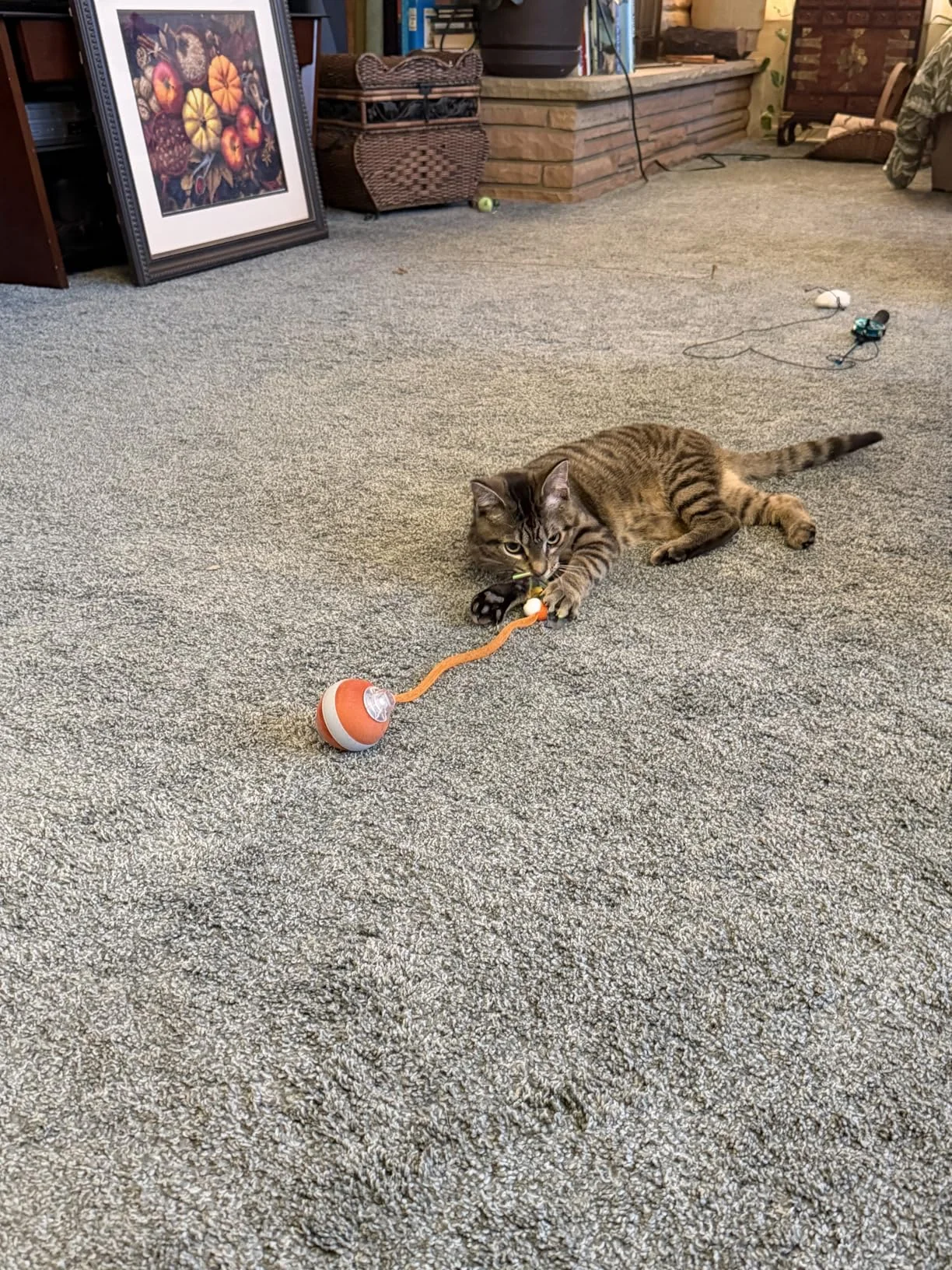
That creates a frustrating two-for-one failure. The electronic toy stops before the cat is finished playing, while the loose attachment may fail long before the owner expects to replace anything. What was supposed to provide convenient interactive play can turn into a short-lived gadget and another item headed for the trash.
🔋 Watch the Runtime After Charging
Charge the toy exactly as instructed, then start a timer when it begins moving. Do not judge it by whether the indicator says "full." Watch how long it actually keeps moving, and gently tug each external attachment afterward to see whether anything has already loosened.
The basic expectation is straightforward: a rechargeable interactive toy needs to keep operating through repeated play rather than collapsing after a few minutes. The moving attachments also need to stay together during ordinary interaction instead of becoming the first thing that fails. The supplied safety material frames this around toys being able to handle repeated pulling without parts separating.
So when a product is advertised as a long-running smart cat toy, a full charge followed by only a couple of minutes of play is a meaningful warning sign—not merely an inconvenience. The reported failures here suggest that these particular product cases deserve caution, especially for buyers expecting reliable daily interactive play.
What to Do When Inexpensive Cat Laser Pointers Overheat and Emit Odors
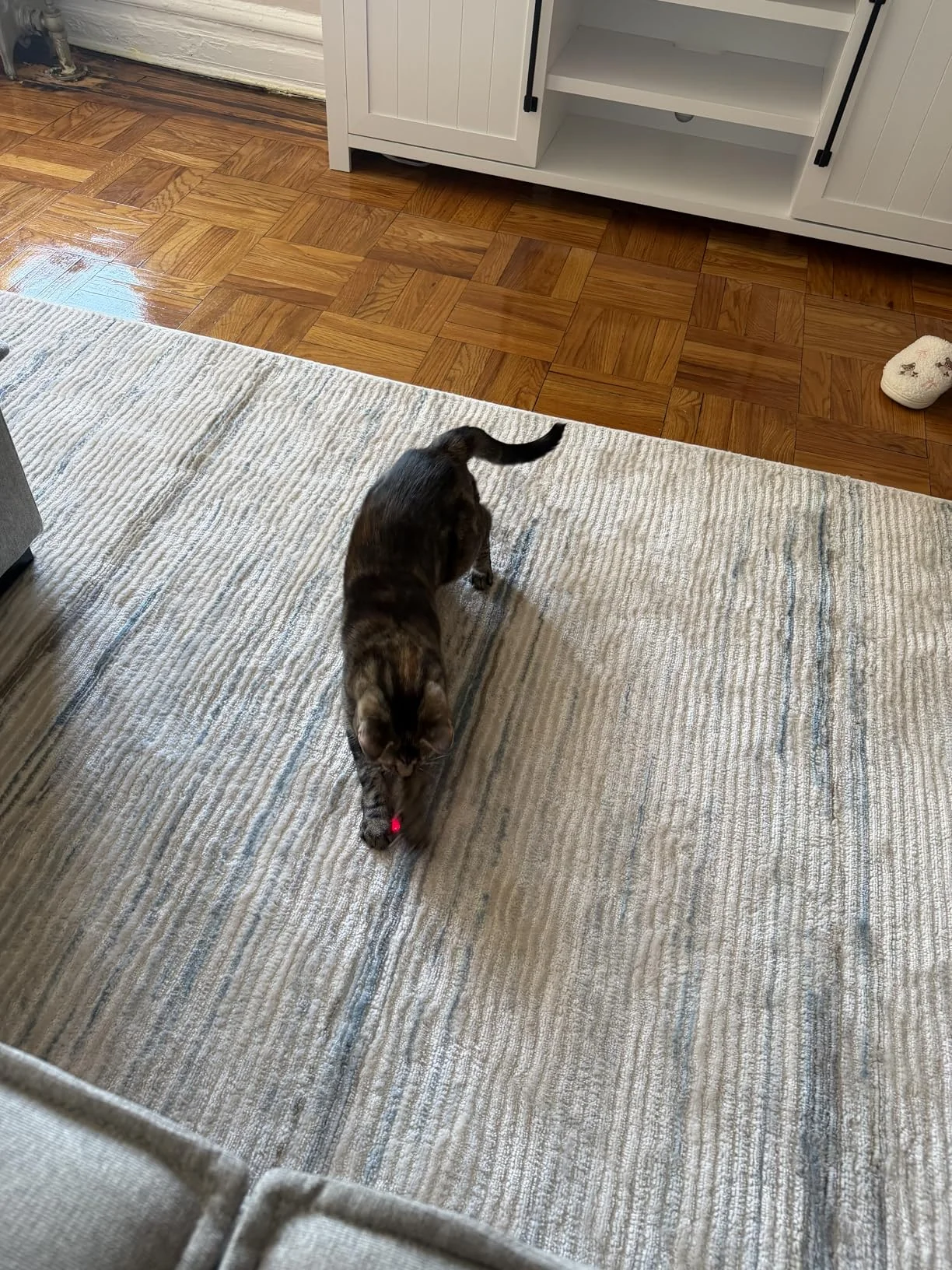
A cheap cat laser toy should not become hot, noisy, and smelly within seconds of use. Yet one reported case involved a pointer that failed after roughly 20 seconds to three uses, with users also noticing unusual warming, noise, and a chemical-like smell during operation.
That combination deserves more attention than a simple dead laser. If the housing is becoming noticeably hot while an unfamiliar odor appears, stop using it rather than waiting to see whether the smell disappears. A laser pointer that already stops working after a handful of uses is not worth pushing through another cycle.
One reported example, PGH-AUDIT-B4FM, was expected to provide a usable red laser but instead failed almost immediately. Reports also described abnormal warmth and an aerosol-like or chemical smell while it was running.
The practical problem is especially frustrating because the advertised feature may disappear before the toy even becomes useful. Instead of giving your cat a consistent moving light to chase, you can end up with a warm little gadget that produces a smell and then quits.
🔥 Feel the Housing Before Another Run
After turning a pointer on briefly, pay attention to the casing without placing it against your cat or holding it close to the face. If it becomes unusually hot, makes an unfamiliar noise, or produces a sharp chemical smell, switch it off and stop using that unit.
The reported cases describe the failed units as showing abnormal warming and odor alongside premature laser failure. That does not establish the exact internal cause, so there is no reason to assume every hot pointer has the same defect. What it does establish is a clear practical signal: heat and unfamiliar odor appearing together during a toy's brief operation are enough reason to retire that particular unit.
For buyers comparing inexpensive cat laser pointers, reliability matters just as much as the advertised light modes. In these reported cases, the observed combination of early failure, heat, and odor makes that product run one to approach cautiously.
Why Unpredictable Motor Noises in Automatic Toys Can Scare Timid Cats
An automatic toy can be marketed as entertainment and still become something a timid cat wants nothing to do with. In the reported cases, multiple indoor cats became frightened by the toy, with some hiding for weeks instead of approaching it.
The problem was not simply that the cats ignored a boring toy. Users described cats becoming scared when the device operated, while the toy itself was also reported to break, fail to start, or behave unreliably during use. One account involved three-year-old indoor cats that remained too fearful to engage, despite having previously lived with a much bolder cat.
One reported case, PGH-AUDIT-5KHM, was associated with cats hiding for weeks after exposure to the moving toy. Another, PGH-AUDIT-VS14, carried similar reports of cats becoming frightened and avoiding the device.
That makes unpredictable movement and noise more than a minor annoyance. If the toy suddenly rattles, changes direction aggressively, or behaves in a way the cat cannot predict, the intended play session can turn into an object the cat actively avoids.
👀 Watch Where Your Cat Goes When It Starts
Run the toy briefly while your cat has an easy escape route. Do not call the cat toward it or force an introduction. Instead, watch whether the cat approaches, freezes, retreats, or disappears somewhere it normally does not hide.
If the reaction is immediate retreat or prolonged avoidance, put the toy away rather than repeatedly exposing the cat in an attempt to make it "get used to it." The reported cases show that some cats did not simply lose interest—they stayed frightened and hid for extended periods.
For timid or easily startled cats, an automatic toy needs to be something they can approach voluntarily, not a noisy object that suddenly takes over the room. In these reported cases, the behavioral downside was substantial enough to outweigh the convenience of automated play.
Choosing the Right Speed and Movement Patterns for Interactive Indoor Toys
A good interactive cat toy should not simply zip around the room at random. The supplied research describes prey-like movement as the useful middle ground: fast enough to encourage pursuit, but unpredictable enough to keep the cat following what happens next.
Pyari et al. (2021) reported that movement resembling prey escape—around 0.5–1.2 m/s, with direction changes every 2–4 seconds—prompted stalking behavior in 87% of the cats studied. That gives buyers a more useful way to think about motion than simply choosing the fastest automated toy.
The distinction matters for best cat toys for bored cats because speed alone does not create meaningful play. A toy that repeatedly races in the same straight line can become background noise, while varied movement gives the cat something to track, chase, and anticipate.
For daily enrichment, the supplied evidence also points to at least 10 minutes of interactive play per day. Henning et al. (2022) reported a 47% lower incidence of stereotypic behaviors among cats receiving that level of human-led interactive play compared with controls.
In practical terms, look for movement that changes direction rather than merely increasing speed. A useful automated pattern should give the cat opportunities to stalk and chase instead of turning the session into an endless sprint.
The goal is not maximum speed. It is movement that feels enough like something escaping to make the cat want to follow it.
CONCLUSION
A careful buyer should judge an interactive cat toy by what happens during real use, not just by its advertised features. For rechargeable toys, charge the unit as directed and time the actual play period. A full-charge indicator does not tell you how long the toy will really keep moving. Check external attachments afterward to see whether anything has started to loosen.
For laser pointers, unusual warmth, noise, or a chemical-like smell is a practical reason to stop using the unit. The reported evidence does not establish one exact cause for every failure, so these signs should be treated as warning signals rather than proof of a specific defect.
For automatic toys, watch your cat's reaction from a safe distance. A toy should invite voluntary play rather than force an interaction. Movement that changes direction and resembles something escaping can be more useful than simply choosing the fastest toy. The better purchase is the one that remains dependable while giving your cat a reason to approach, follow, stalk, and chase.
THE ULTIMATE BUYING VERDICT
| Verdict | Key Consideration | Recommendation |
|---|---|---|
| 🔴 Significant concerns | Very short battery life, loose attachments, early laser failure, unusual heat or odor, or movement that causes prolonged fear | Avoid units showing these warning signs, especially when the toy is expected to provide regular daily play |
| 🟡 Acceptable with limitations | A toy may still be usable when its runtime is limited or its movement does not suit every cat | Test the actual play time and observe your cat's response before relying on it for regular enrichment |
| 🟢 Meets long-term expectations | Reliable repeated play, secure attachments, normal operation, and movement that encourages stalking and chasing | Look for toys that remain functional through repeated sessions and offer varied, prey-like movement rather than maximum speed alone |