A soft cat toy can look perfectly safe until your cat starts chewing, kicking, and pulling at it. Loose fur can come away in the mouth. A wand rod can snap during a hard tug. Even a small metal clasp can catch a claw when a cat twists to escape. Strings create another concern when they hang close to the mouth and become a favorite chewing spot.
These problems are easy to miss because the toy may look fine during a quick inspection. The real test starts when a cat uses it repeatedly and with more force than expected. A careful buyer should look beyond bright colors and claims of durability. Check how the surface holds together, how the rod feels, whether attachments leave open gaps, and how exposed strings are positioned. These simple checks can help separate a toy that only looks sturdy from one that is better suited to repeated play.
Why Cheap Cat Plush Toys Shed Fur and Create Immediate Choking Hazards
A plush cat toy can look harmless on the shelf, then turn into a completely different problem once your cat starts biting, kicking, and licking the fuzzy surface. Cats can pull loose fibers into their mouths during normal play, turning a soft toy into something that needs much closer supervision.
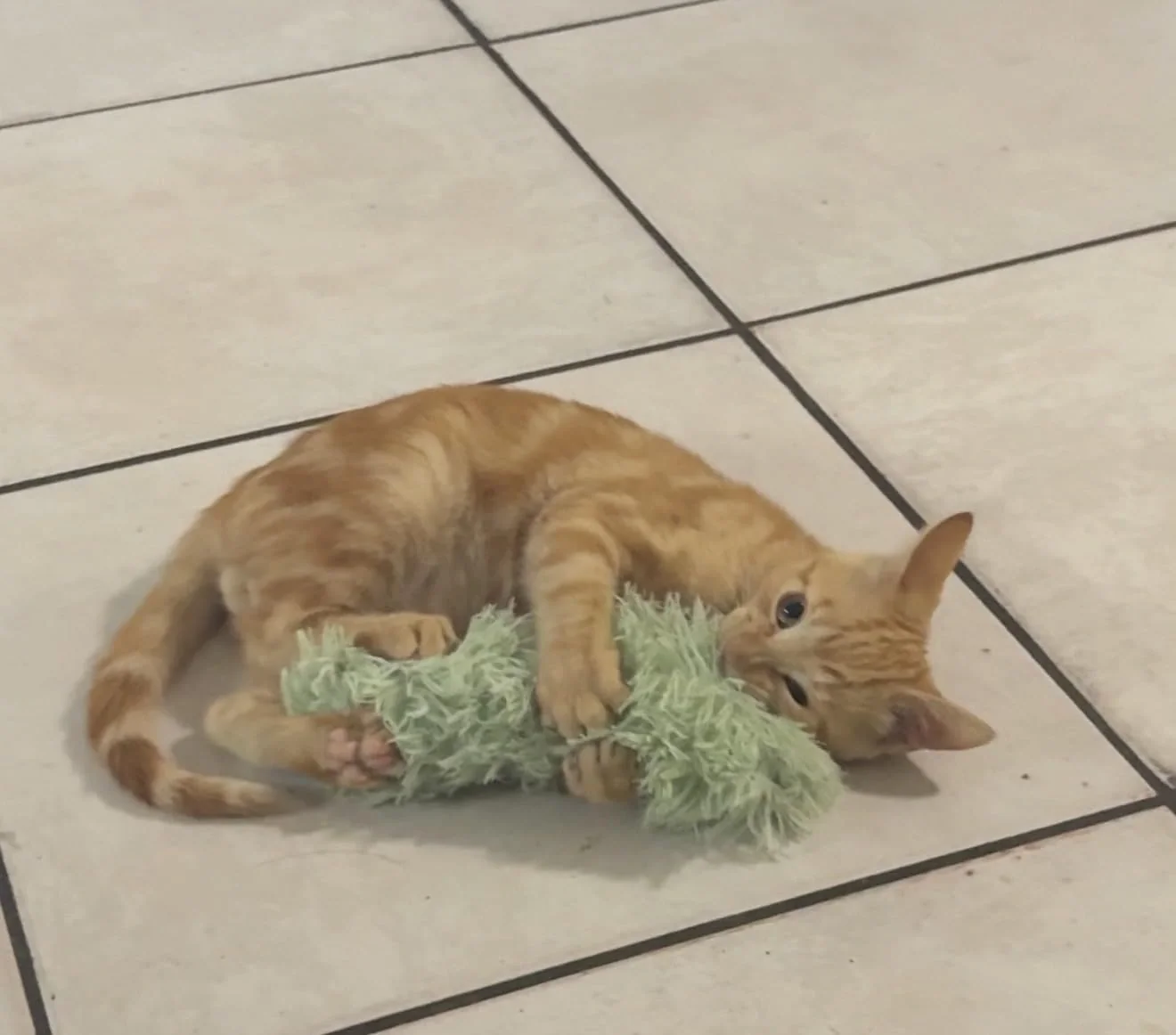
One reported case involved a cat developing a furball in its throat for the first time after chewing this type of toy. The owner had to remove the material manually with tweezers, while other reported experiences described immediate choking after the toy was chewed or kicked.
But the important detail is what happens before you ever see a problem: the surface starts coming apart in your cat's mouth. A toy marketed as durable may still shed when a cat repeatedly grabs it with its teeth and pulls against the fabric.
The case tied to the anonymized product reference PGH-AUDIT-G4DV is particularly useful here. The reported sequence was simple: bite and lick the toy, pull material loose, then deal with a wad of fur that had no business being in the cat's throat.
🧶 Pull the Fur Before Play
Take the plush toy between your fingers and gently tug several fuzzy areas, especially around seams, ears, tails, and corners. If fibers come away easily, or you can expose the underlying fabric with a few light pulls, don't assume your cat will treat those loose strands more gently than you just did.
The safety guidance supplied for this product category also flags loose pieces and small detachable material as concerns, with the referenced standard using a 1.25 cm small-part threshold and calling for toys to withstand repeated pulling without separating.
That doesn't mean every inexpensive plush toy will fail this way, but a shedding surface deserves a lower tolerance for risk, particularly for cats that chew their toys instead of merely batting them around. In this reported case, the combination of loose fur and aggressive chewing makes the advertised “durable” label worth treating cautiously.
Handling Splinter Risks When Telescopic Cat Wand Rods Snap During Play
A telescopic cat wand can fail in a particularly unpleasant way when a cat is pulling hard at the other end. Instead of simply becoming a broken toy, a brittle rod can leave tiny sharp fragments in your hand—or near your cat's mouth.
One reported product, anonymized as PGH-AUDIT-GGPT, snapped after roughly a week of use, with another report describing a break within only five minutes. The same reports described the rod leaving tiny fiberglass splinters in the user's hand, while the toy's attachments also created problems during vigorous play.
That changes the usual meaning of “durable.” A wand that bends, flexes, and survives repeated play is one thing; a rod that suddenly breaks into sharp fragments is another. The supplied safety guidance specifically cautions against brittle, exposed fiberglass in interactive toy rods because these toys are expected to handle repeated pulling, bending, and biting during play.
🖐️ Run Your Fingers Along the Rod
Before the next play session, slowly slide a fingertip along the entire rod and inspect it under good light. Stop using it if you feel rough spots, tiny splinters, cracks, or a section that suddenly feels different from the rest of the rod.
The reported failure is especially concerning because the damage was not limited to the toy itself: the broken rod reportedly left microscopic splinters across a user's palm. The same product reports also describe cats chewing toy components, so a rod that begins breaking apart deserves attention before the cat gets another chance to bite or carry it.
This does not establish that every telescopic cat wand using similar materials will fail, but the reported breakage pattern makes this particular case difficult to treat as a low-concern option. For cats that attack their wand toys aggressively, a rod that remains intact during ordinary pulling and bending is a much more sensible baseline than one that can suddenly fragment.
How Open Metal Carabiners and Clasps Can Trap and Cut Cat Claws
A wand attachment can seem like the least important part of the toy until a cat catches a claw in the wrong place. A small opening in a metal clasp can become a painful trap when a cat twists, kicks, and tries to pull free.
One reported case involving the anonymized product reference PGH-AUDIT-GGPT described a metal carabiner becoming deeply lodged between a cat's toe and nail bed during play. The cat struggled hard enough to bleed, and the owner reportedly had to remove the embedded clasp with pliers to avoid a possible surgical procedure.
But the problem isn't simply that metal is strong. The shape of the connection point matters when a moving paw meets a narrow gap. The supplied safety guidance calls for rounded, paw-safe connection designs and a connection line that can tolerate repeated wear and pulling rather than leaving a vulnerable opening exposed during play.
🐾 Open the Clasp and Look at the Gap
Before handing over the wand, open the attachment and inspect every exposed edge and narrow opening. Run a fingertip around the area and check whether a claw could slip into a gap and become caught when the clasp twists.
If the opening can catch a fingernail or snag fabric during a gentle pull, don't wait for a cat's paw to discover the problem first. A cat can react much faster and with considerably more force when it feels trapped.
The reported incident shows why this deserves attention even when the toy itself still works perfectly. A wand can remain fun and functional while its attachment point creates a completely separate injury risk during ordinary pouncing and kicking.
Not every metal clasp will produce this outcome, but the reported failure in this product makes an exposed, narrow connection point difficult to overlook. For cats that attack wand toys with their paws and claws, a rounded connection with a safer release design is the more reassuring setup.
Safety Guidelines for String Length and Tensile Strength on Kicker Toys
Cats naturally grab, bite, and pull at strings, which makes loose corded parts particularly easy to turn into a chewing target. For indoor cats, a cat kicker toy with an attached string should be judged by more than how entertaining it looks; the length and how securely it stays attached both matter.
The supplied safety guidance sets an 18 cm upper limit for loose strings, because longer corded pieces create a greater risk if a cat manages to swallow them. The same material specifies a 150 N benchmark for seams, intended to reduce the chance that an attachment suddenly separates when a cat bites or pulls hard.
That distinction is easy to miss when shopping for the best cat toys for indoor cats. A string can look perfectly fine during gentle play and still become a problem once a cat repeatedly grabs it with its teeth and yanks backward.
The practical rule is simple: keep exposed strings short, and avoid designs where a cat can easily bite directly through the connection point. A securely attached toy leaves fewer opportunities for a loose piece to become something the cat can swallow.
For kicker toys, also pay attention to where the string sits during play. If it hangs freely around the cat's mouth or paws, the cat can repeatedly attack the same section, increasing the chance that the cord becomes damaged or detached.
These limits are useful screening criteria rather than a guarantee that every toy is safe. When comparing cat toys for indoor cats, a shorter exposed cord and a connection designed to withstand repeated pulling are sensible features to prioritize—especially for cats that chew their toys rather than simply batting them around.
CONCLUSION
The safest approach is to inspect a cat toy before the first play session and continue checking it as your cat uses it. For plush toys, gently pull the fuzzy areas around seams, ears, tails, and corners. Loose fibers are a reason to be cautious, especially when your cat likes to chew rather than simply bat at the toy.
For telescopic wands, run a finger along the full rod and look for rough areas, cracks, splinters, or changes in the surface. For metal attachments, inspect every opening and edge to make sure a claw cannot easily become caught. With kicker toys, pay attention to exposed strings and how securely they are attached.
A careful buyer should also remember that a product looking intact today does not guarantee that it will stay that way. Repeated biting, pulling, and kicking can reveal weaknesses over time. Regular inspection and replacing a toy when it begins to shed, crack, splinter, snag, or loosen is a sensible part of safe play.
THE ULTIMATE BUYING VERDICT
| Verdict | Key Consideration | Recommendation |
|---|---|---|
| 🔴 Significant concerns | Loose plush fibers, brittle rods that can splinter, exposed clasp gaps that can catch claws, or poorly secured strings create the most important concerns. | Avoid toys showing these problems, particularly for cats that chew, pull, kick, or attack toys aggressively. |
| 🟡 Acceptable with limitations | Some toys may remain usable when they pass an initial inspection but still require regular checking during repeated play. | Use closer supervision and inspect the toy often, especially around seams, rods, attachment points, and exposed strings. |
| 🟢 Meets long-term expectations | Toys with firmly held surfaces, intact flexible rods, paw-safe connections, and short, securely attached exposed strings better match the supported safety priorities. | Look for these features and replace the toy when wear, loose material, cracks, splinters, snags, or loose attachments appear. |