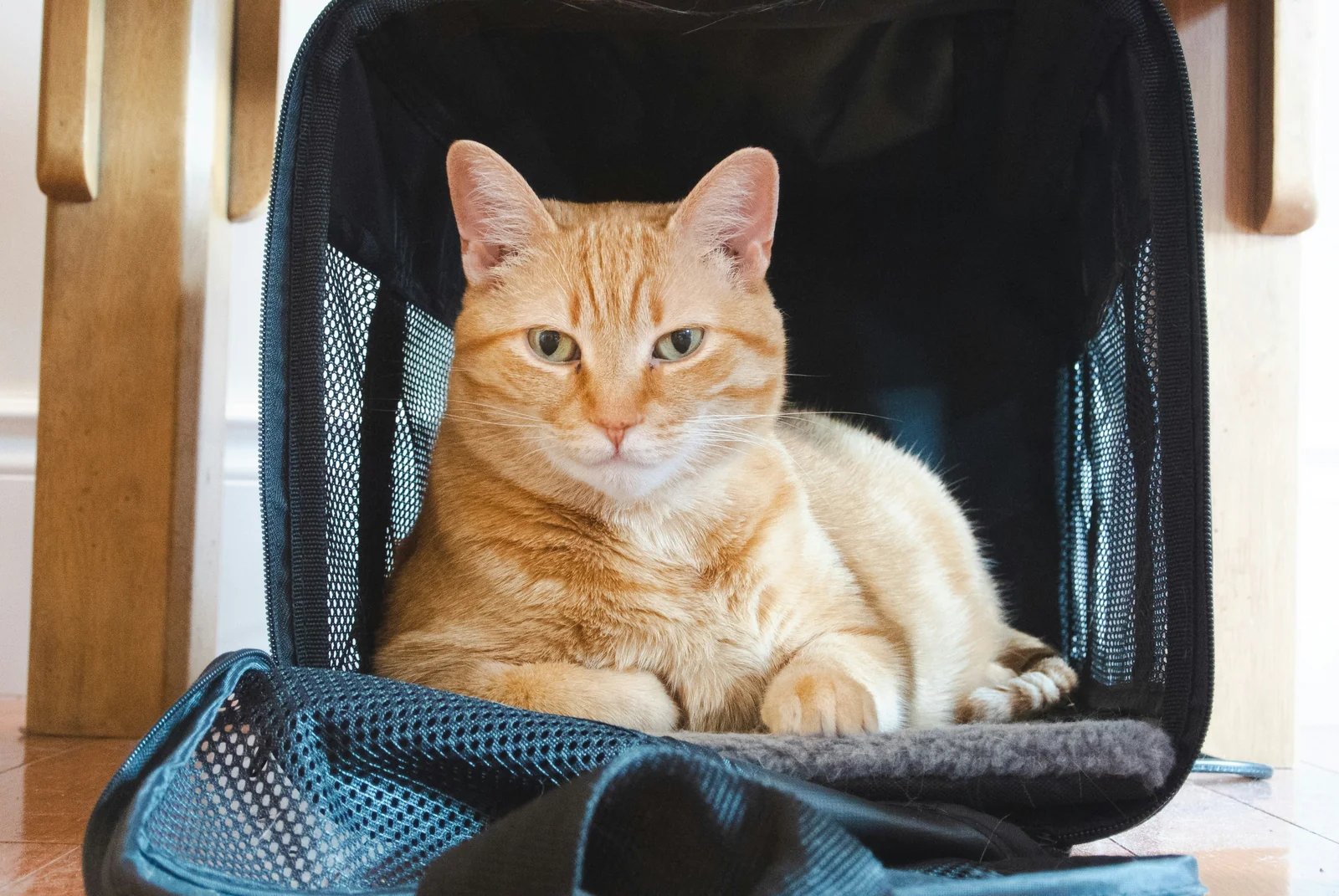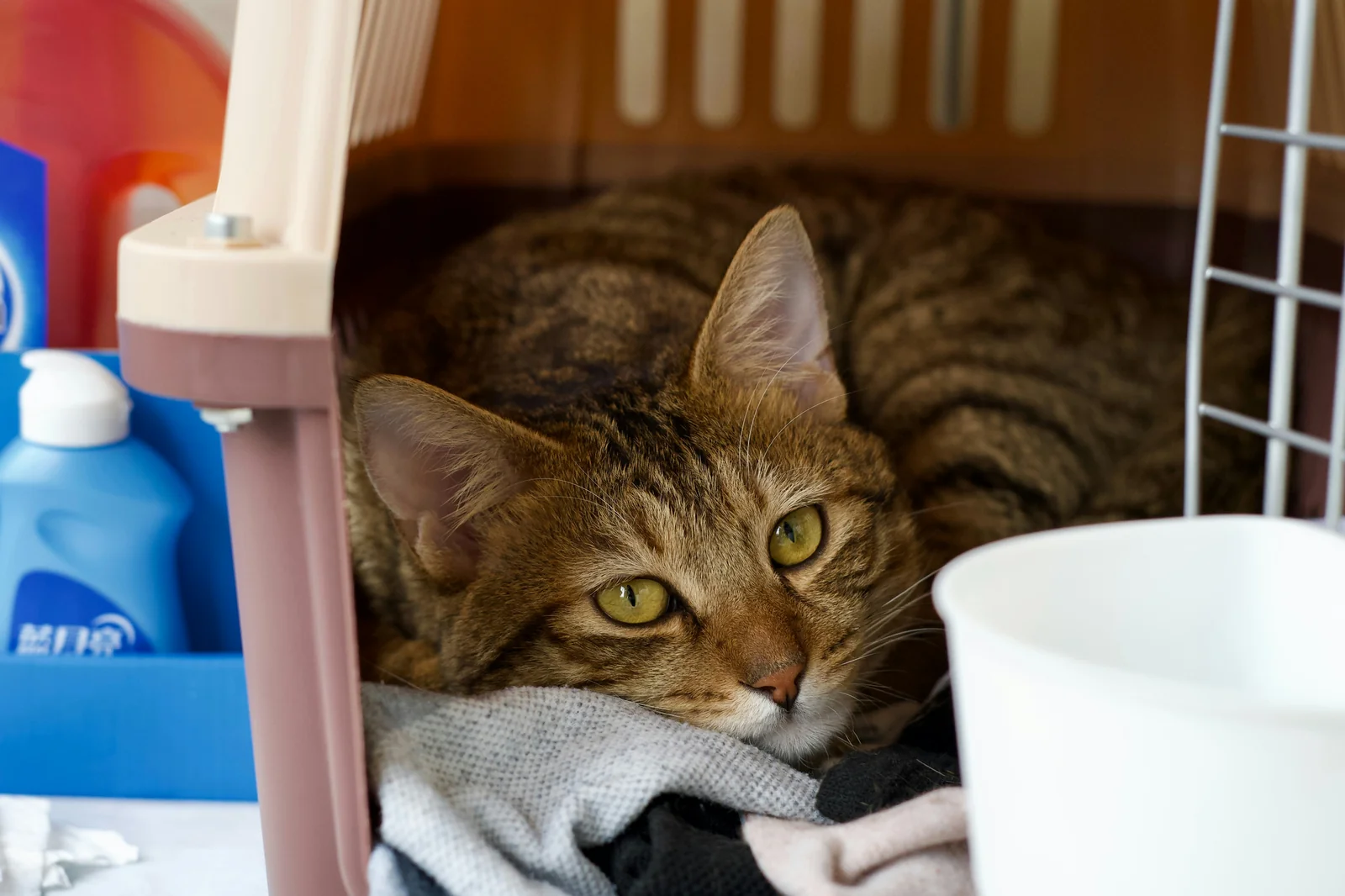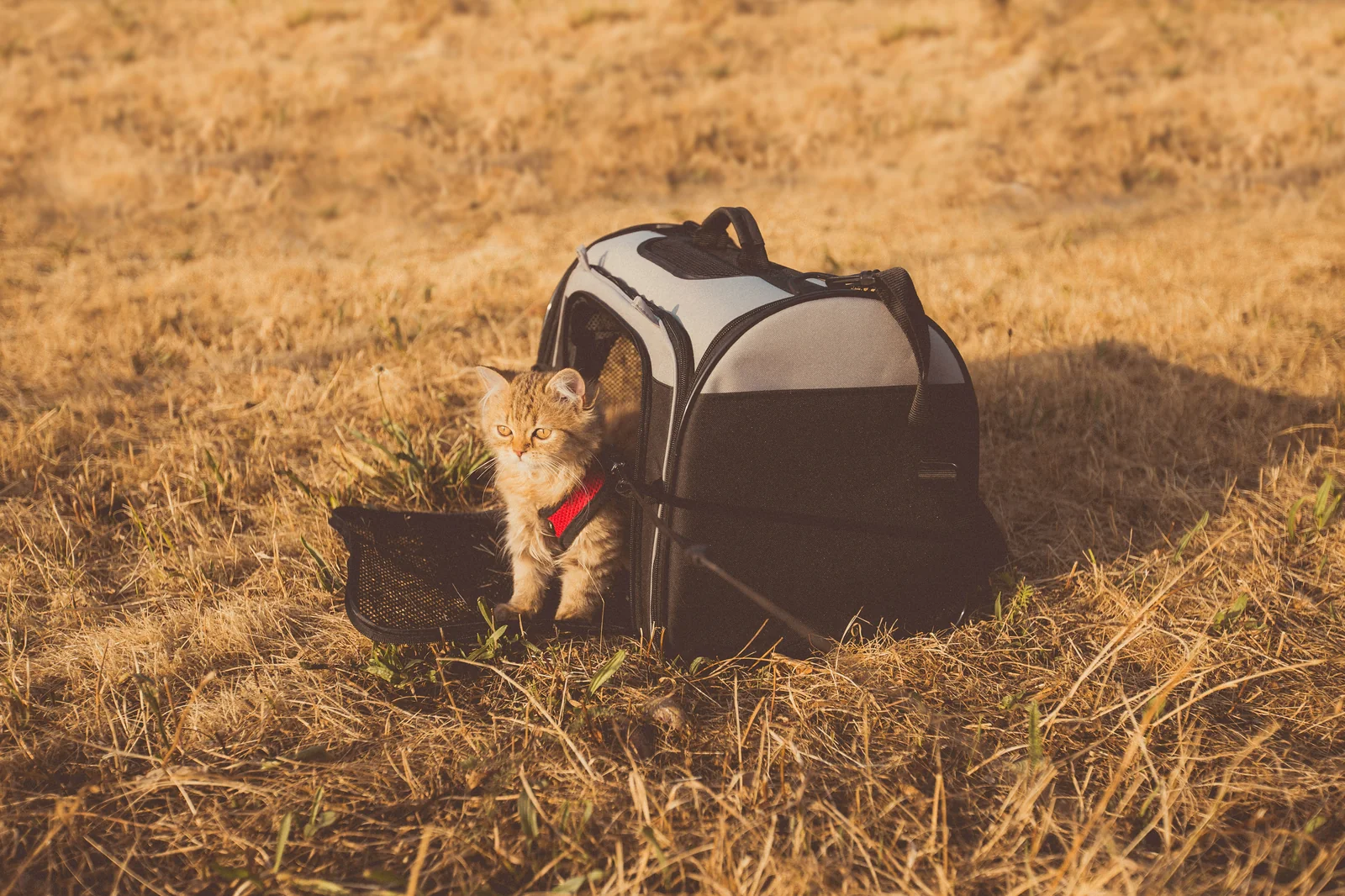
A carrier can look roomy, sturdy, and well ventilated online, yet feel very different once a heavy cat is inside. A 14-pound cat may find a supposedly large carrier too cramped, while a soft carrier may sag under the same cat's weight. Add another cat climbing on top, poor airflow, or an accident on the way to the vet, and small design flaws can quickly become daily problems.
The most useful checks are simple. Measure the usable inside space instead of trusting the outside dimensions. Press the walls to see whether they hold their shape. Look for real mesh coverage, a firm base, and a liner that can be removed and cleaned. If two cats will travel together, consider whether they can separate when stressed.
For a heavy cat, these details matter more than extra pockets, colors, or other convenience features.
DEFECT AUDIT OVERVIEW
| Feature | Potential Concerns | What to Look For |
|---|---|---|
| Interior size and frame | A carrier may be marketed as large but leave a heavy cat cramped or allow the walls to collapse inward. | Measure the usable interior and choose a carrier with a firm frame that holds its shape. |
| Ventilation and shared space | Limited mesh can make the carrier feel stuffy, while two stressed cats may have no way to get away from each other. | Look for substantial mesh on multiple sides and separate space when two cats travel together. |
| Base and cleanup | A weak or fabric-only bottom can sag, leak, or become difficult to clean after urine or vomit. | Choose a firm base with a removable, washable liner and easy-to-clean surfaces. |
How to Choose Carrier Dimensions for Large and Heavy Cats
If your cat is built like a small tank, "large" on the product page means very little unless the usable inside space actually matches their body. A 14-pound cat should not have to fold itself into a carrier just because the outside dimensions look generous.
Several reported cases show why this matters. The anonymized cases PGH-AUDIT-1KX9, PGH-AUDIT-BK65, and PGH-AUDIT-SRJP describe carriers that were marketed as large but still left 14-pound pets cramped, with reviewers calling the available space unsafe. In another case, PGH-AUDIT-SR2L, the advertised 17.5-inch length was reported to be only 16.5 inches inside.
That missing inch is not cosmetic. When a heavy cat cannot stretch, turn, or settle naturally, every trip becomes a battle over limited space. The result can be awkward postures, pressed limbs, and a cat spending the journey trying to escape the carrier rather than resting in it.
🧵 Measure the Inside, Not the Marketing
Before buying, grab a tape measure and check the carrier's actual interior. For length, measure your cat from the nose to the base of the tail, then look for at least 1.2 times that measurement; width should be at least 1.1 times shoulder width, and height at least 1.1 times standing height.
The same research cited in the supplied material found that cats in appropriately sized carriers had 42% lower salivary cortisol and 68% fewer escape attempts than cats placed in undersized carriers. In other words, extra room is not simply a comfort upgrade—it can make the whole trip easier to manage.
For a large-breed cat, do this measurement before looking at colors, pockets, wheels, or airline labels. If the listed dimensions are only exterior measurements, subtract the space taken up by padding and framing before deciding that the carrier is truly large enough.
The current feedback around these undersized models makes the safest approach pretty simple: trust your tape measure more than the word "large." For a heavy cat, a carrier that looks roomy online can feel remarkably different once the cat is actually inside.
Structural Frame Requirements to Prevent Inward Collapse Under Pressure
A soft-sided carrier can look perfectly fine while sitting on a store shelf, then become a very different object once another cat steps on it. Without a firm frame inside the walls, the carrier can simply fold inward, leaving the cat underneath the pressure instead of protected inside the bag.
This is exactly what reviewers reported across several anonymized cases. PGH-AUDIT-1KX9, PGH-AUDIT-SZCR, and PGH-AUDIT-SRJP were described as collapsing when pets moved around them or stepped on top, with the carrier effectively flattening around the animal.
For a multi-cat household, that is not a minor inconvenience. A cat climbing over the carrier does not understand that there is another cat underneath; if the walls give way, the pet inside can suddenly lose its usable space and be pushed against the carrier floor or sides.
🔎 Push the Side Before You Trust It
Put the empty carrier on the floor and press firmly against the middle of each side with your hand. If the wall folds deeply inward with ordinary hand pressure, pay attention to what is actually holding that shape rather than assuming the fabric itself will keep its form.
The supplied research gives a useful benchmark: the material used for the carrier walls was modeled at 28 MPa or more for pulling forces and 65 kPa or more for crushing forces. In the cited 2021 simulation, stronger construction kept deformation within a 15% threshold during a simulated 1.2-meter drop or heavy outside pressure, while weaker versions deformed beyond that point.
You do not need to recreate that simulation in your living room. The practical takeaway is much simpler: a large cat carrier should have something inside the walls that keeps them standing when pressure is applied.
Look for a clearly described frame rather than vague promises that the bag is "sturdy." A carrier with substantial rods or firm panels is much less likely to turn into a sagging pouch when another pet bumps, climbs on, or presses against it.
For households with multiple cats, this is one feature worth checking before the color or storage pockets. A carrier that caves inward under ordinary pressure is asking the fabric to do a job that a proper frame should be doing. The reported failures above justify extra caution with models that lack meaningful reinforcement, even though individual experiences can vary from product to product.
Mesh Coverage Guidelines to Maintain Proper Airflow and Cooling
A carrier can have mesh windows and still feel like a stuffy little box once a large cat is inside. If the openings are too small or too limited to the sides, heat and stale air have fewer places to escape, and some reviewers reported cats becoming uncomfortably hot and panting during use.
That pattern appears across several anonymized cases: PGH-AUDIT-1KX9, PGH-AUDIT-BK65, PGH-AUDIT-QDCZ1, and PGH-AUDIT-SRJP all drew complaints about poor ventilation. For a heavier cat, that is especially worth noticing because the carrier is already dealing with a larger animal in a confined space.
🌬️ Hold the Mesh Up to the Light
Before buying, look at the carrier from the side and estimate how much of the surrounding surface is actually open mesh rather than solid fabric or plastic. The supplied safety benchmark calls for ventilation openings covering at least 20% of the side surface area, providing enough open area for air movement rather than relying on a few small windows.
You can turn that into a simple shopping check: compare the total open mesh area with the solid wall around it. A carrier covered mostly by solid panels with a couple of narrow mesh strips deserves more scrutiny than one with substantial openings on multiple sides.
The supplied material also links inadequate airflow with CO₂ buildup above 5,000 ppm, which is presented as an acute breathing concern during confinement.
For a large cat, look for ventilation on more than one side, so air movement doesn't depend on a single small panel. And check whether the mesh remains open when the carrier is loaded rather than being pressed flat against another surface.
The reported complaints do not mean every carrier with limited mesh will produce the same outcome, but they are a useful warning sign. If the ventilation looks like decoration instead of a real part of the carrier, keep shopping.
Why Transporting Two Cats in One Enclosure Increases Aggression and Stress
Putting two cats into one carrier can sound practical right up until one cat wants space and discovers there is nowhere to go. In a tight enclosure with no divider, a frightened cat cannot simply move away from a stressed companion, and a harmless bump can quickly turn into hissing, swatting, or a full fight.
The problem becomes harder to ignore when the carrier itself gives way under pressure. In the anonymized case PGH-AUDIT-SZCR, reviewers described the carrier collapsing when another pet stepped on it, leaving the animals inside with even less usable space. For two cats sharing one enclosure, losing that space at the worst moment can turn an already stressful trip into chaos.
😾 Watch What Happens When They Lose Their Space
Before a trip, put both cats near the carrier and observe whether either one repeatedly tries to create distance from the other. If one cat keeps backing away, hiding, hissing, or swatting when the other approaches, do not assume they will suddenly tolerate being confined together.
The supplied evidence specifically supports the practical problem of a carrier collapsing under outside pressure, but it does not provide a controlled study showing that two cats sharing this particular carrier will inevitably become aggressive. So the safer conclusion is narrower: when two cats are already stressed, removing their ability to separate gives them fewer ways to avoid conflict.
That makes a simple divider surprisingly valuable. A firm center partition can give each cat its own enclosed area instead of forcing both animals to share every inch of the same space.
For owners searching for a cat carrier for 2 cats, the key question is therefore not just whether the bag is technically big enough for two bodies. Ask whether each cat can have its own protected space if the trip gets stressful. A dedicated two-compartment carrier, removable rigid divider, or two separate carriers may be the calmer option when the cats are not reliably comfortable sharing confinement.
Leak-Proof Bases and Washable Liners for Motion Sickness and Accidents
Cats do not need to be sick for a carrier to become a cleanup disaster. One nervous trip, an unexpected accident, or a bout of motion sickness can leave urine or vomit soaking through the bottom, and suddenly the carrier is not just dirty—it may be headed straight for the trash.
That is what happened in the anonymized case PGH-AUDIT-SR2L. During the first use, urine reportedly escaped through the carrier seams and reached the car seat, leaving the owner with a contaminated seat and a carrier that could no longer be used.
The frustrating part is that the mess may not be obvious while you are still driving. Liquid can disappear beneath the liner or padding, so by the time you notice the smell, the material underneath has already had plenty of time to absorb it.
🧼 Lift the Liner Before the Next Trip
Take the carrier apart before using it and lift the removable liner or padding away from the bottom. Look closely at the corners and seams underneath, then check whether the base forms a raised tray or simply consists of fabric stitched together.
If the bottom is fabric all the way through, treat that as a warning sign for accident-prone travel. A washable liner that can be removed completely is much easier to clean than padding permanently attached to the carrier.
For heavier cats or anxious travelers, a raised, wipe-clean base also gives you a practical backup when an accident happens. The goal is not to pretend accidents will never occur; it is to make sure one accident does not ruin the carrier, the car seat, and your entire afternoon at the same time.
The reported failure involving PGH-AUDIT-SR2L is one specific user experience, so it should not be treated as proof that every stitched carrier will leak. Still, it is a useful reason to inspect the bottom before buying: if you cannot easily remove, clean, and dry the part your cat sits on, cleanup is going to be much harder when things go wrong.
Hard-Sided vs. Soft-Sided Carriers for Support and Base Rigidity
When choosing between a soft sided cat carrier and a hard sided cat carrier, the biggest difference for a heavy cat is what happens underneath its weight. A soft carrier can flex and sag, while a hard-sided box keeps its shape instead of allowing the base to dip around the cat.
That distinction becomes especially important with a cat carrier for heavy cats. Reports tied to PGH-AUDIT-BK65 and PGH-AUDIT-SRJP describe soft carriers collapsing or folding inward, while thin wooden bases were reported to crack under travel use.
The supplied engineering comparison points to the same basic design question: does the carrier spread the cat's weight across a firm base, or does the bottom simply hang underneath it? A rigid PP or ABS shell is designed to keep its form and distribute pressure rather than letting one area sink deeply under the cat.
For cats weighing 15 pounds or more, this makes the choice less about whether soft or hard carriers are universally "better" and more about how much support the individual cat needs.
A soft-sided carrier can still be useful when portability and lower weight matter, but its base and frame deserve particular attention. If the floor bends noticeably under the cat or the walls fold inward when the carrier is handled, the design may not provide the support a heavier animal needs.
A hard-sided carrier generally offers a firmer platform and more consistent interior shape. That can be especially relevant for an older or physically fragile cat that benefits from having a stable place to stand and lie down.
So when comparing the two styles, start with the base and side support, not the fabric, color, or extra pockets. For a heavy cat, the carrier should remain a carrier—not slowly turn into a sagging hammock once the cat gets inside.
CONCLUSION
The safest way to shop for a carrier for a large or heavy cat is to judge the parts you can actually test. Start with the inside measurements, because exterior dimensions can hide padding, framing, and other lost space. Then check whether the walls stay upright when you press them and whether the floor remains firm under weight.
Ventilation deserves the same attention. A few small mesh panels may not provide the same airflow as openings on several sides. If two cats are sharing a carrier, also think about whether each cat has enough protected space to avoid the other when the trip becomes stressful.
Finally, inspect the bottom before the first journey. A removable liner, washable padding, and a firm, wipe-clean base can make an accident far easier to manage. These checks do not guarantee a perfect carrier, but they help you avoid designs that look impressive online while failing at the basic job of supporting and protecting your cat.
THE ULTIMATE BUYING VERDICT
| Verdict | Key Consideration | Recommendation |
|---|---|---|
| 🔴 Significant concerns | Cramped interiors, walls that collapse under pressure, limited ventilation, weak bases, and bottoms that are difficult to clean can create serious practical problems for heavy cats. | Be cautious with carriers that rely on exterior dimensions, thin fabric, small mesh panels, or a soft unsupported floor. |
| 🟡 Acceptable with limitations | Soft-sided carriers can work when portability matters, but their frames and bases need closer inspection. Two cats may also be able to share a carrier only when they are comfortable together and have enough space. | Accept these designs when you can confirm that the carrier holds its shape, supports the cat well, provides useful airflow, and can be cleaned easily. |
| 🟢 Meets long-term expectations | A properly sized interior, firm frame and base, substantial ventilation, washable liner, and suitable separation for multiple cats provide the strongest combination of practical support. | Measure the usable space, test the frame and floor, inspect the mesh, and choose a design that remains stable and easy to clean during repeated trips. |