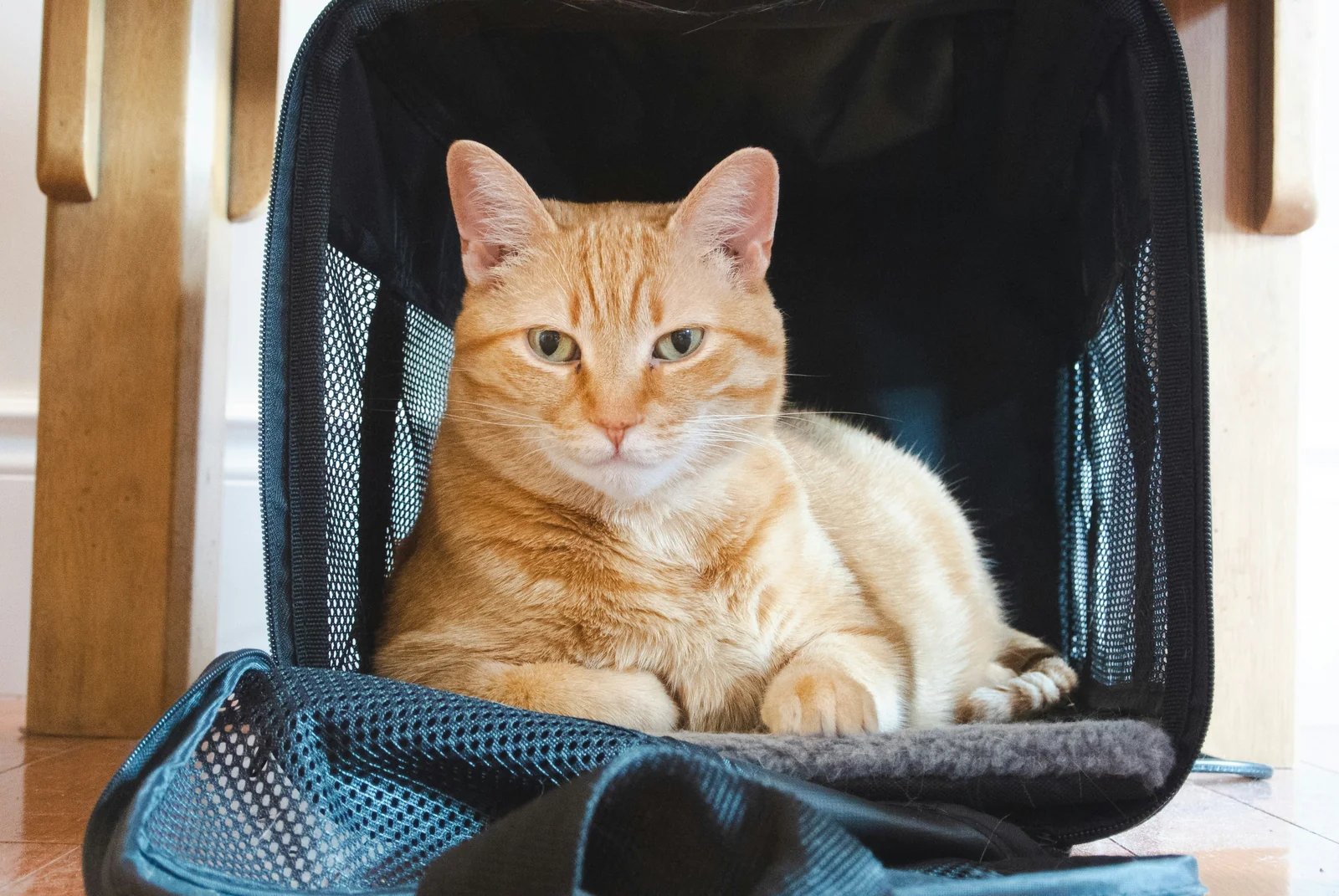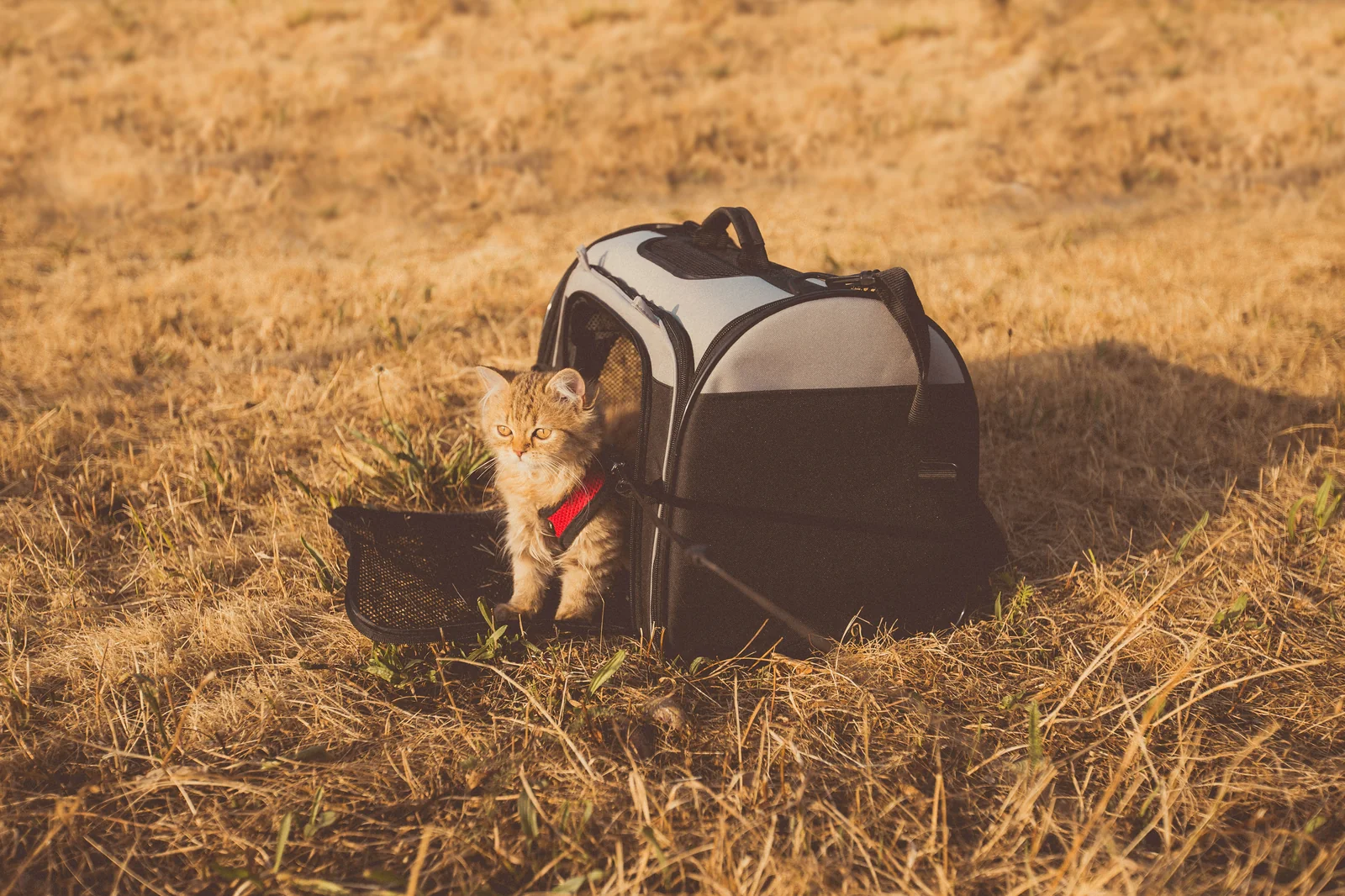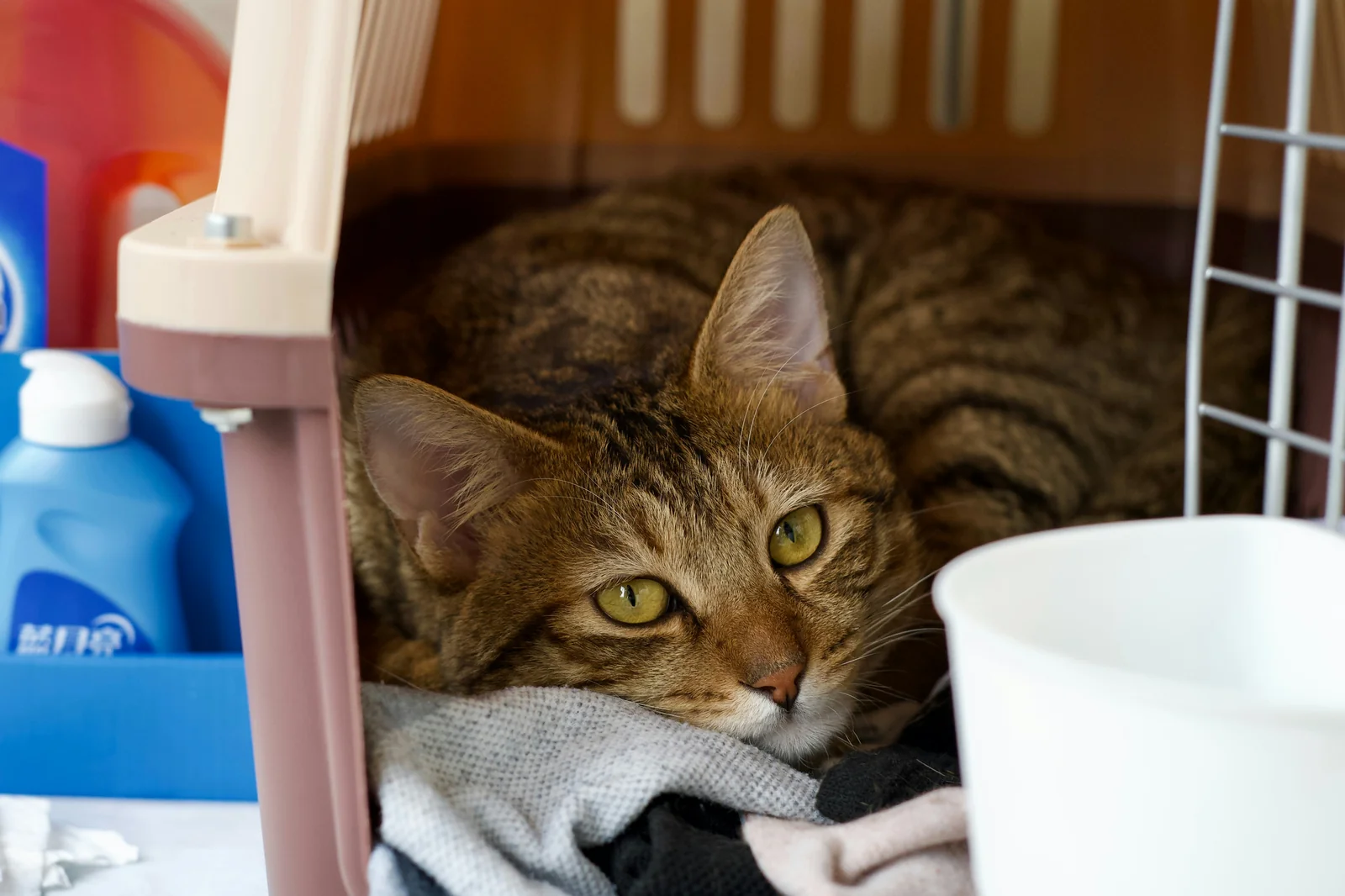
A cat carrier may feel secure when you carry it around the house, but problems can appear as soon as the car starts moving. During sudden braking or a sharp turn, a soft carrier can fold inward while the cat continues moving inside. An anxious cat can also push the carrier across the floor, tip it over, or find a weak zipper and escape into the cabin.
The reported cases show several practical problems worth checking before a car trip. Some carriers were difficult to keep secure without holding them down by hand. Others reportedly rolled or slid when cats moved inside, while weak plastic zippers could stick, lose teeth, or pull apart. These problems matter because an unsecured carrier or escaped cat can create a dangerous distraction for the driver.
For car travel, comfort should therefore be considered alongside shape, stability, restraint, and zipper security.
Why Mesh-Only Soft Carriers Fail Under Sudden Braking and Impact
A soft carrier can feel forgiving in your hands, but that softness becomes a serious limitation when the car stops hard. During sudden braking or a sharp lane change, the cat keeps moving even after the carrier stops, and a bag with little support can fold inward instead of keeping its shape.
That concern is not just theoretical in the reported cases. In one rescue trip, the carrier referenced in case PGH-AUDIT-SZCR nearly allowed a stray kitten to escape after it failed under pressure, while another case tied to PGH-AUDIT-QDCZ1 described the bag folding around an anxious cat during transport.
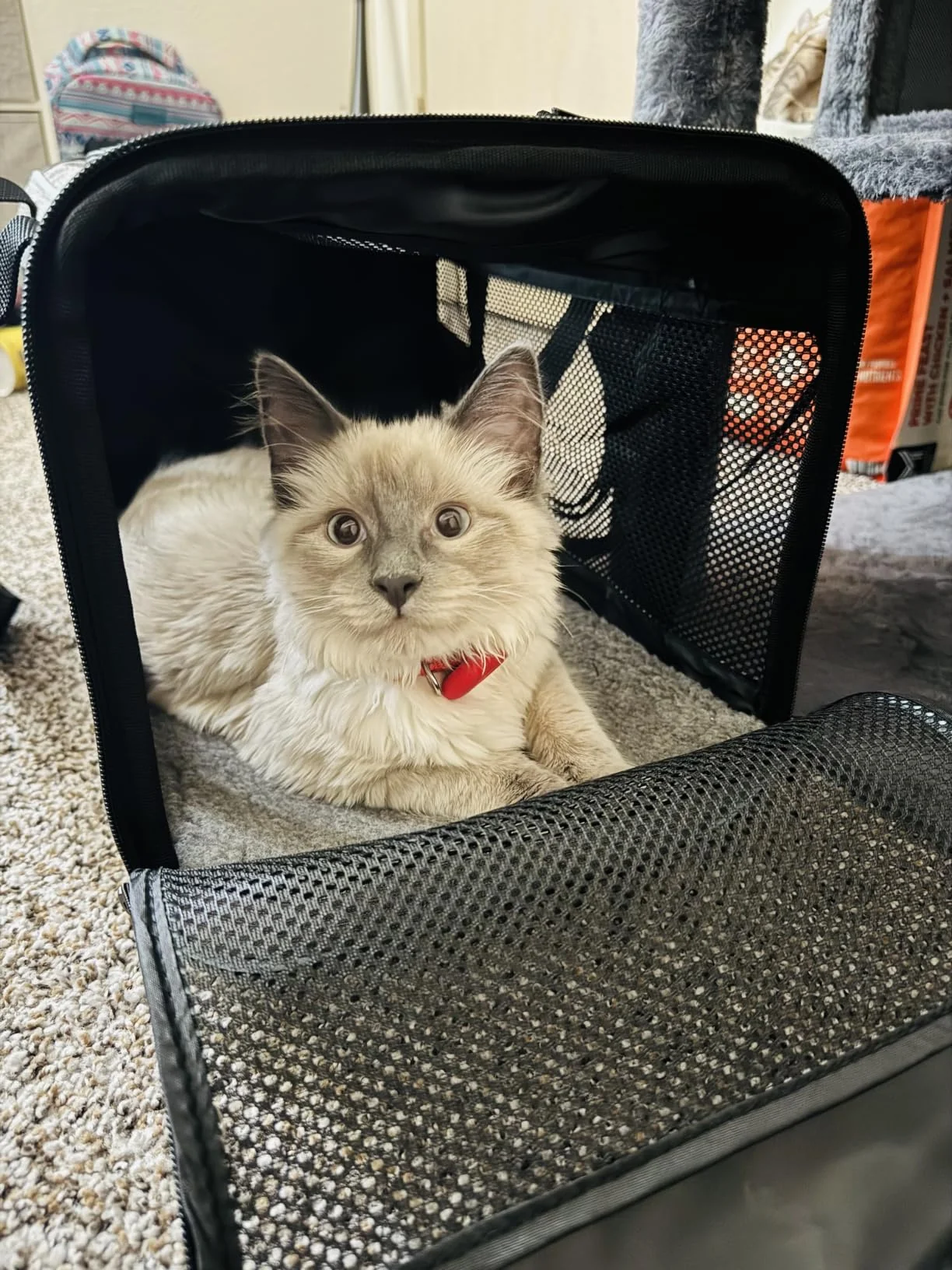
A more significant problem appears when outside force is added. A carrier linked to PGH-AUDIT-SZCR reportedly caved in when another pet stepped on top of it, showing how little room there may be between "soft and comfortable" and flat against the cat. When a vehicle stops suddenly, that same lack of support gives the cat far less protection from being thrown forward or squeezed inside the bag.
🔍 Press the Carrier Before You Drive
Put the empty carrier on the seat and press down firmly on the top and sides with your hands. If the mesh walls immediately fold inward and stay there, picture what happens when a heavy object or sudden movement pushes against them.
Now check the bottom and corners. If the whole bag behaves like a purse rather than something that can hold its shape, it is worth treating that as a safety limitation, especially for car travel.
There is also published crash-test evidence behind this concern. A 2022 Lund University study in the supplied evidence tested 12 carrier designs in simulated 30 mph frontal collisions; the source reports that mesh-only designs without a rigid frame failed, while rigid designs with proper attachment points prevented the reported ejection or internal trauma. The supplied Centre for Pet Safety 2021 evidence likewise reports severe head and neck injuries in all tested cat-sized dummies when carriers were not secured, while properly anchored rigid carriers substantially reduced peak forces.
So the practical takeaway is straightforward: mesh can still be useful for airflow and visibility, but mesh alone should not be expected to protect a cat during a serious vehicle impact. For routine driving, a carrier that keeps its shape and can be securely attached deserves a much closer look than one that simply feels soft and comfortable in your hands.
The reported failures above do not establish that every soft carrier will behave identically, but they are enough to make the lack of support a feature worth checking rather than something to take for granted.
How Seatbelt Anchors and Latch Straps Secure Carriers in Moving Vehicles
A cat car carrier can look perfectly fine sitting on the passenger seat until the vehicle moves. Then a sudden stop turns an unsecured bag into something that can slide, tip, or fly forward, leaving the driver trying to control both the car and the carrier.
One reported case tied to PGH-AUDIT-SR2L is especially revealing: the carrier lacked a reliable way to secure it, so the owner had to drive while holding the bag down with one hand. That is more than an inconvenience. If the cat starts moving at the same moment traffic demands a hard brake, the driver has a choice no pet owner should have to make.
🚗 Pull the Strap Before Starting the Engine
Set the empty carrier where you normally place it and try to move it forward with both hands. If it slides freely across the seat, the carrier is depending on your hand instead of the vehicle to keep it in place.
Next, look for a purpose-built belt path or dedicated anchoring point. Run the seatbelt through the intended route and pull firmly; the carrier should remain positioned rather than simply shifting until the belt becomes tight.
The supplied CPS evidence gives this feature a measurable purpose. It states that carrier attachment points and latches should withstand at least 300 N of pulling force, while the carrier should resist deformation beyond 1.5 times the cat's body weight during an impact. The same source reports that properly anchored rigid carriers reduced peak acceleration forces by 82% in the cited crash testing.
That makes an important distinction clear: a strap for carrying the bag is not automatically an anchor for securing it inside a moving vehicle. A carrier intended for road travel should give the seatbelt a clear, dedicated route or provide a suitable anchoring system rather than leaving the owner to improvise.
The reported SR2L case is one reason to take that detail seriously. If keeping the carrier still requires one hand throughout the drive, the setup has already shifted too much responsibility from the carrier to the driver. The specific reported product should be treated cautiously, while the broader lesson applies to any cat car carrier whose vehicle attachment method is unclear.
Preventing Carriers from Sliding or Tipping on Car Floors
A carrier does not have to break to become a problem in the car. An anxious cat can claw, twist, and throw its weight around when the engine noise and road movement start, and a soft bag sitting loose on the floor can slide, tip, or roll with the cat still inside.
That is exactly what was reported with PGH-AUDIT-8BK65 and PGH-AUDIT-QDCZ1. During trips for veterinary care, an anxious young cat reportedly moved enough inside the carrier to send the entire soft carrier rolling across the vehicle floor. What began as a simple ride to the clinic became a carrier that could no longer stay where the owner had put it.
🛞 Push the Carrier Across the Floor
Before the next trip, place the empty carrier on the floor where you intend to use it. Push it sideways and forward with your palm, then give the base a firm nudge with your foot.
If it skates easily or tips onto one side, your cat may be able to do the same thing from inside. Check whether the base stays flat and whether the carrier has a broad, stable footprint rather than a narrow bag that can fold or roll.
A lower, wider shape can make tipping less likely, while a grippy base can help prevent ordinary sliding. But those features should complement proper vehicle restraint rather than replace it.
The supplied CPS crash-testing evidence makes that distinction important: it reports that carriers left unsecured in vehicles resulted in severe head and neck injuries for all tested cat-sized dummies, while properly anchored rigid carriers substantially reduced peak acceleration forces.
So when choosing a cat car carrier, look beyond whether the fabric feels thick or the bag looks comfortable. A stable base, resistance to tipping, and a genuine way to secure the carrier to the vehicle matter far more once the cat starts moving inside it.
The reported rolling incidents are specific user experiences rather than proof that every soft carrier will behave the same way. Still, if a carrier can be pushed across the floor with little effort while empty, it deserves extra caution before being trusted with an anxious cat on the road.
Keeping Zippers Secured to Prevent Cats from Escaping into the Footwell
A zipper failure inside a moving car is not just a carrier problem. If a frightened cat pushes its way through a gap, it can end up loose inside the cabin while the driver is still moving, turning a routine trip to the vet into a scramble for control.
Reports linked to PGH-AUDIT-SZCR and PGH-AUDIT-QDCZ1 describe plastic zippers that stick, lose their teeth, or pull apart during use. That is especially concerning when the cat is already anxious and actively pushing against the carrier walls.
🐾 Pull Every Zipper Before You Drive
With the carrier empty, close every zipper completely and pull firmly on the two sides of the opening. Then press against the closed section from inside with your hand to imitate the kind of pressure a determined cat can create.
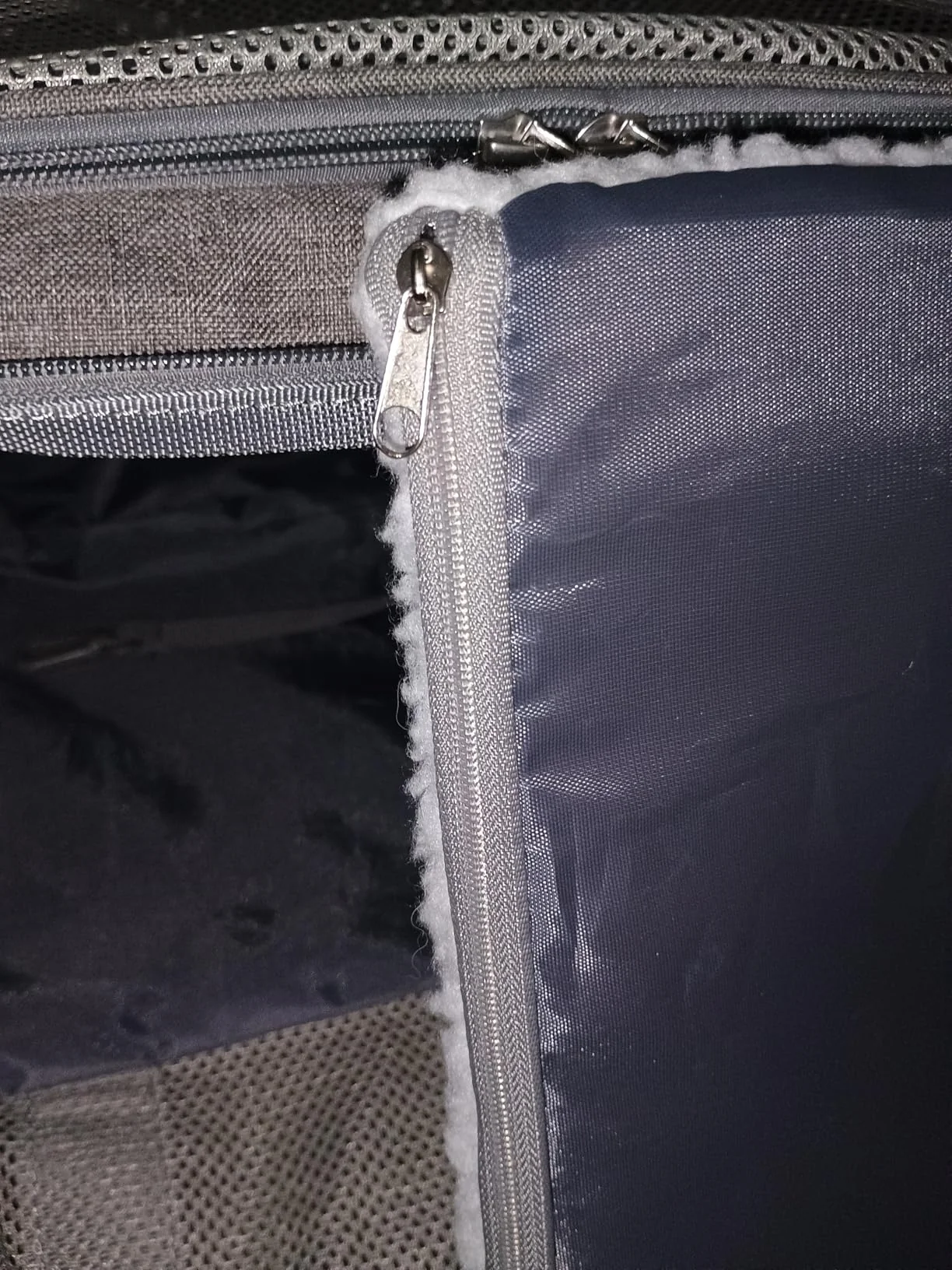
Watch the zipper head rather than just the fabric. If it creeps backward, catches, separates, or leaves a visible opening between the teeth, do not assume it will behave better once the carrier is bouncing around in a moving vehicle.
The reported failures also show why "it closes" is not enough. One of the cited carriers required manual straightening of bent zipper teeth or other workarounds to keep the opening secured. Once a cat has found even a small weakness, repeated pushing can turn that weakness into an escape route.
For car travel, the safer design goal is simple: the zipper should stay closed when the cat pushes against it, and the carrier should offer an additional way to prevent accidental opening. A locking feature or zipper restraint can provide another layer of protection when the cat is restless.
These reports concern specific products and user experiences, so they do not establish that every plastic zipper will fail this way. But if the zipper already sticks, separates, or opens under modest hand pressure, that carrier deserves caution before being used in a moving vehicle—especially where an escaped cat could reach the driver's footwell.
CONCLUSION
A careful buyer should test a carrier before trusting it for regular car travel. Press the empty bag from the top and sides to see whether it immediately collapses. Push it across the floor to check whether it slides or tips easily. Then close every zipper and apply pressure around the opening to see whether the zipper stays in place.
The carrier should also have a clear way to stay secured inside the vehicle. A carrying strap is not automatically a suitable vehicle anchor. A purpose-built belt path or attachment point is more useful because it helps keep the carrier positioned without requiring the driver to hold it down.
Soft fabric can still provide airflow and visibility, but softness alone is not enough. A better choice is a carrier that keeps its shape, has a stable base, stays closed when the cat pushes against it, and can be properly secured in the vehicle. These simple checks can reveal weaknesses before they become problems during a stressful trip.
THE ULTIMATE BUYING VERDICT
| Verdict | Key Consideration | Recommendation |
|---|---|---|
| 🔴 Significant concerns | Carriers that collapse easily, slide or tip on the floor, lack a reliable vehicle attachment method, or have zippers that stick or separate create serious concerns for car travel. | Avoid carriers with obvious weaknesses in shape, stability, restraint, or zipper security. |
| 🟡 Acceptable with limitations | Soft carriers can provide airflow, visibility, and a comfortable feel, but they may offer less support if they fold, move, or rely heavily on the owner to keep them secure. | Consider one only if it remains stable, closes securely, and can be properly restrained inside the vehicle. |
| 🟢 Meets long-term expectations | A carrier that keeps its shape, resists sliding and tipping, stays securely closed, and provides a suitable way to attach it to the vehicle is better suited to repeated car travel. | Look for stable construction, secure zippers, a broad and steady base, and a dedicated vehicle restraint method. |