
You open a new joint chew expecting an easy daily routine, but the first piece is hard enough to make you hesitate. Then you notice the inner seal is missing, the ingredient list is unclear, or your dog reacts badly after a few doses. Even a product that promises better mobility can create new problems when the formula, texture, packaging, or dosing instructions are difficult to trust.
The supplied product reports raise several practical concerns, from rock-hard chews and questionable packaging to reported skin reactions, neurological symptoms, and illness after increased dosing. At the same time, the evidence does not support judging a joint supplement by a quick change in the first few days. Some reported benefits require a much longer period to assess, while omega-3 fatty acids have stronger clinical support than many broad "joint support" claims.
For careful buyers, the better approach is to check the product itself, follow the labeled serving guidance, and judge mobility over time rather than relying on marketing promises.
DEFECT AUDIT OVERVIEW
| Product Area | Common Problems | Why It Matters |
|---|---|---|
| Chew texture and dosing | Very hard chews, difficult breaking, increased serving suggestions | A chew should be manageable for the dog and should not encourage casual dose increases. |
| Ingredients and reactions | Unclear flavoring, brewer's yeast, rosemary extract, reported skin or neurological reactions | Full ingredient transparency helps owners identify concerns before committing to regular use. |
| Packaging and product quality | Missing inner seals, unusual foreign material, unexpected chew counts | Damaged packaging or visible contamination should be treated as a quality warning. |
How Long Does Glucosamine Really Take to Work in Dogs?
If your dog seems a little looser after the first day or two, it is tempting to call that proof the supplement is working. But "feels better quickly" and "has a proven effect" are not necessarily the same thing.
That matters because two reported cases, PGH-AUDIT-VSCB and PGH-AUDIT-6XC8, describe dogs showing what looked like an early improvement during the first week, followed by a return of serious mobility problems. The reports are a useful reminder not to judge a joint supplement by a handful of good days alone.
🦴 Watch the Whole 70 Days, Not Just the First Week
Take a simple approach: write down how your dog handles stairs, getting up from the floor, walking distance, and jumping onto familiar furniture. Keep those observations consistent rather than relying on one unusually energetic morning.
The reason is fairly simple. Glucosamine and chondroitin are not presented in the supplied evidence as an instant pain switch; the comparison is closer to slowly helping a squeaky hinge move more comfortably. The cited 2007 double-blind trial used oral glucosamine at 200 mg/kg and found that meaningful differences in pain and weight-bearing were not statistically significant until day 70.
So when an advertisement promises a dramatic change in 24 hours or three days, treat that timeline cautiously. A rapid change can be encouraging, but it should not be confused with the longer timeframe reported in the trial evidence.
There is also an important distinction between a supplement helping comfort and actually reversing an already damaged joint. The supplied evidence specifically notes that glucosamine was not proven to reverse existing joint damage.
For dog owners, the practical takeaway is simple: don't abandon a product—or trust its advertising—based solely on the first few days. Track the dog's movement over time, and if the condition is worsening rather than gradually stabilizing, involve your veterinarian rather than simply increasing the supplement.
What to Do When Dog Joint Chews Arrive Hard as Rocks
A joint chew is supposed to make daily dosing easier, not turn your kitchen into a tiny demolition site. Yet reports tied to PGH-AUDIT-PK2 and PGH-AUDIT-VJHW describe chews arriving so hard that owners struggled to break them apart, with one account saying a hammer was needed to crush them.
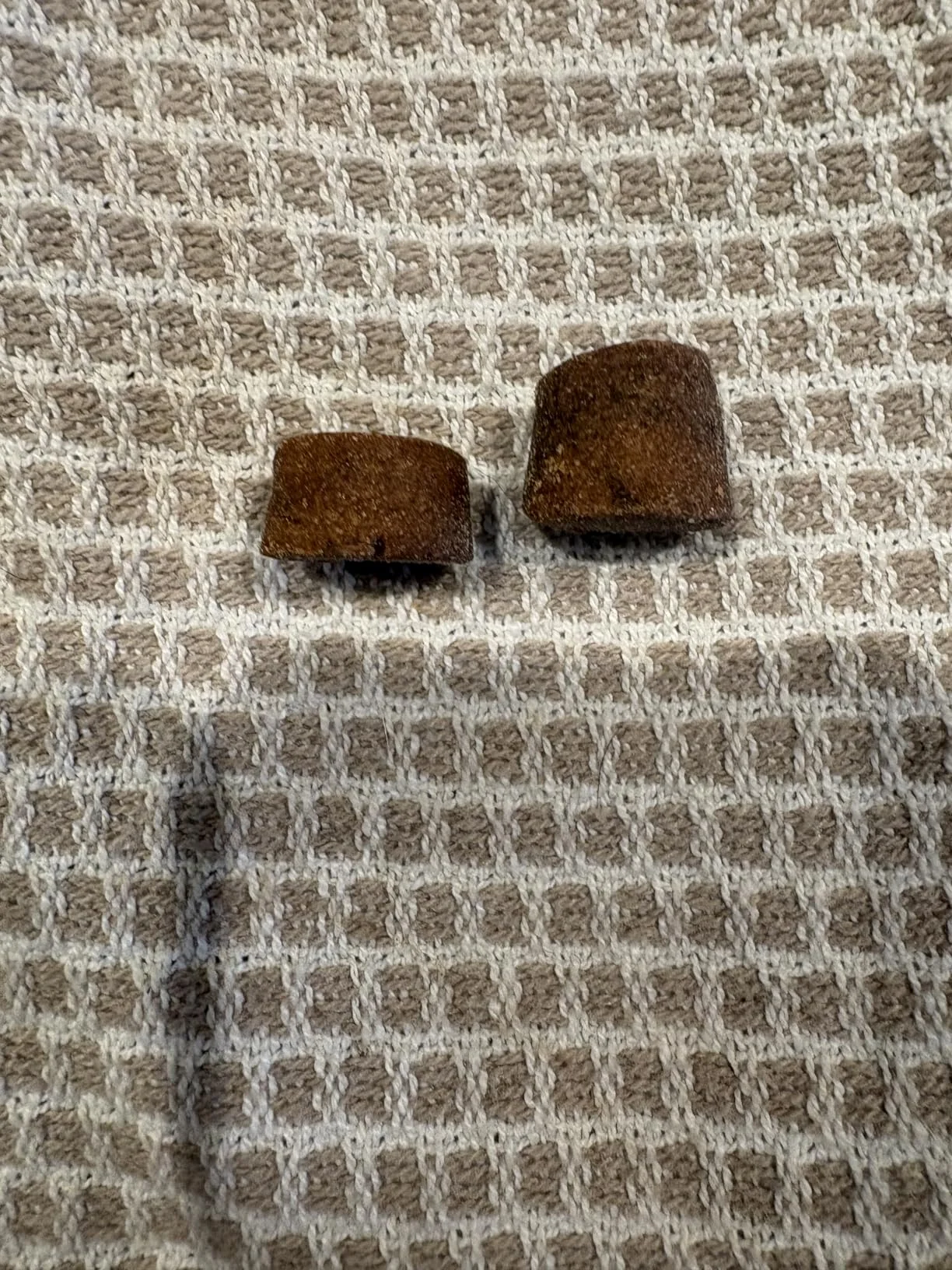
That becomes especially awkward with puppies, senior dogs, or dogs with few teeth. A chew that cannot be comfortably bitten may end up swallowed whole, refused completely, or broken into pieces that are still too hard to manage.
🔨 Try Breaking One Before You Hand It Over
Take one chew and try to break it by hand first. If it is so hard that you immediately reach for a kitchen tool, don't assume your dog will somehow handle it better.
The reports specifically describe rock-hard chews that had to be hammered apart, while other users said older dogs or dogs with dental problems could not chew them properly.
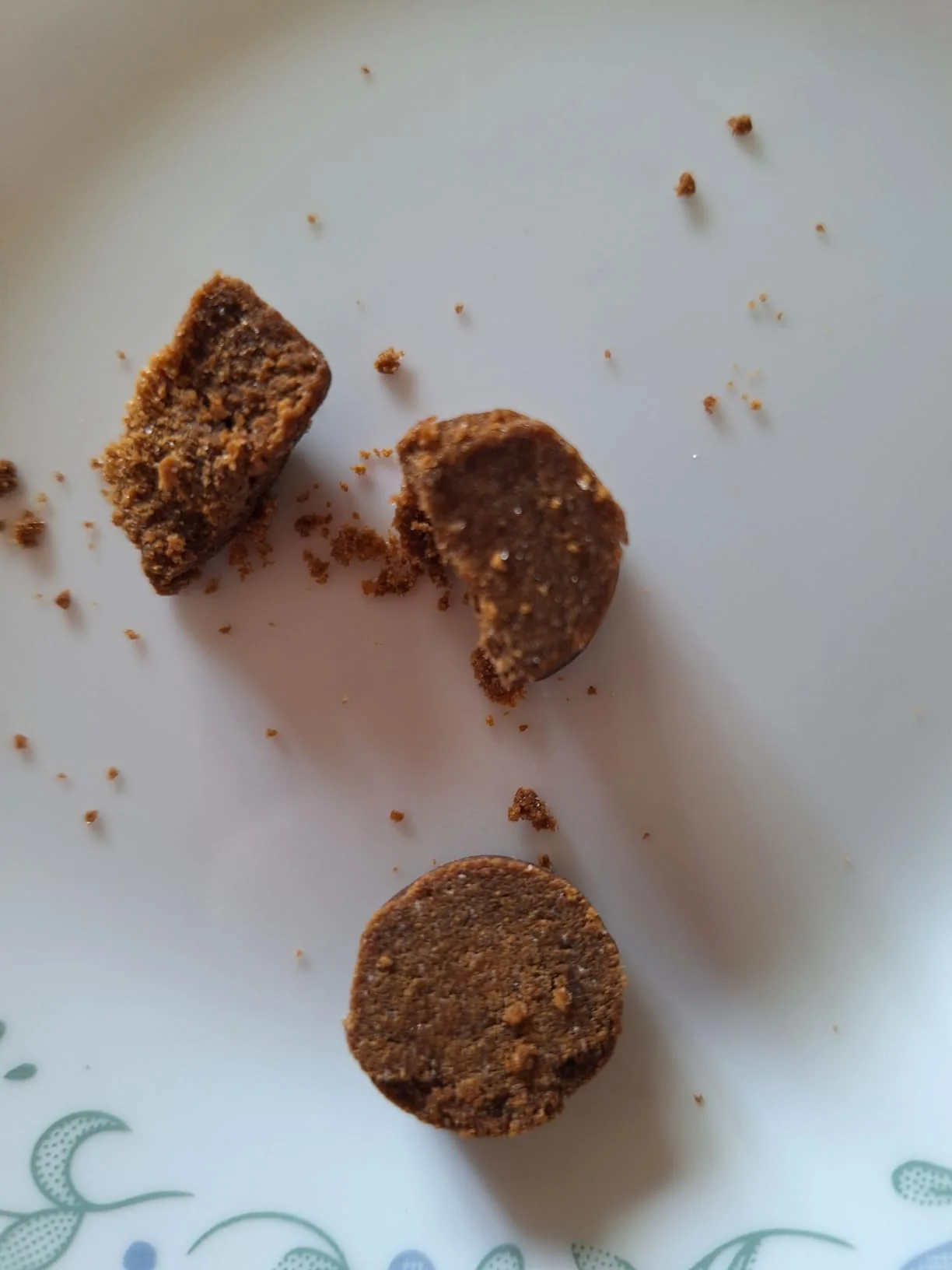
For a dog already struggling with mobility, adding a painful chewing problem is hardly a great upgrade. A joint supplement should not require a hardware-store solution before breakfast.
If the texture of the chew has changed noticeably from what you expected, especially if your dog cannot comfortably bite it, it makes sense to stop and assess the individual product rather than forcing the dose. The available reports point to inconsistent chew texture across individual purchases, so an unusually hard chew deserves more caution than a normal variation in firmness.
Can Rosemary Extract in Dog Supplements Trigger Seizures?
When a dog suddenly develops shaking, unusual head movement, or a seizure after months of taking a supplement, the ingredient list deserves a closer look. "Natural preservative" does not automatically mean irrelevant, especially when the same formula has already produced concerning reports.
In cases linked to PGH-AUDIT-PK2 and PGH-AUDIT-VJHW, owners reported dogs developing seizures after using products containing rosemary extract, with the episodes reportedly stopping after the chews were discontinued. One set of reports described three seizures within roughly three months of use. These reports also include tremors, lethargy, and other neurological changes.
The important distinction is that these reports show an association, not proof that rosemary extract itself caused every seizure. Dogs can have multiple reasons for neurological symptoms, so the timing of a reaction should prompt investigation rather than an automatic diagnosis.
🌿 Flip the Bottle Over Before You Buy
Check the complete ingredient list, including the small print near the bottom. If rosemary extract appears and your dog has a seizure history or develops unusual shaking, stopping the product and contacting your veterinarian is a much safer move than continuing simply because the ingredient sounds natural.
The concern is not purely hypothetical in the product reports: one documented formula lists rosemary extract among the ingredients, while users separately reported seizures in dogs after starting the chews. Those reports also describe dogs becoming seizure-free after discontinuation.
That makes the ingredient worth flagging when reviewing a questionable batch, but it would be too strong to label rosemary extract a confirmed seizure trigger in every dog. If a seizure actually occurs, veterinary assessment matters more than trying to solve the ingredient mystery at home.
For dogs with a neurological history, the safest purchasing habit is simple: read the entire formula before committing to long-term daily use, rather than assuming "natural" means risk-free.
Packaging Defects to Watch For: Missing Inner Seals and Batch Contamination
A damaged package is one thing. Opening a supposedly sealed bag and finding no inner seal at all is another. That becomes more concerning when owners also report unusual material embedded inside the chews.
In reports associated with PGH-AUDIT-VJHW, users described visible metallic fragments and suspected glass-like fibers inside individual pieces. Reports tied to PGH-AUDIT-1NQ also describe containers arriving without an inner seal, raising concerns about whether the contents remained properly protected after packaging.
The practical problem is straightforward: once a chew contains something that clearly does not belong there, the question is no longer whether your dog likes the flavor. You have to decide whether that particular piece should go anywhere near the dog's mouth.
🔍 Open the Lid and Check the Seal First
Before giving your dog the first chew from a new container, look underneath the outer lid for the inner seal and inspect the pieces themselves. Don't automatically throw away the packaging after opening it; keep it if something looks wrong.
The product reports include complaints about missing inner seals and, separately, pieces containing metallic fragments or suspected fiberglass-like material.
If you find a foreign object, a broken seal, unusual moisture, or obvious contamination, do not keep feeding from that container while trying to work out whether the next piece is clean. Photograph the packaging and affected chew, preserve the batch information, and contact the seller or manufacturer.
The reported cases do not establish that every package has contamination, but they do show why a missing seal or visible foreign material should be treated as a product-quality warning rather than a cosmetic defect. A dog chew should arrive looking like something you can reasonably put in a dog's bowl—not something that needs a forensic explanation.
Why Double Dosing Joint Supplements Can Lead to Pancreatitis
"Take more for stronger results" sounds appealing when a dog is already struggling to walk. But doubling a supplement is not automatically a faster route to better mobility, particularly when the dog is older or already has digestive problems.
Reports associated with PGH-AUDIT-YRV2 and PGH-AUDIT-6XC8 describe dogs becoming seriously ill after increased dosing. The reported problems included vomiting, diarrhea, lethargy, pancreatitis, and other sudden health declines; one account also described a package containing fewer chews than expected, effectively shortening the stated supply.
That does not establish that doubling the dose caused every reported illness. The timing is a warning signal, not a medical diagnosis.
⚠️ Count the Chews Before You Increase Anything
Before changing the amount, count the pieces in the container and compare that number with the stated serving directions. Then check the dog's actual weight and current health situation instead of assuming that "double" means "better."
The supplied reports include cases of dogs developing gastrointestinal problems, pancreatitis, and severe decline after use, while other reports specifically mention double dosing and rapid deterioration.
There is also a practical trap here: a recommendation to increase servings can make a supposedly month-long container disappear much sooner, especially when the actual count is already lower than expected. That turns an aggressive dosing suggestion into both a health question and a value question.
The supplied scientific material does not establish a specific dose at which these products cause pancreatitis, nor does it prove that a particular ingredient combination directly produced the reported cases. So the sensible conclusion is narrower: if a dog develops vomiting, diarrhea, marked lethargy, abdominal discomfort, or other sudden deterioration after a dose increase, don't keep escalating the serving while waiting for the supplement to "kick in."
For dogs with existing digestive or pancreatic concerns, dose changes are better discussed with a veterinarian. A supplement is supposed to support the routine—not turn the routine into an experiment on how much a sick dog can tolerate.
Hidden Allergens in Dog Chews: Managing Brewer's Yeast and Shellfish Sensitivities
A joint chew can look like a simple daily treat while hiding an ingredient that does not agree with a sensitive dog. That is especially frustrating when the original goal was easier mobility and the result is itching, skin irritation, or a dog suddenly refusing the chew.
Reports connected to PGH-AUDIT-VSCB describe hives, hot spots, inflamed skin, hair loss, and intense scratching severe enough to cause self-inflicted wounds. The same reports flag chicken flavor and brewer's yeast as ingredients that were not clearly identified as allergens.
A separate group of reports tied to PGH-AUDIT-1NQ describes similar skin reactions, including excessive scratching, hair loss, and bleeding, while specifically noting unlisted chicken and brewer's yeast.
👃 Read the Ingredient List Before the First Chew
Before giving a new joint chew, check the entire ingredient panel rather than stopping at the headline ingredients. Look specifically for flavoring ingredients and yeast-derived ingredients if your dog has previously reacted to them.
The supplied evidence does not establish that every reaction was caused by brewer's yeast, nor does it establish that every glucosamine product contains shellfish. It does, however, identify unlisted chicken and brewer's yeast as reported concerns in these product cases, making ingredient transparency an important part of choosing a chew for a sensitive dog.
The same source material also raises shellfish sourcing as a question owners may need to verify when choosing glucosamine, particularly for dogs with known sensitivities.
If a dog develops widespread itching, facial swelling, breathing difficulty, vomiting, or another sudden reaction after a new chew, do not keep feeding it simply to see whether the symptoms settle down. Stop and seek veterinary advice, especially if the reaction is severe.
For sensitive dogs, the safer habit is boring but effective: read the full ingredient list, verify unclear flavor or source information, and treat a new chew like any other new food rather than assuming "joint supplement" means allergy-free.
Which Vet-Recommended Ingredients Actually Have Clinical Proof?
"Vet-recommended" is not the same thing as "clinically proven." A familiar brand can earn trust, but the more useful question is which ingredients have evidence behind them and whether the actual formula delivers them in a meaningful combination.
The strongest signal in the supplied evidence is omega-3 fatty acids, particularly EPA/DHA. A 2012 systematic review in the Journal of Veterinary Internal Medicine identified omega-3-supplemented diets as the nutraceutical category with consistent clinical efficacy for canine osteoarthritis. A 2022 randomized, placebo-controlled double-blind trial then reported statistically significant improvements in pain and mobility after 6 weeks of supplementation.
That puts EPA/DHA in a different evidence category from simply choosing whichever bottle has the most impressive "joint support" label.
🧪 Build the Formula Around Evidence, Not the Brand Name
Glucosamine and chondroitin should not simply be dismissed, either. The supplied evidence cites a 2007 randomized double-blind trial in which oral glucosamine/chondroitin treatment produced statistically significant improvements in pain and weight-bearing scores by day 70 (P < 0.001).
The distinction is important: different ingredients have different strengths and timelines in the evidence. Omega-3s have the clearest consistent clinical support in the cited 2012 review, while glucosamine/chondroitin evidence in the supplied material points toward longer-term use rather than instant relief.
So instead of filtering hundreds of "vet-recommended" products by brand reputation alone, use a tighter checklist:
• EPA/DHA: prioritize clearly disclosed omega-3 content rather than vague "fish oil" marketing. • Glucosamine/chondroitin: verify that the actual amounts are disclosed and recognize that benefits may take substantially longer to assess. • Formula transparency: scrutinize fillers, flavorings, and potential allergens rather than assuming a premium brand automatically has a clean formulation. • Clinical timeline: judge mobility changes over weeks, not from a single unusually energetic day.
The supplied research itself identifies a major gap in the market: competitors frequently mention glucosamine, omega-3s, or other ingredients without providing enough information about dosage precision, bioavailability, ingredient ratios, or peer-reviewed evidence.
That is the real decision funnel: evidence first, disclosed dose second, formulation quality third, brand name last. A recognizable bottle can be a useful starting point, but the ingredient panel and clinical evidence are what tell you whether the product deserves your money.
CONCLUSION
A careful buyer should look beyond the front of the bottle. The supplied evidence shows why texture, packaging, ingredients, serving directions, and clinical evidence all deserve attention before a dog joint chew becomes part of a daily routine.
Start by checking whether the chews can actually be handled comfortably. A piece that is unusually hard may be a poor fit for an older dog or one with dental problems. Next, inspect the container and keep the packaging if anything looks unusual. Missing seals or visible foreign material are reasons to stop rather than simply use the remaining pieces.
The ingredient panel also deserves a full read. Reported reactions involving chicken flavor, brewer's yeast, and formulas containing rosemary extract make transparency especially important for sensitive dogs. If a dog develops a sudden reaction or becomes unwell, continuing the product or increasing the serving is not a sensible test.
Finally, give clinical timelines the same attention as product claims. Mobility should be tracked over weeks, while evidence in the supplied material supports particular attention to EPA/DHA and longer-term glucosamine/chondroitin use. A trustworthy purchase is one where the formula, dose, condition, and expected timeline are clear enough to evaluate without guesswork.
THE ULTIMATE BUYING VERDICT
| Verdict | Key Consideration | Recommendation |
|---|---|---|
| 🔴 Significant concerns | Rock-hard chews, missing inner seals, visible foreign material, unclear ingredients, or sudden reactions after use | Avoid continuing a product when the physical product or the dog's response raises serious concerns, and seek veterinary advice when the dog becomes unwell. |
| 🟡 Acceptable with limitations | Products with manageable chews and clear ingredients but limited evidence, uncertain timelines, or formulas requiring closer review | Use only with careful attention to serving directions, ingredient details, packaging condition, and changes in the dog's mobility. |
| 🟢 Meets long-term expectations | Clearly labeled formulas with disclosed active ingredients, intact packaging, manageable chews, and evidence-supported ingredients such as EPA/DHA | Look for transparent dosing and formulation details, then assess mobility over an appropriate period instead of expecting instant results. |