A rabbit can seem fine until a familiar hay suddenly gets ignored, a feeder tips over, or a chew breaks open to reveal something unexpected. These problems are easy to overlook because the products may look normal in their packaging. But the cases reviewed here show how hay quality, calcium levels, storage, feeder design, sizing, and chew construction can affect everyday feeding.
Some warning signs are simple to spot. Hay that looks unusually pale or feels sticky, a bag with heavy dust or a sharp smell, or a feeder opening that stretches too easily all deserve a closer look. Other problems take more checking, such as whether a combination unit leaves enough usable room or whether a grass chew contains hidden hardware. Careful inspection before feeding can help you avoid products that create more problems than they solve.
DEFECT AUDIT OVERVIEW
| Product Area | Common Problems | Why It Matters |
|---|---|---|
| Hay quality and storage | Unusual color or texture, low fiber, excess moisture, heavy dust, strong odors, insects | Rejected or poor-quality hay can reduce dependable rough-food intake and may become unsuitable during storage |
| Feeders and litter units | Stretching openings, weak clips, unstable racks, small usable spaces, missing parts | Poor design can cause entrapment, wasted hay, contamination, or an uncomfortable feeding area |
| Rabbit chews and small-pet sticks | Hidden staples or glue, unusually hard pieces, strong artificial odors, repeated pet refusal | Chews should be easy to inspect and should not contain unexpected materials or unexplained treatments |
Why Inadequate Fiber in Hay Can Lead to Severe Digestive Stasis
A rabbit refusing hay is easy to dismiss as a picky-eater moment. But when the food that should keep your rabbit chewing and eating suddenly gets ignored, waiting it out can turn a feeding problem into a gut problem.
One batch linked to the anonymized case PGH-AUDIT-VJDC arrived with an unusual light or lime-green appearance. After reconstitution, owners described it as sticky and lacking substance, and rabbits that normally ate the product began refusing it altogether.
That matters because hay is not just something rabbits nibble between meals. Their digestive system depends on a steady supply of rough food moving through it, so replacing rejected hay with pellets and treats can leave the rabbit eating, but not necessarily eating what the gut needs.
🖐️ Feel the Hay Before You Serve It
Take a small handful and look at it under normal room light. If it has an unexpectedly pale-green appearance or a strange sticky feel after preparation, do not assume your rabbit is simply being difficult; compare it with a fresh, familiar batch before making it the main food source.
The practical warning is simple: if a rabbit suddenly refuses a hay product it normally accepts, the product itself deserves attention. In the reported case, repeated bags showed similar appearance and texture concerns, which made the issue look less like one rabbit's preference and more like a problem worth checking at the batch level.
The dietary evidence adds another reason not to shrug this off. Research cited for rabbit diets found that animals receiving less than 15% total dietary fiber had 3.2 times the mortality from gastrointestinal stasis compared with diets reaching at least 18%.
In everyday terms, think of the rabbit gut as a conveyor belt that needs rough food to keep moving. When there is not enough of it, the system can slow dramatically, allowing digestive contents to sit instead of moving along normally.
So if your rabbit suddenly rejects a questionable hay product, switching blindly to treats or relying on pellets is not a good substitute for restoring dependable hay intake. The reported batch concerns make that particular product worth approaching cautiously rather than assuming the rabbit is merely being fussy.
Timothy vs. Alfalfa: How High Calcium Content Affects Adult Rabbits
For an adult rabbit, choosing between timothy and alfalfa is not just a matter of taste. A hay that looks like a nutritious upgrade can become a poor everyday choice when its calcium level is too high.
The difference is especially important when a rabbit's regular diet quietly shifts toward alfalfa. The evidence reviewed here links adult diets above 0.8% calcium with urinary sludge concerns, while the cited trial reported microcrystalluria in 37% of rabbits receiving an alfalfa-based diet.
The case tied to PGH-AUDIT-X5V adds a different warning sign. The product was reported as having a misleading grass formulation, with irritating unwanted material and poor-quality grass pieces mixed in, making the contents harder to judge from the package description alone.
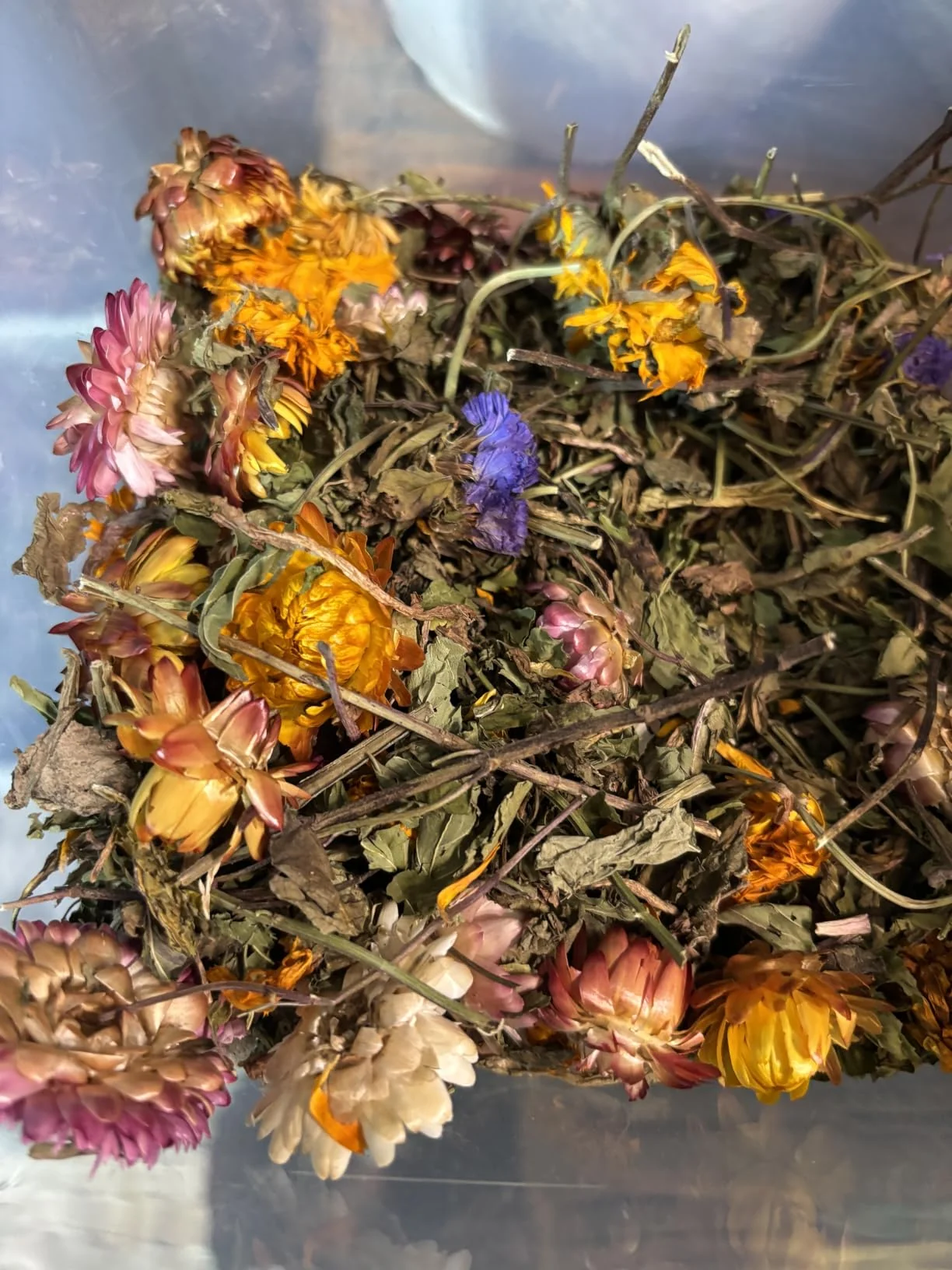
👀 Compare the Green Before the Next Scoop
Put the hay you normally feed beside the questionable product and compare the pieces, color, and visible mix. If the contents look substantially different from what the label suggests, don't let attractive packaging make the feeding decision for you.
Timothy hay is the more straightforward everyday option described in the evidence reviewed here for adult rabbits. Its calcium content is listed at roughly 0.4–0.6%, considerably below the cited 0.8% level associated with long-term urinary concerns.
Alfalfa is different. Its calcium content is listed around 1.3–1.8%, so feeding it as the main hay to an adult rabbit can push calcium intake well beyond the level highlighted in the evidence.
That does not mean every bite of alfalfa instantly creates a bladder problem. The concern is repeated, everyday feeding when a lower-calcium grass hay would be more appropriate for an adult rabbit.
So when comparing timothy hay for rabbits with alfalfa, look past the "richer" or "more nutritious" sales pitch. For an adult rabbit, the evidence reviewed here points toward timothy's lower calcium range as the more suitable long-term choice, while questionable labeling or visibly inconsistent hay deserves extra caution.
Signs of Excess Moisture and Mold in Packaged Rabbit Hay
A hay bag can look perfectly dry from the outside and still leave you wondering why your rabbit suddenly starts sneezing after feeding time. The real problem may be hiding inside the package, where moisture and poor storage can change what looked like ordinary hay.
In the case associated with PGH-AUDIT-X5V, rabbits were exposed to intensely dusty material with a strong peppermint-like odor and reportedly began sneezing heavily. Another reported case, PGH-AUDIT-1BSZ, involved packaged hay balls that developed live hay bugs after sitting in storage for months.
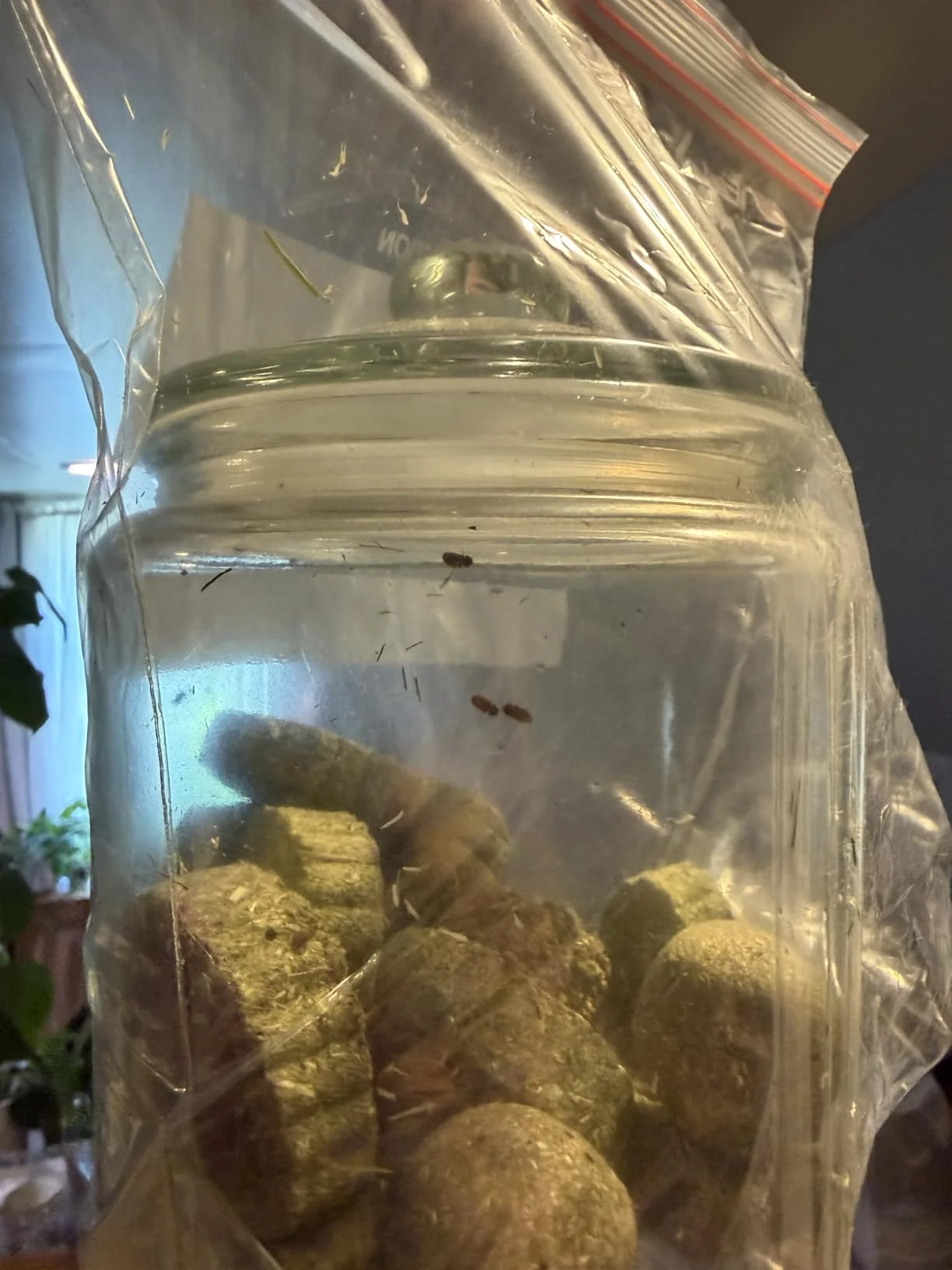
Those signs do not prove that every respiratory problem came from the hay, but they are difficult to ignore when they appear immediately after opening or after prolonged storage. A package that smells sharply unusual, produces excessive dust, or develops visible insects deserves a closer look before it becomes a rabbit's everyday food.
👃 Open the Bag and Smell Before Feeding
Open the package and pause before putting the hay into the enclosure. Check the smell, look for unusual dust, and inspect for insects or visible spoilage; if something seems markedly different from the hay your rabbit normally accepts, set that batch aside rather than hoping the smell will disappear.
Moisture is especially important during storage. The evidence reviewed here identifies 27% moisture as a critical upper limit for safe bulk hay storage, with higher moisture linked to poorer quality and spoilage after storage. For stored rabbit hay, the cited guidance points to keeping the material much drier, with less than 15% moisture recommended for the hay itself.
Think of it like leaving bread somewhere damp: the outside can appear normal while the contents gradually become a much worse food. That is why a sealed package is not automatically a clean package.
For the reported cases, the unusual dust, strong odor, and later insect outbreak are practical reasons to treat questionable hay cautiously. A rabbit owner should not have to gamble on whether a cheap bulk bag stayed properly dried and stored. If the seller cannot provide meaningful information about how the hay was dried and kept, a more transparent source is the safer direction.
What Happens When Fabric Feeder Hole Trims Tear and Create Entrapment Risks
A fabric hay feeder is supposed to keep the enclosure cleaner, not turn feeding time into a rescue situation. The danger starts when a rabbit can chew through the opening and change its shape.
The reported case tied to PGH-AUDIT-7CPT describes exactly that failure. The feeder opening lacked a chew-resistant edge, and after the rabbit damaged the area, its head became trapped, with the incident reportedly ending in strangulation.
That is a very different problem from a feeder that simply tears or looks shabby. Once chewing creates a new opening that can catch around a rabbit's head, the product has changed from a feeding accessory into an entrapment hazard.
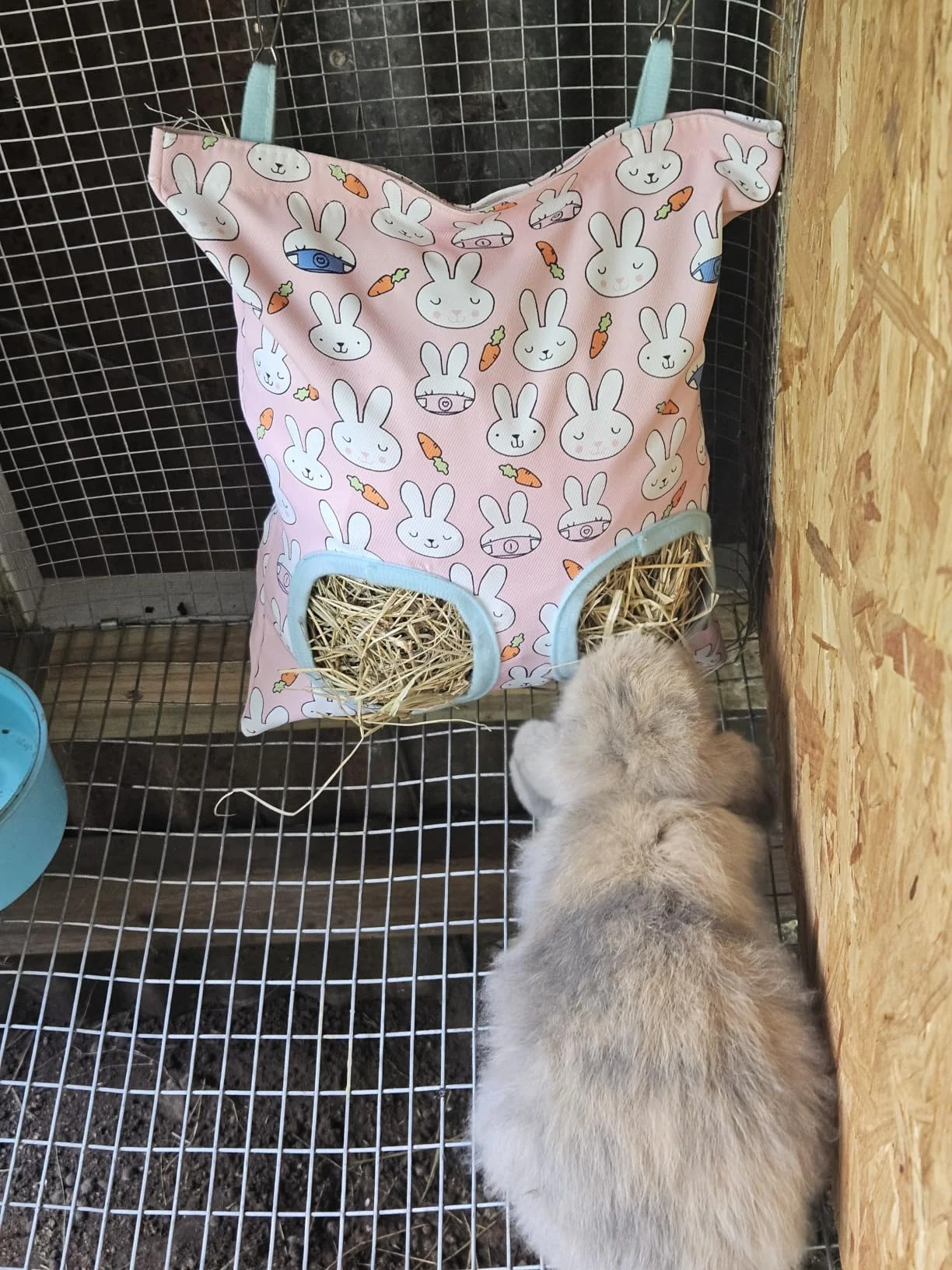
🖐️ Pull the Hay Opening Apart Before You Hang It
Before putting the feeder in the enclosure, gently inspect the entire feeding opening with your fingers. Look for loose fabric, torn edges, or a soft opening that can stretch and close around a rabbit's head; if the shape changes easily under light handling, do not assume it will remain safe after repeated chewing.
The feeding guidance reviewed here gives a clear dimensional reference: an elevated hay access opening should be at least twice the rabbit's head width, with a cited minimum of 12 cm for adult rabbits. It also specifically cautions against soft openings that can be torn apart by chewing.
This matters because rabbits do not treat fabric edges like humans do. A loose thread or weakened trim can become something to tug, bite, and enlarge, potentially changing the opening after the feeder has already passed your initial visual check.
The reported case makes that failure especially serious: the rabbit did not simply destroy the feeder and leave the hay untouched. The damaged opening reportedly trapped the head, a consequence that made the promise of a cleaner enclosure not worth the risk.
For fabric hay bags, durability is therefore only part of the decision. The opening must remain stable after normal rabbit interaction, and any feeder that can be chewed into a closing loop deserves immediate removal rather than another chance.
How Flimsy Hanging Clips and Light Hay Racks Cause Waste and Spills
A hay rack that flips over the moment a rabbit gets curious is more than an annoying mess. Once hay lands on the enclosure floor, it can be stepped on, soiled, and thrown away before your rabbit gets a chance to eat it.
The reported case linked to PGH-AUDIT-VR4 describes seams being torn apart within about two hours, followed by the metal clip coming loose. Another reported feeder, PGH-AUDIT-F79, was so light and unstable that the rabbit could toss it around instead of using it as intended.
That turns a feeding accessory into a daily waste machine. A rack that cannot stay put can leave perfectly good hay scattered across bedding and exposed to urine or other contamination.
🔗 Tug the Clip Before You Load the Hay
Before filling the rack, gently pull on the attachment point and move the empty feeder as your rabbit would. If the clip slips, the bag shifts dramatically, or the whole feeder is easy to flip, don't wait for a full load of hay to expose the weakness.
The feeding guidance reviewed here gives a useful target: elevated hay access should sit at least 10 cm above the floor, while hay pull-out waste should be kept to 15% or less. By contrast, open floor feeding is associated with more than 30% waste, along with greater opportunities for hay to become contaminated.
The distinction is easy to see at home. A stable feeder keeps the hay available where the rabbit can reach it; a flimsy one turns the same hay into floor debris that gets trampled, mixed with bedding, or soaked by an accident.
And once the hay is visibly soiled, saving money by putting it back into the feeder makes little sense. The cheaper rack can quietly become the more expensive choice when every tipped load ends with discarded hay.
The reported failures make the attachment hardware worth checking before purchase and after installation. If a clip or lightweight feeder cannot stay securely in place during ordinary rabbit interaction, its promised convenience may not survive the first serious tug.
Common Sizing Problems with Combination Feeder and Litter Box Units
A combination feeder and litter box can look like a clever space-saving solution until it arrives and the rabbit has barely enough room to use it comfortably. A listing may show a complete setup, but the usable space inside can be very different from the impression created by the photos.
The case associated with PGH-AUDIT-17RY involved a litter box repeatedly described as far too small for standard rabbits, with missing components such as the pan, brush, rolls, and toys that buyers expected from the presentation. Another reported unit, PGH-AUDIT-72H, was also much smaller than expected, lacked assembly instructions, and reportedly came apart during use.
That means the first sizing question is not simply, "What are the outside dimensions?" It is whether your rabbit can actually enter, turn, squat, eat, and leave without being squeezed by the surrounding parts.
👀 Look at the Usable Space, Not the Box Size
Before buying, check the actual interior opening and usable floor area rather than relying on the product's overall measurements. Compare those dimensions with your rabbit's current body size and normal movements, and remember that feeder components can reduce the space shown in the headline dimensions.
The reported evidence also includes a serious concern involving a dwarf rabbit and an included wood toy, which the reviewer associated with GI stasis. That report does not establish that the unit itself caused the condition, but it reinforces why unexpected accessories should not automatically be treated as appropriate for every rabbit.
A missing tray or brush creates another practical problem: the "all-in-one" setup may require additional purchases just to become usable. A compact package is not necessarily a complete solution if essential pieces are absent or the interior space is effectively unusable.
For these combination units, prioritize the dimensions your rabbit can actually use, not the size printed on the box. If the listing makes the product look roomy but the usable interior is tiny, the convenience pitch may not match what arrives at your door.
Hidden Hardware Risks: Finding Metal Staples and Hot Glue in Grass Chews
A chew made from grass can look reassuringly natural from the outside. The problem begins when the outside is hiding something your rabbit never should have to chew.
In the case associated with PGH-AUDIT-GJFS, reviewers reported finding hot glue and hidden metal staples inside carrot-shaped chew pieces. That changes the inspection completely: a toy marketed for chewing is no longer something you can judge safely by its outer appearance alone.
Another reported case, PGH-AUDIT-W1BS, involved grass treats described as extremely hard, with a rabbit reportedly dying after consuming them. The report does not establish that the product caused the death, but the combination of unusual hardness and the reported outcome is enough reason to treat questionable chew products cautiously.
🔍 Split One Open Before You Trust the Bag
Take one piece from a questionable batch and examine it closely before giving it to your rabbit. Look along seams, joins, and concealed sections for glue, staples, sharp metal, or anything that does not belong in a chewable grass product.
This matters because rabbits do not politely stop at the surface. Once a chew is being bitten apart, anything hidden inside can become part of what gets swallowed.
The safety rationale reviewed here is straightforward: a rabbit's digestive tract is vulnerable to swallowed foreign material, and the cited evidence raises concern about physical blockage or injury when unsuitable objects are ingested. A decorative chew should never require detective work just to establish that it contains only what the label promises.
The reported hardware findings make pure construction especially important. For grass chews intended for rabbits, a simpler product with no hidden staples and no glue holding internal pieces together removes an avoidable source of uncertainty.
If a chew breaks open and exposes hardware, unusual material, or unexpectedly hard pieces, the sensible move is to remove the entire batch rather than giving it another trial. The reported cases warrant caution around products whose construction cannot be verified from the finished piece.
Why Small Pets Reject Wood Sticks Treated with Artificial Apple Scents
A chew advertised as sweet-smelling apple wood should not leave an entire enclosure wondering what went wrong. When rabbits, hamsters, or other small pets repeatedly refuse a supposedly irresistible chew, the scent itself may be part of the problem.
The reported case associated with PGH-AUDIT-ZHPX involved wood sticks promoted with an apple scent that reportedly lacked the expected fruit aroma. Multiple small pets refused to chew them, even when they were offered repeatedly.
Another reported product, PGH-AUDIT-GJFS, was described as having a strong chemical smell immediately after opening. The reports do not establish what specific substance produced that odor, but the repeated rejection makes an unusual smell a practical warning sign rather than something to simply cover up with another treat.
👃 Smell the Sticks Before Offering Them
Open the package and smell the wood yourself before putting it into the enclosure. If the odor is sharply chemical, unusually strong, or simply unlike clean dried wood, leave the pieces out and compare them with untreated wood you already trust.
Rabbits and other small pets rely heavily on smell when deciding whether unfamiliar material belongs in their food or chew environment. That means a product that seems pleasantly scented to a human may still be rejected by an animal that detects the smell differently.
The evidence reviewed here specifically frames artificial aromatic treatment as a possible reason for defensive food rejection, but it does not provide enough detail to identify a particular fragrance ingredient or prove that every artificial apple scent is harmful. The safest practical conclusion is narrower: an unexplained chemical odor should not be treated as proof of freshness or quality.
A chew marketed as natural should also be easy to evaluate without guessing what has been added to it. Clean, untreated-looking wood with a straightforward ingredient story gives owners fewer unknowns to worry about.
When a whole group of small pets refuses the same sticks, the answer may not be that every animal suddenly became picky. The reported cases make the product's smell and labeling worth checking before buying another bag.
CONCLUSION
A careful buyer should judge rabbit feeding products by what arrives in the package, not only by the product photos or claims. Start with the hay itself: check its appearance, feel, smell, dust, and storage condition. For adult rabbits, the evidence reviewed here favors lower-calcium timothy hay for everyday use rather than making alfalfa the main hay.
Feeders deserve the same hands-on approach. Check that openings stay stable, clips hold firmly, racks do not tip easily, and the usable space is large enough for the rabbit to move normally. For combination units, confirm that essential parts are actually included.
Chews should also be inspected before use. If a grass product exposes glue, staples, metal, or unusually hard pieces, or if scented wood has a strong unexplained odor, there is little reason to take the chance. Choosing simple, transparent products and checking each batch before regular use is a practical way to reduce avoidable feeding problems.
THE ULTIMATE BUYING VERDICT
| Verdict | Key Consideration | Recommendation |
|---|---|---|
| 🔴 Significant concerns | Hay with unusual color or texture, excessive dust, strong unexplained odors, unstable feeders, unsafe openings, very small usable spaces, or chews containing hidden hardware | Avoid products showing these warning signs, and remove questionable items rather than continuing to test them with your rabbit |
| 🟡 Acceptable with limitations | Alfalfa may have a place in some feeding situations, while combination units or feeders may work when their size, stability, and included parts are suitable | Use these options only when their specific limitations fit the rabbit and the product passes a careful physical inspection |
| 🟢 Meets long-term expectations | Dependable hay quality, appropriate everyday calcium levels, stable feeder construction, adequate usable space, and simple chew materials that can be clearly inspected | Look for straightforward products with consistent contents, secure construction, suitable dimensions, and no unexplained materials or odors |