A hay feeder can seem like a simple purchase until the rabbit starts chewing, pushing, or squeezing into places the design did not handle well. A soft fabric opening may change shape after chewing. A weak seam can tear within hours. A freestanding rack can slide across the floor and leave hay mixed with urine, feces, or bedding. Even an all-in-one litter box and feeder can become a poor choice when the usable space is too small for an adult rabbit.
The same lesson applies to DIY feeders. Large gaps, rough wire ends, loose joints, and unstable parts can create problems that are easy to miss before the feeder is used. The safest buying approach is therefore not to judge a feeder only by its appearance or advertised features. Check how the feeding openings hold their shape, how firmly the feeder stays in place, how much usable space the rabbit has, and whether every reachable edge feels smooth and secure.
COMMON PROBLEM OVERVIEW
| Product Area | Common Problems | Why It Matters |
|---|---|---|
| Fabric feeders | Openings and seams can be chewed apart quickly | Damaged fabric can change the opening and leave loose material accessible |
| Freestanding and combined feeders | Racks may tip, slide, or provide too little usable space | Hay can end up on the floor, while cramped designs may be uncomfortable for adult rabbits |
| DIY wire feeders | Large gaps, sharp edges, loose joints, or unstable construction | Rabbits need easy hay access without excessive openings or rough reachable surfaces |
Why Fabric Feeder Holes Without Reinforced Edges Can Trap a Rabbit's Head
A hay feeder can look harmless simply because the fabric feels soft in your hand. The problem starts when a rabbit treats that same soft opening like something to chew, pull, and widen.
One reported case tracked as PGH-7CPT involved a rabbit getting its head trapped after chewing through the binding around the hay opening. The same shipment was also reported missing its mounting hooks, while the thin fabric was described as tearing easily during normal use.
That creates an especially nasty failure pattern: the opening does not stay the opening you bought. Once the edge is chewed apart, the shape changes, loose fabric becomes another thing to pull at, and the feeder can stop functioning as a controlled hay access point.
🪢 Look Closely at the Hole Before Hanging It
Take the feeder in your hand and gently pull the fabric around each hay opening. If the edge stretches noticeably, separates at the stitching, or already shows loose threads, don't assume the rabbit will leave it alone.
The reported experience with this product line is a useful warning: another rabbit feeder made from similarly fragile fabric was shredded around its hole trims after only a few uses, while another rabbit tore one side apart in under two hours.
The safer design principle here is fairly simple. The feeding opening should remain wide enough for the rabbit's head to enter and leave naturally, rather than relying on flexible fabric that can be chewed into a smaller, irregular opening. The supplied guidance places the access width at about twice the rabbit's head width, with at least 12 cm for adult rabbits.
That matters because a feeder opening that changes shape after chewing cannot be judged by its advertised dimensions alone. Check the actual opening and its edges, not just the product photo.
For this reported case, the combination of damaged openings, trapped-head reports, and missing mounting hardware gives cautious buyers good reason to favor a feeder whose openings remain firm and predictable during daily use.
What Happens When Rabbits Chew Through Thin Fabric Feeders in Hours
A hay feeder can survive shipping, look perfectly fine on day one, and still fail almost immediately once a rabbit starts chewing. With a fabric bag, the rabbit gets to decide how long the opening, seams, and sides remain intact.
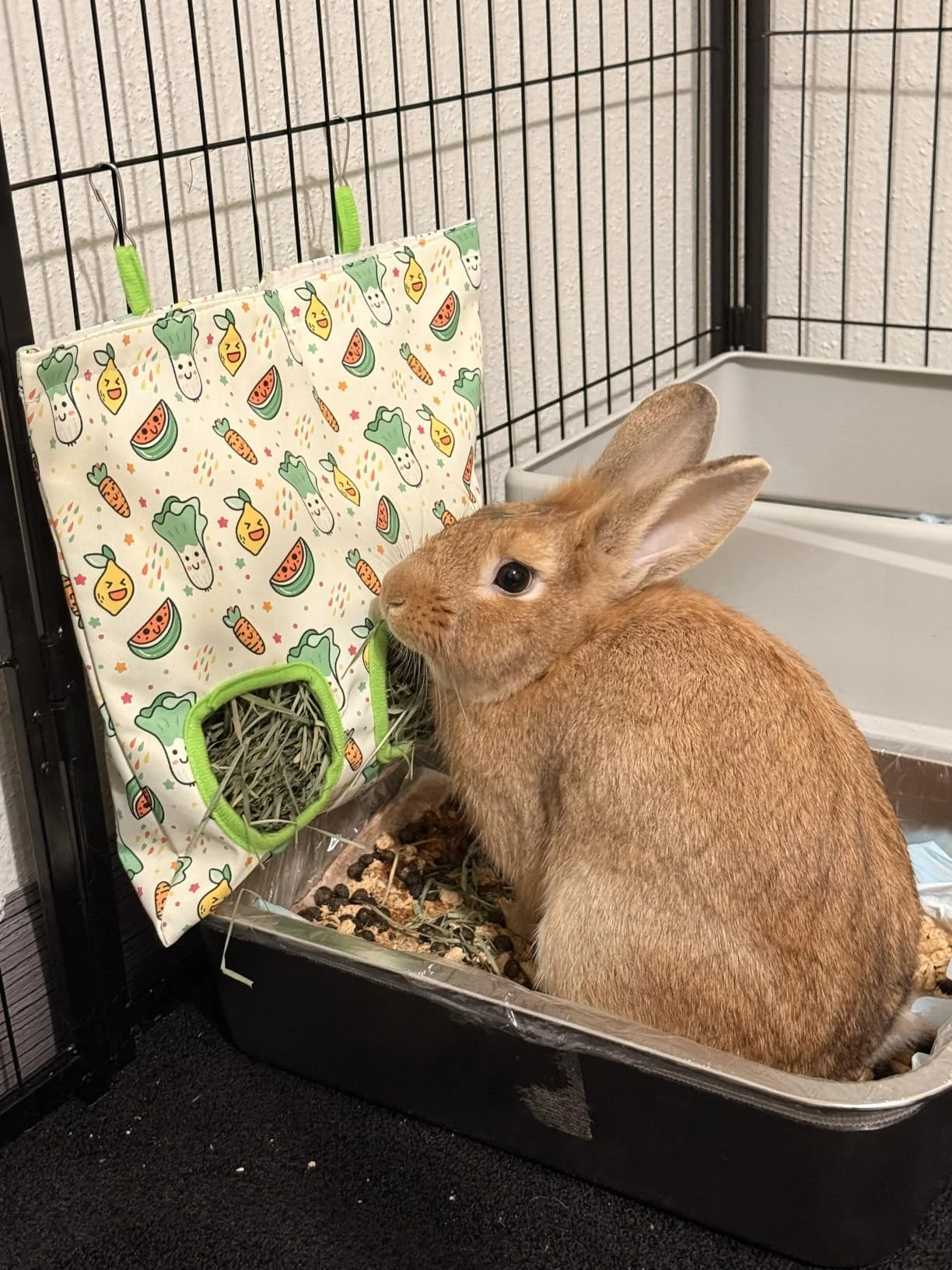
A reported case tracked as PGH-S1VR describes a feeder that was shredded on one side in less than two hours. The stitching was compared to dental floss, and the item reportedly arrived with visible hygiene concerns.
That is not a minor cosmetic problem. Once the side gives way, hay can spill everywhere, the feeder can detach or sag, and loose pieces of the bag become accessible to the same animal that just destroyed it.
More importantly, do not treat a "heavy-duty" fabric claim as proof that the feeder can withstand rabbit chewing. The reported experience here shows that a bag can fail within hours despite being sold for small-animal use.
🦷 Tug the Seam Before You Hang It
Take the empty feeder and gently pull the fabric beside the feeding opening and along the main seams. If the stitching visibly separates, the cloth stretches excessively, or loose threads appear with light handling, that is a good reason to stop before your rabbit gets involved.
The same reported case includes other reports of rabbits ripping through the hole trim after only a few uses, pulling the bag away from its clamps within days, and creating enough damage to make the feeder unusable.
The supplied guidance raises an additional concern about rabbits swallowing non-food fabric fibers, but the available source material here does not independently establish the specific intestinal blockage mechanism described. What the consumer evidence does show is simpler: this feeder's fabric and stitching were reported to fail rapidly under ordinary rabbit interaction.
For this reported product case, a feeder that can be torn apart in hours deserves a very different risk assessment from one whose feeding area remains intact. If the seams already feel flimsy in your hands, saving a few dollars on the bag may not be much of a bargain.
How Unstable Freestanding Racks Lead to Floor Soiling and Hay Waste
A freestanding hay rack should stay where you put it. When a rabbit can shove it across the floor, the feeding problem quickly becomes a cleanliness and waste problem.
One reported case tracked as PGH-MZF79 involved a rack that was too unstable to hold its intended hay properly. The rabbit repeatedly knocked it over and tossed it around, leaving the feeder unable to do its basic job.
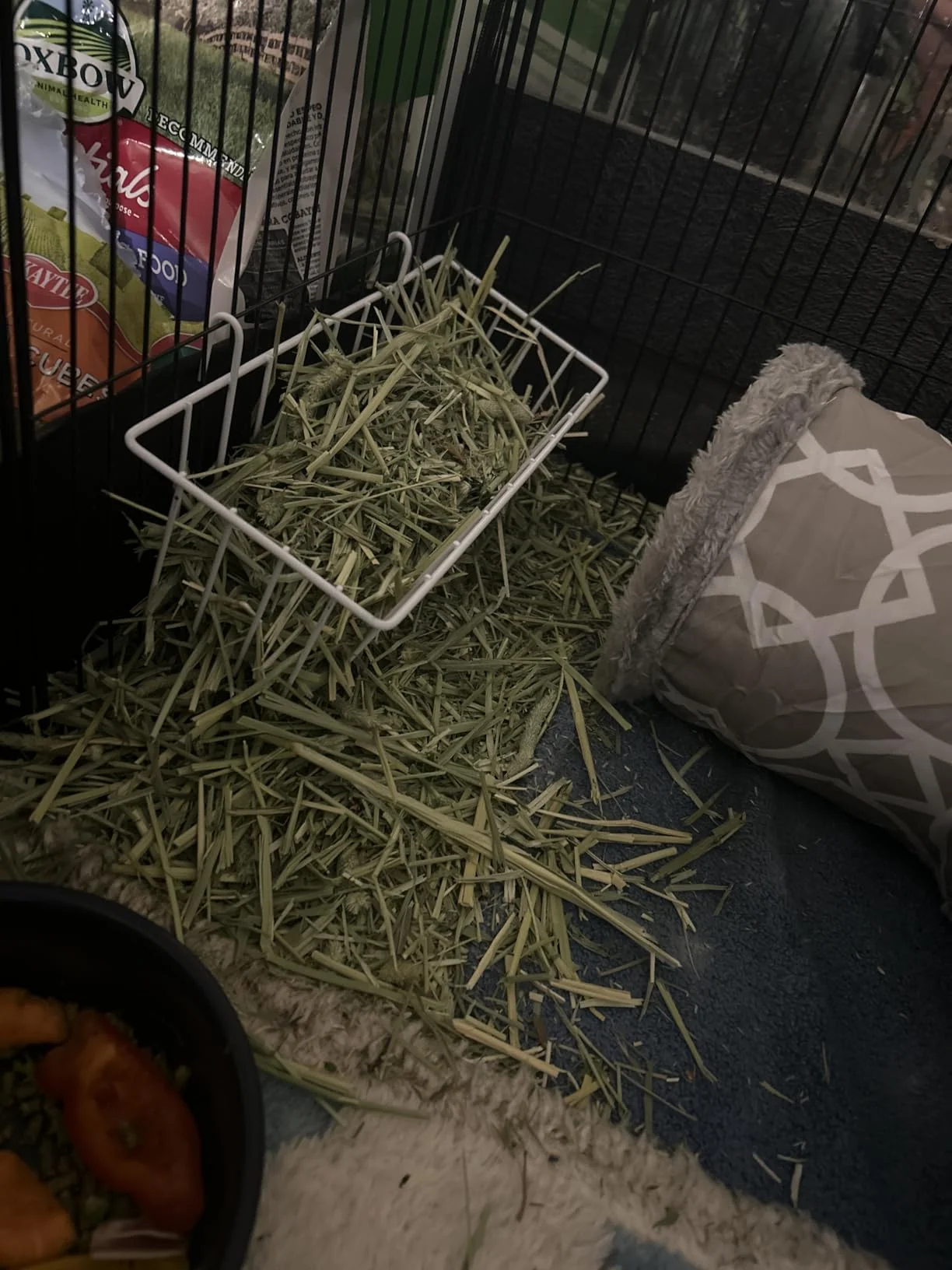
That failure is easy to underestimate. Once hay lands on the floor, it can mix with urine, feces, bedding, and whatever else is under the rack; the rabbit may then either ignore it or eat from a visibly dirty pile.
🌿 Push the Rack Before You Fill It
Give the empty rack a gentle sideways push with one hand. If it slides, tips, or rocks easily, imagine that same movement happening repeatedly when a rabbit pulls hay from it, climbs against it, or simply decides the feeder looks like a new toy.
The supplied feeding guidance gives a practical target: keep the hay access at least 10 cm above the floor and limit loose hay pull-out so waste stays at 15% or less. Floor-level access is specifically associated with more opportunity for urine and feces to contaminate the hay.
That makes the basic design choice fairly straightforward. A stable, elevated holder keeps the forage where the rabbit can reach it without putting the entire pile on the floor every time the feeder gets bumped.
The reported PGH-MZF79 experience shows why a rack that cannot stay put may be unsuitable even if it technically holds hay when first assembled. For owners dealing with constant floor mess, choosing a feeder that stays firmly positioned can remove one very avoidable source of wasted and soiled hay.
Why Undersized Litter Box and Feeder Combos Cause Discomfort for Adult Rabbits
A litter box with a hay feeder built into it sounds convenient—until the usable space is so small that the rabbit cannot comfortably stand, turn, and eat. A compact footprint is not automatically a space-saving win if the rabbit cannot actually use it.
One reported case tracked as PGH-17RY described a litter box as dramatically smaller than expected and unsuitable for standard rabbits. The same purchase was also reported to be missing the expected pan, brush, rolls, and toys, leaving the buyer with much less than the product presentation suggested.
That mismatch matters even more with an all-in-one design because the feeder and toilet compete for the same usable area. If the rabbit has to squeeze into a narrow corner just to reach hay or reposition itself, the advertised combination may look efficient on a product page while feeling cramped in daily use.
📏 Stand Inside the Space Before You Commit
Measure the actual floor area available to your rabbit—not the outside dimensions shown on the listing. Then check whether your rabbit can stand normally, turn around, and settle without having to press against the sides.
For this reported product, even a dwarf rabbit was described as finding the box excessively small, while the supplied evidence also notes that the product was viewed as unsuitable for standard rabbits.
There is also an important distinction between a missing accessory and a poor fit: a replacement tray can sometimes solve the first problem, but you cannot add usable floor space to an undersized enclosure simply by adding another accessory.
The current case therefore points to a simple buying rule: judge a feeder-and-litter combination by the rabbit's actual usable space, not by how many functions the listing claims to combine. For this reported product, the combination of unexpectedly small dimensions and missing components makes it reasonable to approach the advertised "all-rabbit" suitability with caution.
Key Safety Guidelines for Sizing Wire Spacing in DIY Rabbit Hay Feeders
A DIY rabbit hay feeder does not need to be complicated, but every opening and exposed edge has to earn its place. A loose assembly or rough wire can turn a simple hay holder into something the rabbit keeps pushing, chewing, or catching against.
One reported feeder assembly was described as smaller than expected, difficult to attach, and prone to falling apart during use. It also arrived without assembly instructions, leaving the owner to work out how the pieces were supposed to stay together.
For a homemade rack, start with the opening rather than the decoration. The supplied guidance says the spacing should allow the rabbit to pull hay smoothly while reducing opportunities for a paw or head to become caught.
Do not treat a wider gap as automatically better. A rabbit needs to reach the hay easily, but an opening that is unnecessarily large gives the animal more room to push a paw, nose, or head through.
The same principle applies to the wire itself. Avoid sharp, unfinished ends and rough corners. The supplied design guidance specifically calls for smoothly rounded edges so exposed metal does not scrape the eye or mouth.
🔧 Run Your Fingers Along Every Edge
Before putting hay or a rabbit anywhere near a new DIY feeder, slowly run a fingertip along every reachable wire end, corner, joint, and cut edge. If you feel a snag, sharp point, loose section, or movement between pieces, stop and fix that spot before use.
One important limitation: the supplied material does not provide a validated universal wire diameter, exact grid spacing, or exact feeder height for DIY construction. It therefore would be misleading to invent "industrial-grade" measurements and present them as established rabbit safety standards.
What the evidence does support is more practical: stable construction, openings that permit easy hay access without excessive gaps, and smoothly finished edges should be treated as baseline requirements. A DIY rack that cannot meet those basics is not made safer by simply adding more wire.
CONCLUSION
The main buying lesson is to inspect the parts a rabbit will actually touch, chew, and push. For fabric feeders, gently test the area around the openings and seams. Stretching, loose threads, or stitching that separates easily are warning signs. For freestanding racks, push the empty feeder before filling it. A rack that slides or rocks easily may create more waste and mess during daily use.
Size also deserves a closer look. With feeder-and-litter combinations, measure the usable floor area rather than relying on the outside dimensions. The rabbit should have enough room to stand, turn, and eat without being squeezed into a narrow space. For DIY designs, check every wire end, corner, and joint by hand before use. Smooth edges, stable construction, and sensible openings matter more than decorative features or complicated designs.
THE ULTIMATE BUYING VERDICT
| Verdict | Key Consideration | Recommendation |
|---|---|---|
| 🔴 Significant concerns | Fragile fabric, damaged feeding openings, unstable racks, undersized combined spaces, or sharp and loose DIY parts | Avoid products showing these problems, especially when the feeder can be torn, tipped, or made uncomfortable during normal rabbit use |
| 🟡 Acceptable with limitations | A feeder may work when its openings remain usable, its rack stays stable, and its available space fits the rabbit, but some designs still require frequent inspection | Choose only when you can verify the actual opening, usable space, seams, joints, and stability before regular use |
| 🟢 Meets long-term expectations | Firm feeding openings, durable seams, stable elevated placement, adequate usable space, and smoothly finished DIY edges | Look for a feeder that stays predictable during daily use and remains easy for the rabbit to reach without excessive gaps or rough surfaces |