
A dog bed can seem like a great purchase on delivery day. The foam looks thick, the cover feels soft, and the product promises comfort for years to come. Then daily use begins. A large dog compresses the cushion, an accident reaches the inner foam, or routine washing becomes far more difficult than expected. Problems that never appeared in the product photos start showing up where your dog actually sleeps.
Many owners don't realize these issues until weeks or months later, after the return window has already passed. Features that looked impressive in the listing often matter much less than how the bed performs through regular sleeping, cleaning, and everyday wear. Looking beyond marketing claims and paying closer attention to real-world durability can help you choose a bed that stays comfortable long after it leaves the box.
CONSUMER EVIDENCE OVERVIEW
| Product Area | Common Problems | Why It Matters |
|---|---|---|
| Cushion Support | Thick foam compresses quickly under heavier dogs. | Less support may reduce sleeping comfort over time. |
| Water Protection | Moisture passes through the cover into the inner foam. | Hidden dampness can make cleaning more difficult and shorten the bed's usable life. |
| Long-Term Durability | Hardware, covers, and structural components wear faster than expected. | Everyday use can gradually reduce stability, comfort, and overall reliability. |
Why Thick Dog Beds Can Still Compress Below 3 Inches Under Heavy Dogs
A dog bed can look impressively thick when it comes out of the box, yet feel completely different once a large dog settles in for the night. Several owners expecting an 8-inch orthopedic cushion instead described the sleeping surface flattening until only about 1.5 to 3 inches remained beneath their dog's weight. At that point, the extra height around the edges becomes little more than decoration.
One reported case, PGH-CASE-2HJZ, involved a bed used by a dog weighing well over 100 pounds. Another, PGH-CASE-ZCTY, showed a similar pattern with giant-breed use. In both situations, owners reported that the foam compressed enough for their dogs to end up resting against the hard floor instead of the thick support promised in the listing.
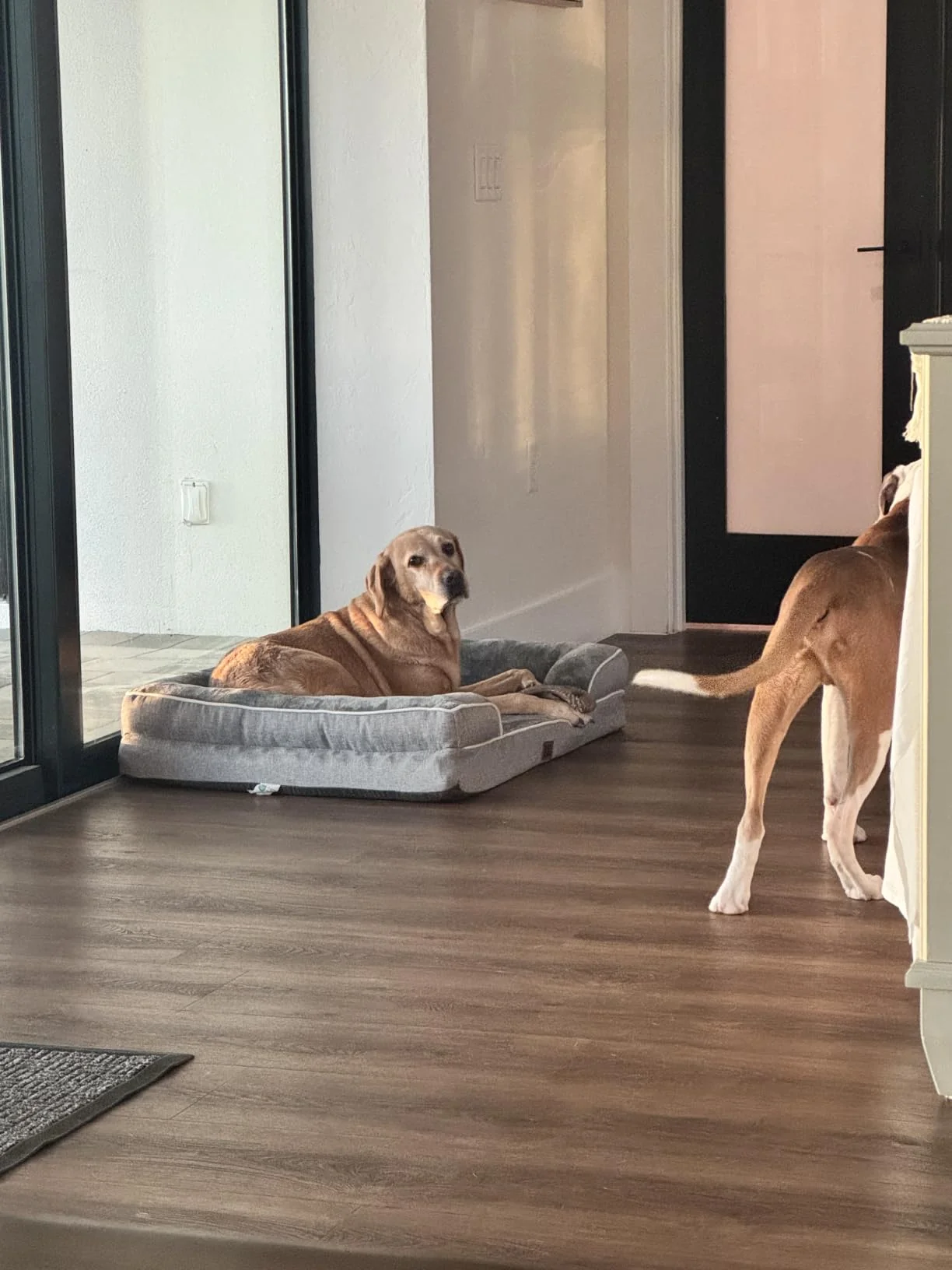
But appearance isn't the same as support. A tall mattress made from foam that collapses too easily can leave heavy dogs carrying almost all of their body weight on their hips, shoulders, and elbows. For older dogs already struggling to stand up after sleeping, that difference can turn a full night's rest into repeated repositioning and restless sleep.
🖐️ Press the Sleeping Spot Before Bedtime
Push your hand firmly into the exact area where your dog usually sleeps. Hold it for several seconds, then slowly release.
If your palm reaches the floor with very little resistance, or the foam stays noticeably flattened after you lift your hand, your dog is probably experiencing the same thing every night—just with far more weight than your hand can create.
Research examining sleep comfort in dogs with joint disease has consistently pointed toward lasting cushioning rather than simple mattress height. When support disappears under body weight, hard flooring can increase pressure on already sensitive joints and make uninterrupted rest more difficult for affected dogs.
That doesn't automatically mean every thick bed performs poorly. It does suggest that advertised thickness alone isn't enough to judge real support, especially for dogs weighing around 100 pounds or more. If a bed marketed as "medical-grade orthopedic" still bottoms out under normal use, the practical experience may fall well short of the promise.
What Happens When Liquid Seeps Through a Water-Resistant Bed Cover
A bed doesn't have to look soaked to develop a hidden hygiene problem. Some products advertise a water-resistant or even waterproof cover, but owners discovered that once urine slipped past the fabric, the foam underneath absorbed it like a sponge. The outside dried. The inside didn't.
One reported case, PGH-CASE-DQBB, involved a 14-year-old three-legged terrier with occasional incontinence. After several accidents, the owner unzipped the cover and found urine had already soaked deep into the foam, where mold and a strong odor had developed. A separate report, PGH-CASE-79N7, described liquid passing through the cover despite expectations that the mattress was fully protected.
Unfortunately, once moisture reaches the inner cushion, cleaning becomes much harder than wiping the surface. The smell may seem to disappear for a while, but the damp foam hidden inside can stay wet far longer than most people realize, shortening the usable life of the bed and creating an unpleasant place for a dog to sleep.
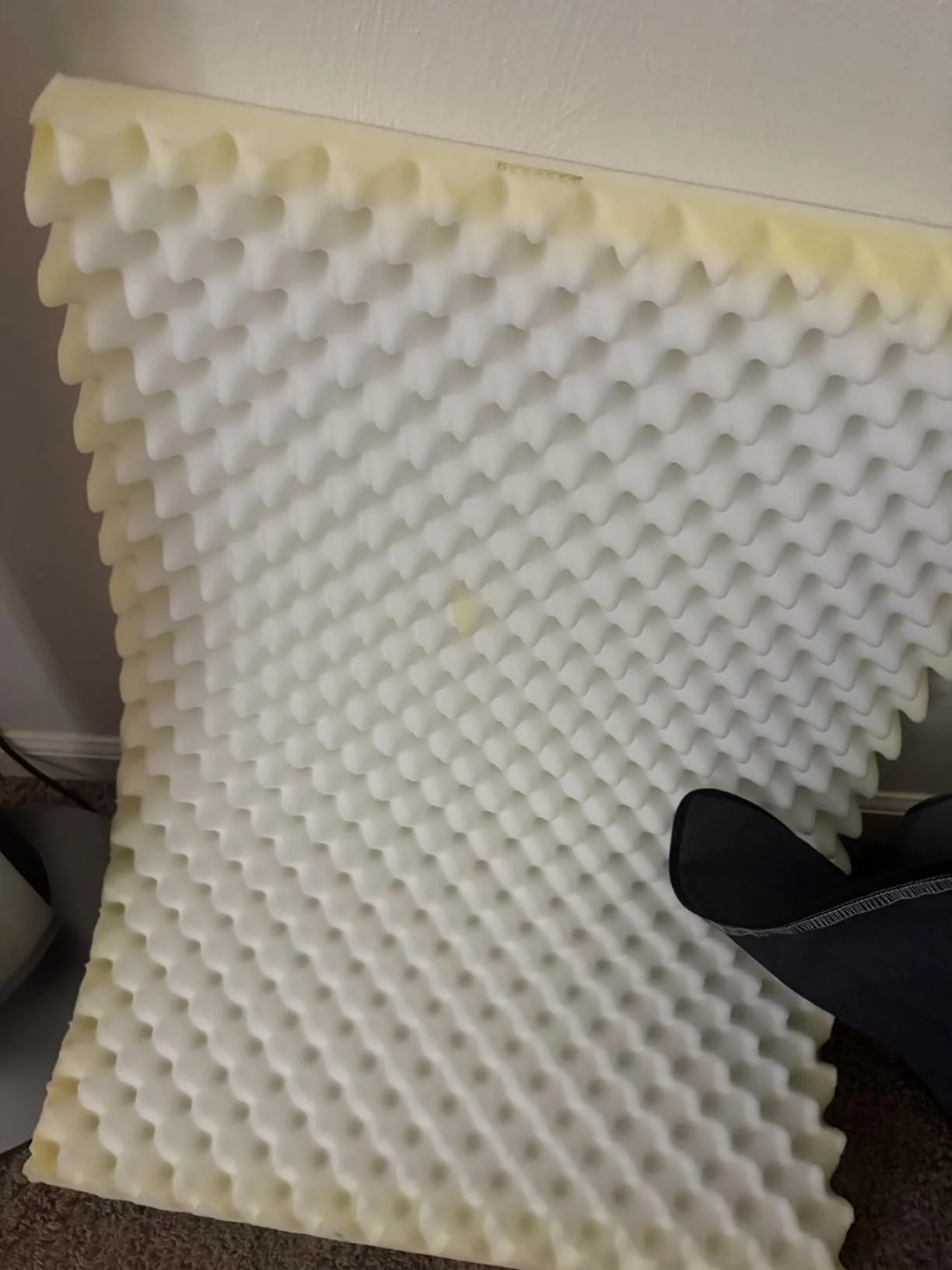
💧 Open the Cover Before the Next Wash
Unzip the cover and press a clean paper towel against the center of the foam.
If the towel comes away damp, stained, or carrying an odor even though the outside fabric feels dry, the protective layer has already failed where it matters most. Surface cleaning alone won't remove moisture that's trapped deep inside the cushion.
Clinical evaluations of waterproof sleep surfaces have shown that a true liquid barrier helps keep moisture out of the inner padding, reducing conditions that allow bacteria and mold to grow while also extending the usable life of the mattress.
A water-resistant cover can still be useful for small spills, but it shouldn't be confused with a fully sealed barrier. When liquid repeatedly reaches the foam, the real-world performance may not match the product's waterproof claims, particularly for senior dogs or pets with ongoing accidents.
Are Pet Stairs with a 4-Inch Top Step Safe for Older Dogs?
The final step is where many older dogs hesitate, and there's a good reason for it. Some pet stairs look wide and stable from the front, but the top platform is only about 4 inches deep. That leaves very little room for a large paw to land before the dog has to step onto the bed.
One reported case, PGH-CASE-D6ZB, described a dog repeatedly missing that narrow top step while climbing. Another, PGH-CASE-98V6, involved an elderly dog and a recovering cat that lost balance on a soft stair design after the inner support compressed, causing the entire body to roll sideways instead of moving forward.
That's where the problem shifts from comfort to footing. If the upper platform flexes under weight or doesn't provide enough space for a secure step, older dogs often compensate by stretching farther than they normally would. For pets already dealing with stiff joints or limited mobility, that extra reach can quickly become an awkward slip rather than a confident climb.

🐾 Stand Beside the Top Step
Place your hand on the highest platform and press down where your dog's front paws usually land.
If the surface noticeably sinks, rocks from side to side, or leaves only enough room for part of your hand, imagine a large paw trying to stop there before stepping onto the bed. That small landing area gives very little margin for an aging dog that already moves cautiously.
Studies examining canine mobility have found that gentler climbing angles reduce the effort required from joints during elevation changes, while steeper approaches demand greater movement from the shoulders, hips, and back. A wider, more stable landing also gives dogs extra time to shift their weight before taking the final step.
That doesn't mean every soft stair or compact design is unsafe. It does mean that a narrow top platform combined with a steep climb can become an unnecessary challenge for senior dogs or those living with arthritis or spinal conditions, even if the product appears sturdy in photos.
Washing Non-Removable Dog Beds: Common Washing Machine Problems
A dog bed that's advertised as machine washable sounds convenient—right up until wash day. The biggest surprise isn't usually getting it into the washer. It's trying to get it back out after the inner filling has soaked up gallons of water and turned into something that feels more like a soaked concrete block than a pet bed.
One owner, PGH-CASE-WTVB, described a non-removable bed that absorbed so much water it became nearly impossible to lift. Even after a full spin cycle, the center stayed saturated and extremely heavy. Another report, PGH-CASE-LJKV, involved a washable mud mat whose seams split apart during the washing and spinning process, leaving the product damaged after routine cleaning.
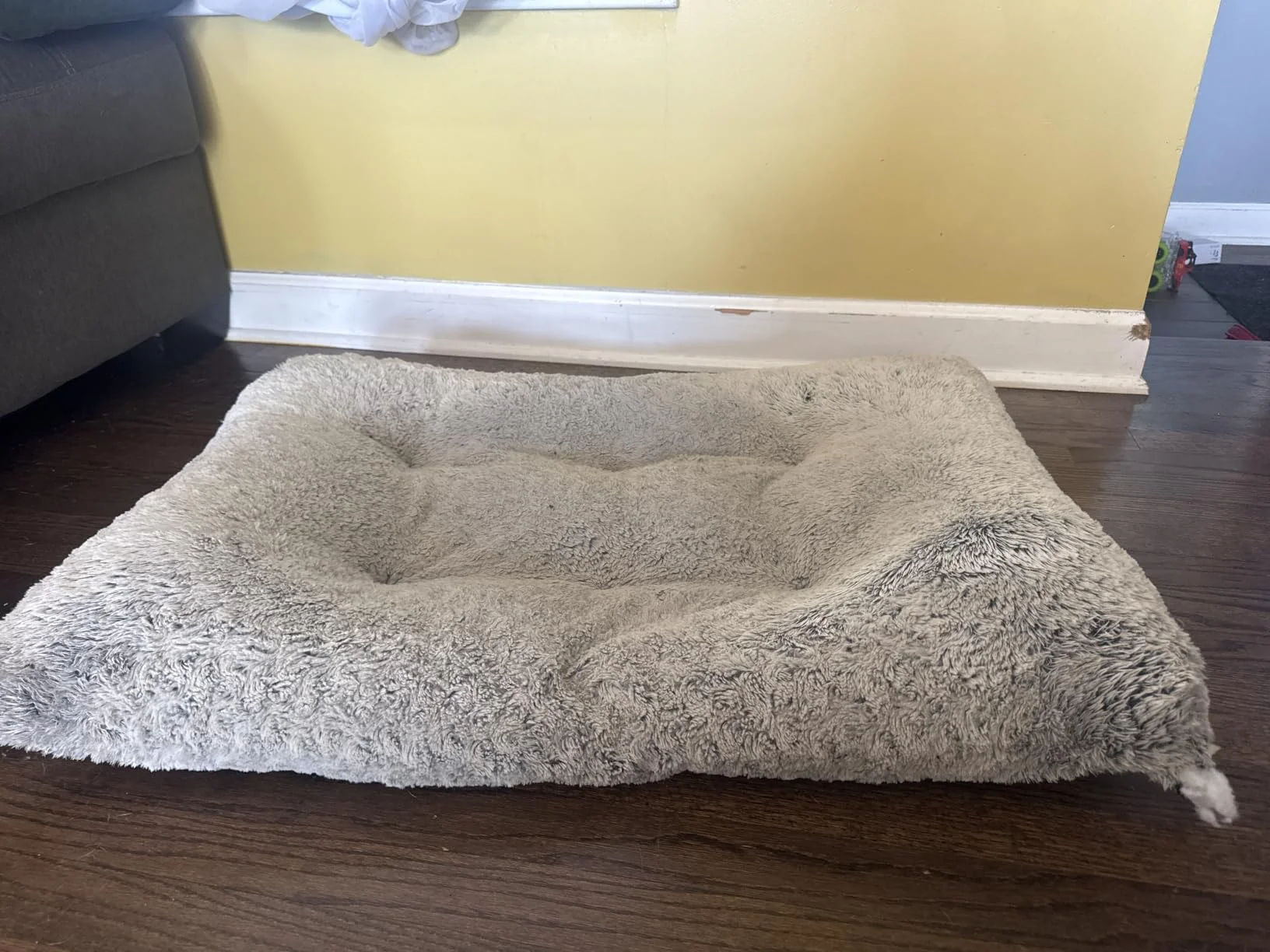
But the problem doesn't end with the bed itself. When oversized foam and filling hold excessive water, the washing machine has to spin a load that may no longer be evenly balanced. That extra weight can cause violent shaking, repeated spin failures, or force owners to stop the cycle before it finishes.
🧺 Unzip the Cover Before Laundry Day
Take a close look before putting the bed into the washer.
If there's no zipper, no removable outer cover, and the entire cushion has to be washed as one oversized piece, expect the inner filling to hold far more water than a separate cover would. Once soaked, it may stay heavy for hours and become difficult to dry evenly.
For beds that cannot be separated into individual washable parts, routine cleaning often becomes much more time-consuming than the product photos suggest. These owner accounts don't mean every one-piece bed will fail, but they help explain why many owners eventually prefer designs with a fully removable zippered cover instead of washing the entire cushion every time it gets dirty.
Chemical Odors in New Foam Beds and Skin Reactions in Short-Haired Breeds
A "new bed smell" isn't always just an inconvenience. Several owners expected the odor to disappear after a day or two, but instead noticed their dogs becoming uncomfortable shortly after using the bed. For dogs with short coats and constant skin contact with the sleeping surface, that first impression can matter far more than it does for humans.
One reported case, PGH-CASE-ZCTY, involved a short-haired pit bull that developed raised bumps across its body after sleeping on a newly opened foam bed. Another case, PGH-CASE-DQBB, described a bed that continued to give off a strong chemical odor even after unpacking, leaving the owner concerned about allowing the dog to keep using it.
The smell itself isn't necessarily the only issue. When low-quality foam continues releasing noticeable odors, the sleeping surface may also collect dust and other irritants over time. For sensitive dogs, especially those already prone to skin or breathing problems, that combination can make a brand-new bed far less inviting than expected.
👃 Smell the Foam Before Your Dog Sleeps
Unzip the cover and place your nose close to the center of the foam instead of the outer fabric.
If the odor is still sharp enough to make you instinctively pull away after the bed has been aired out, your dog will be resting only inches from that same source for hours at a time. If you also notice your pet scratching more than usual or developing new skin irritation after switching beds, the sleeping surface deserves a closer look.
Veterinary research has examined how chemical emissions and accumulated allergens inside foam materials may contribute to skin and respiratory irritation in susceptible dogs. While not every dog will react the same way, minimizing unnecessary exposure is generally considered part of maintaining a cleaner sleeping environment.
A noticeable odor doesn't automatically mean every foam bed is unsafe, and some materials naturally dissipate their smell after airing out. Even so, when a strong chemical smell lingers alongside reports of skin irritation, the overall experience may not reflect the level of quality many buyers expect from a premium pet bed.
Car Seat Covers for 100+ lb Dogs: Strap Failure and Ventilation Issues
A seat cover may look perfectly secure while the vehicle is parked, but the real test begins when a 100-pound-plus dog shifts its weight during a drive. Several owners found that the weak point wasn't the fabric—it was the straps and hardware holding everything together. Once those failed, the entire seat cover could collapse toward the footwell.
One reported case, PGH-CASE-5ZD7, involved a 142-pound dog that pulled hard enough during normal movement to snap one of the retaining straps. The same owner also noted that the design blocked airflow to the rear seating area, leaving the dog noticeably hotter and less comfortable during longer trips.
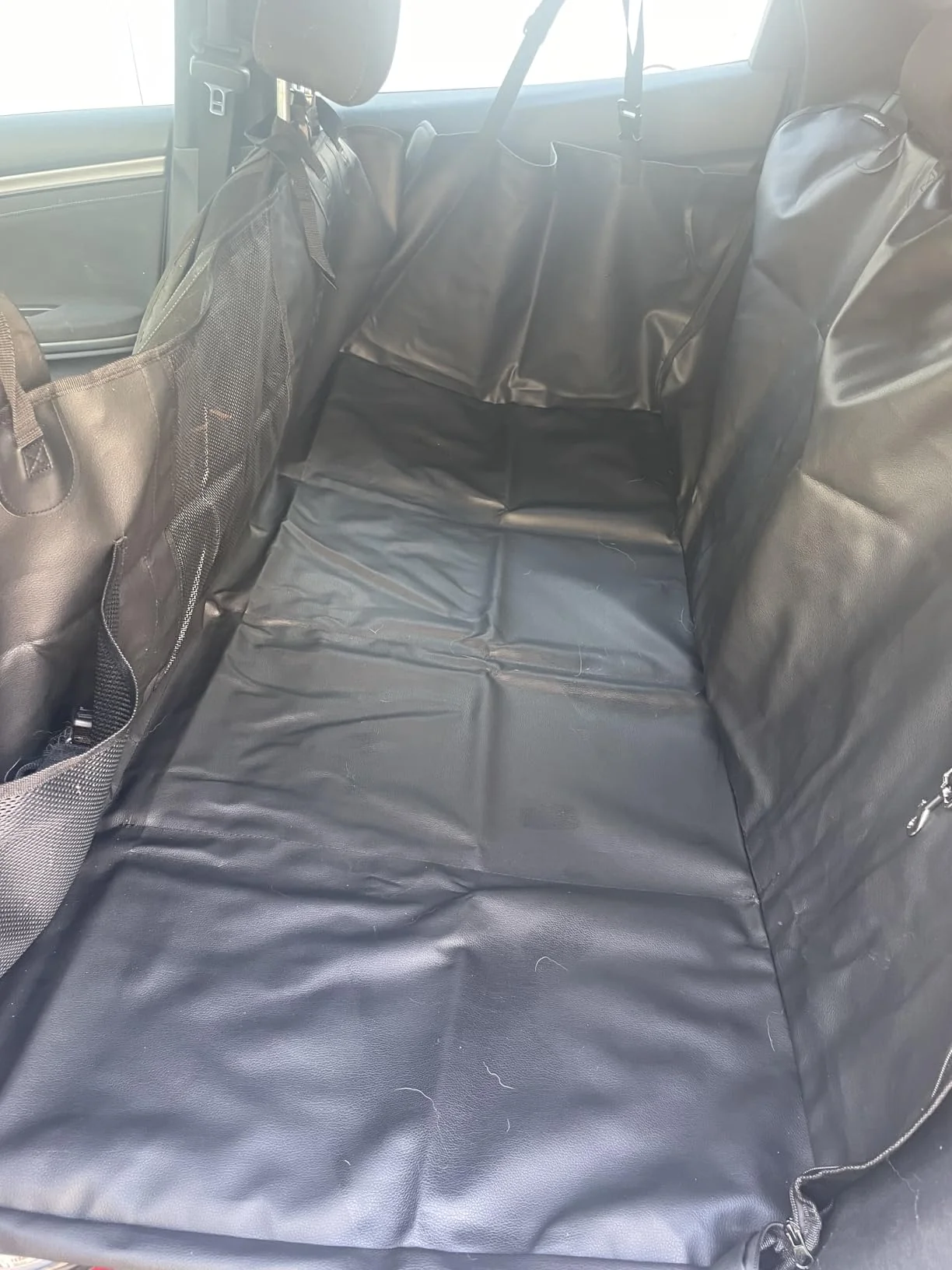
A broken strap isn't just an inconvenience. When one anchor gives way, the cover can slide unexpectedly as the dog adjusts position, forcing the animal to brace against an unstable surface instead of riding securely. Add trapped heat beneath a solid fabric barrier, and an already stressful trip can become even more uncomfortable.
🚗 Pull the Rear Straps Before Your Next Drive
Grab each strap near the buckle and give it several firm tugs in different directions.
If the webbing stretches excessively, the stitching starts separating, or the buckle shifts under moderate force, remember that a large dog can generate much greater force every time it stands, turns around, or leans into a corner. Then check whether the rear air vents remain completely open once the cover is installed. If airflow is blocked behind a full hammock panel, the back seat may become noticeably warmer than expected.
Research into body temperature regulation has shown that steady heat release is essential for maintaining normal comfort, making unrestricted airflow particularly important during travel. A seat cover that combines reliable load-bearing hardware with effective ventilation is better positioned to handle both movement and heat than one that focuses only on protecting upholstery.
None of this means every heavy-duty seat cover will suffer strap failure or trap excessive heat. It does suggest that products marketed for giant breeds deserve a close look at both load-bearing hardware and rear-seat airflow, rather than relying on reinforced fabric claims alone.
When Zipper Defects and Flimsy Side Bolsters Lose Their Shape
A supportive dog bed isn't just about the center cushion. The raised sides are supposed to give dogs a comfortable place to rest their head, while the zipper should survive years of routine washing. When either one fails during the first few uses, the entire bed quickly feels worn long before its time.
One reported case, PGH-CASE-79N7, described side bolsters that gradually lost their shape as the filling shifted into uneven clumps. Instead of forming a supportive edge, the sides sagged and flattened, leaving little for the dog's head or neck to lean against. Another owner, PGH-CASE-2HJZ, reported a zipper that failed after normal use, making it impossible to close the cover properly again.
Once the zipper gives out, regular cleaning becomes frustrating because the cover can no longer stay securely in place. At the same time, lumpy side bolsters stop acting like supportive cushions and become little more than loose fabric wrapped around uneven filling.
🛏️ Feel Both Side Cushions Yourself
Run both hands along each bolster from end to end.
If you can feel large empty spaces, hard clumps, or filling that slides from one end to the other, the side support is already breaking down. Then slowly zip and unzip the cover from end to end. A zipper that catches repeatedly, separates behind the slider, or refuses to stay closed is unlikely to improve with continued use.
These reported issues don't mean every bed with side bolsters or a zipper will develop the same problems. They do explain why many buyers eventually favor designs with shape-retaining side cushions and durable locking zippers, since those components are used every day and often determine how well the bed holds up over time.
How Sizing Discrepancies Impact Sleeping Space in Extra-Large Beds
An XL label doesn't automatically mean a giant dog will actually have room to stretch. Several owners found that the usable sleeping area was noticeably smaller than expected because the raised sides and overall dimensions reduced the interior space far more than the product photos suggested.
One reported case, PGH-CASE-WTVB, described a bed measuring 1–2 inches smaller than expected, leaving less room for a large dog to fully extend its body. Another owner, PGH-CASE-LJKV, reported similar sizing differences, finding that the advertised dimensions didn't reflect the space the dog could actually use once the bolsters were taken into account.
The missing inches may not sound significant on paper, but they can make the difference between a dog sleeping with its legs comfortably stretched out or curling up simply because there isn't enough room. Over time, constantly resting in a cramped position can leave large dogs changing position more often instead of settling into a relaxed sleep.
Research observing canine sleep behavior has noted that dogs naturally choose positions that allow their muscles to relax when adequate space is available. A bed that restricts normal stretching may reduce overall sleeping comfort, particularly for larger breeds that occupy most of the mattress from nose to tail.
Instead of relying solely on labels like XL or Giant, compare the usable interior sleeping surface with your dog's fully stretched body length. The owner reports above don't suggest every oversized bed is inaccurately sized, but they do show that model names alone aren't always a reliable guide when choosing a bed for large breeds.
CONCLUSION
A dog bed is something your pet relies on every day, so long-term performance often matters more than first impressions. Features such as supportive padding, dependable water protection, removable covers, stable construction, and durable hardware usually become much more important after months of regular use than they appear during shopping.
Instead of focusing only on thickness, size labels, or promotional descriptions, consider how the bed is likely to perform under your dog's weight, cleaning routine, and daily habits. Taking a closer look at practical design details before buying can help avoid common frustrations and make it easier to choose a bed that continues providing dependable comfort over time.
THE ULTIMATE BUYING VERDICT
| Verdict | Key Consideration | Recommendation |
|---|---|---|
| 🔴 Significant concerns | Products that fail basic durability checks, flatten easily under pressure, or lack full perimeter water protection. | These products may require extra scrutiny when used by heavy or aging pets. |
| 🟡 Acceptable with limitations | Products that perform adequately but show compromises in materials, heat management, or long-term durability. | Suitable for lighter use when owners understand the expected trade-offs. |
| 🟢 Meets long-term expectations | Products built with supportive materials, full perimeter protection, and stable construction. | These characteristics generally provide the most reliable long-term comfort and durability. |