A dog bed can seem easy to live with until the first real accident or heavy wash exposes what the label did not tell you. A waterproof liner may let urine reach the foam. A bed labeled "machine washable" may become so waterlogged that the washer struggles to spin it. Heavy mats can open at the seams, while rubber backings may crack, peel, or leave stains on hardwood after repeated washing.
There are also problems you cannot see from the outside. A strong odor from foam may remain even after the packaging is opened, and a dog may develop a visible skin reaction after sleeping directly against the materials.
These failures have one thing in common: the important part of the product is often hidden beneath the surface. Before buying, it helps to look past simple claims such as washable, waterproof, non-slip, or premium and check how the bed or mat is actually constructed.
CONSUMER EVIDENCE OVERVIEW
| Product Area | Common Problems | Why It Matters |
|---|---|---|
| Waterproof liners | Liquid can reach the inner foam | The cover may be clean while moisture and odor remain inside |
| Washable beds and mats | Waterlogged filling, opened seams, or damaged backing after washing | Cleaning can become difficult and may damage the product or surrounding floor |
| Foam and non-slip materials | Strong odor, visible skin reactions, flaking, staining, or loss of grip | Materials hidden inside or underneath the product can affect everyday use |
Why Waterproof Liners Leak Fluid into the Inner Foam Layer
A waterproof dog bed sounds simple: an accident happens, you wipe the cover, and the foam stays dry. But when the barrier fails, the mess does not stop at the surface. Urine can work its way into the foam, where the part you cannot easily wash becomes the part holding the odor and moisture.
One reported case involved a senior dog bed where urine reportedly soaked through the supposed waterproof liner and reached the foam, followed by odor and mold growth. Similar reports describe the same basic failure pattern across several beds, documented in consumer evidence cases PGH-AUDIT-DQBB, PGH-AUDIT-2HJZ, and PGH-AUDIT-ZCTY.
That is the expensive part of the problem. A washable cover is not much help if liquid has already reached the cushion underneath it. You may be washing the outside while the inside keeps the evidence of the accident.
💧 Lift the Cover Before the Next Wash
Unzip the cover and lift the foam out completely. Feel along the bottom and corners of the inner cover, then check for dampness or a lingering urine smell that remains after the outer fabric feels dry.
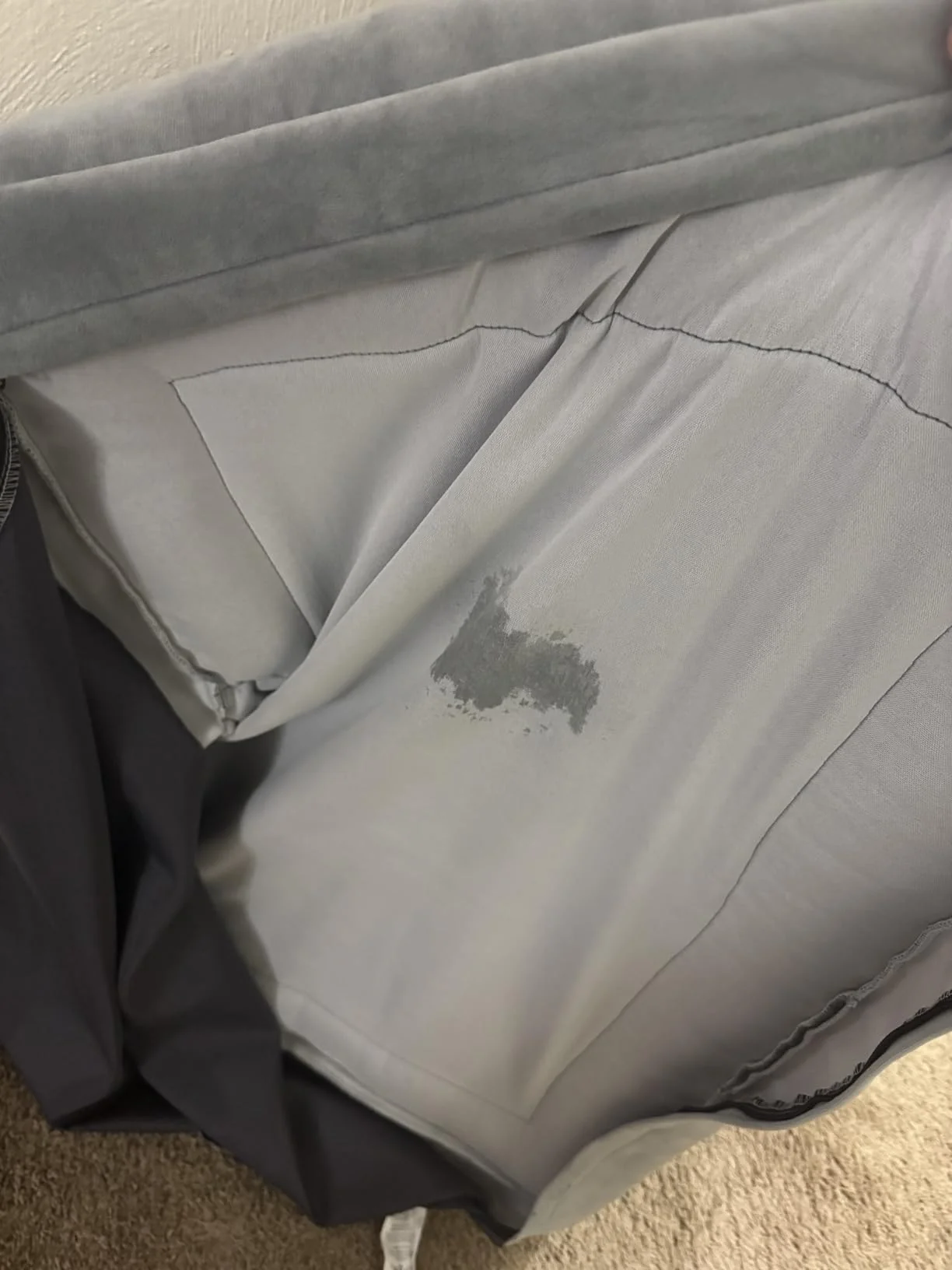
If the liquid barrier is working, the foam should not be acting like a hidden sponge. If moisture has reached the cushion, cleaning the cover alone cannot remove what has already moved below it.
There is a practical reason this distinction matters. Research cited in the supplied evidence found that fully waterproof beds performed better for durability and hygiene than beds without that protection, while canine continence-care research emphasized the importance of waterproof seals for hygiene management.
So the useful question is not simply "Is the cover waterproof?" It is whether the entire path between an accident and the foam actually keeps liquid out.
A bed that passes the marketing test but fails that physical barrier test can leave owners with a very different cleaning job than expected. For this particular group of reported failures, the waterproofing claim deserves a closer look before you rely on it for repeated accidents.
What Happens When You Wash a Dog Bed That Does Not Unzip
A dog bed can look perfectly washable until you actually put the entire thing into a front-load washer. Once the filling absorbs water, a lightweight bed can turn into a heavy, awkward lump that the washer struggles to spin.
One reported case described a bed that became a "waterlogged brick" after washing and took days to dry. Another heavy mat reportedly held so much water that the washing machine became unbalanced and had trouble completing the spin cycle. These failures were noted in consumer evidence cases PGH-AUDIT-WTVB and PGH-AUDIT-LJKV.
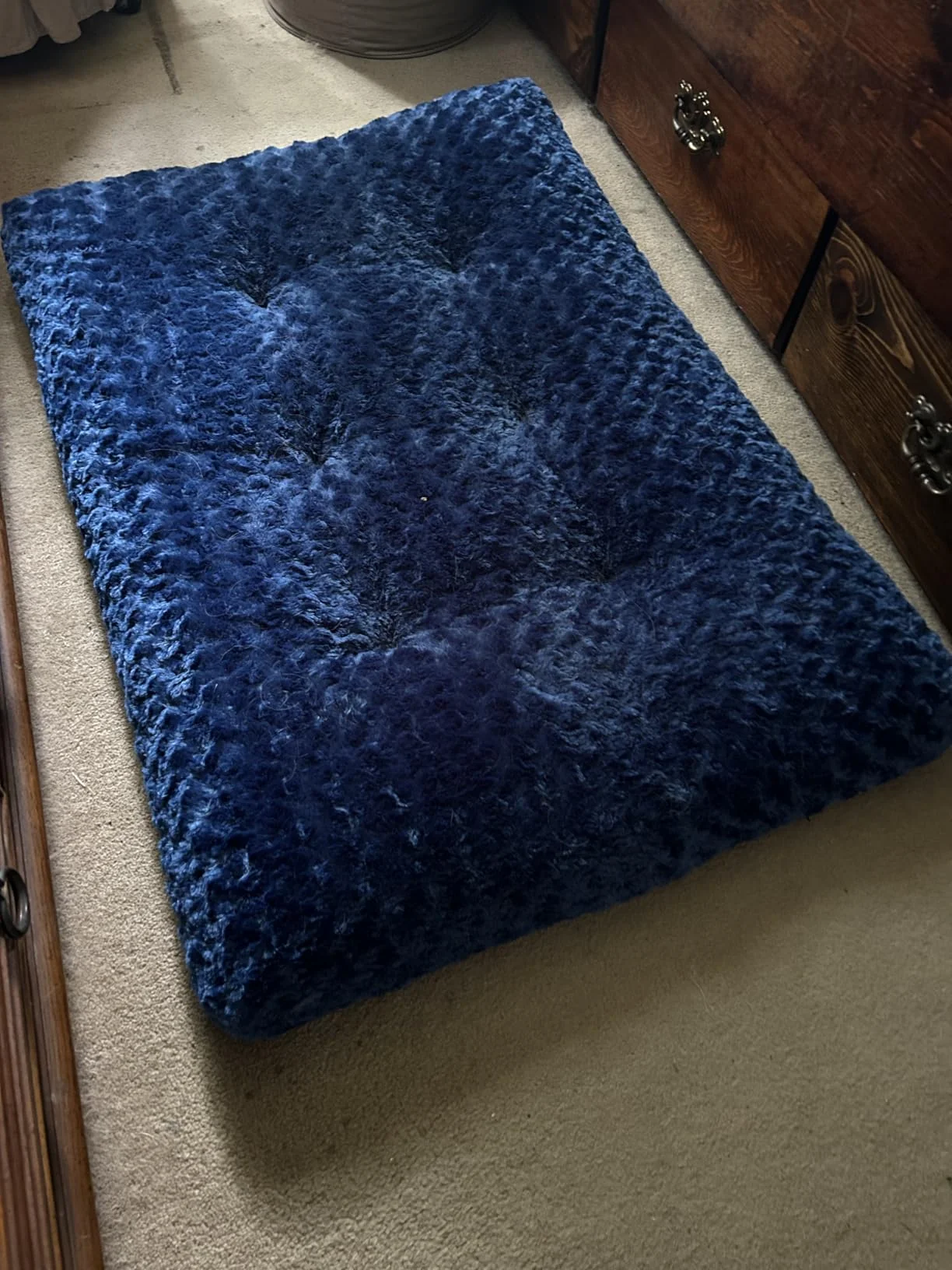
That creates a nasty little chain reaction: the bed gets soaked, the washer cannot distribute the weight properly, the spin cycle struggles, and now the appliance becomes part of the cleaning problem.
🧺 Open the Bed Before You Wash It
Before buying, look at the construction rather than stopping at the word "washable." Can the cover actually come off the inner filling? Unzip it, remove the cushion, and check whether the cover and insert can be handled separately.
That distinction matters because a removable cover lets you wash the part that gets dirty without forcing several pounds of waterlogged filling through a household washer.
With a non-removable design, the entire bed has to absorb the wash water and then give it back during the spin and drying process. If it stays saturated, the bed can remain heavy and difficult to dry long after the wash cycle ends.
For owners dealing with accidents, muddy paws, or frequent washing, "machine washable" is therefore not quite the same thing as "easy to wash." The zipper matters because it separates the dirty outer layer from the bulky filling—and that can make the difference between a routine laundry load and a washer full of trouble.
Why Heavy Mud Mats Fray and Burst Seams in Front-Load Washers
A heavy mud mat can look tough on the floor and still fall apart the first time it meets a washing machine. The problem becomes obvious when the edge stitching starts opening during the wash, allowing the filling or inner material to escape.
One reported case describes the mat's edges unraveling and coming unstitched as early as the first wash. Another bed reportedly developed shifting, lumpy filling after washing, followed by seams giving way. These failures are documented in consumer evidence cases PGH-AUDIT-LJKV and PGH-AUDIT-WTVB.
Once an edge opens, the washer is no longer dealing with one intact mat. Loose filling can spread through the drum, while the damaged border keeps pulling apart under repeated movement.
And that is where a supposedly simple cleaning job gets expensive. A mat that survives months of muddy paws but fails during its first wash is not doing much good as a washable product.
👀 Pull the Edge Before You Buy
Run your fingers around the entire perimeter of the mat. Look closely at the border where the top material meets the backing, and gently pull the edge to see whether the stitching feels secure or starts separating.
Pay particular attention to corners and long straight seams. Those areas are easy to overlook in product photos, yet they are exactly where a weakly finished edge can begin opening once the mat becomes saturated and starts moving inside a washer.
A cleaner-looking seam is not automatically a stronger one, but loose threads, uneven stitching, exposed edges, or a border that visibly separates under light handling are useful warning signs.
If the mat is intended for regular machine washing, the construction needs to survive more than muddy paws and wet feet. It also has to come out of the washer as one piece, without turning the filling into a cleanup project of its own.
For a frequently washed mud mat, the edge deserves as much attention as the absorbent surface. A cheap-looking seam can turn the first serious wash into the moment the whole product starts coming apart.
Chemical Off-Gassing and Hives in Short-Haired Dogs
The first warning may arrive before the dog even settles into the bed. Open the package and a strong chemical smell comes out, then a short-haired dog spends the night pressed directly against the fabric and foam. When the dog later develops raised bumps or irritated-looking skin, the bed becomes one of the things worth reconsidering.
One reported case involved a short-haired dog that developed widespread bumps and hives after sleeping on the bed. Another reported case described a strong chemical odor from the foam. These examples are documented in consumer evidence cases PGH-AUDIT-GZCT and PGH-AUDIT-DQBB.
That does not prove that a particular chemical caused a particular reaction. It does, however, make the combination worth taking seriously: a persistent odor plus a visible skin reaction is not something to casually write off as "new foam smell."
👃 Smell the Foam Before Your Dog Does
Take the cover off and smell the inner foam yourself before putting the bed into regular use. You do not need specialized equipment; the point is simply to notice whether the odor is faint and quickly dissipates or remains strong around the actual cushion.
The supplied research adds another reason to look beyond the cover. A study published in the American Journal of Veterinary Research found that foam-filled dog beds can contain higher concentrations of house dust mites and allergens than some other bedding materials. That does not establish that foam causes hives, but it does show that what is inside the bed matters, not just how soft the outer fabric feels.
And this is where the sales language can get ahead of the useful information. A label saying "orthopedic," "memory foam," or "premium" tells you very little about how the finished bed will behave around a dog with sensitive skin.
If the smell remains unusually strong, or a dog develops a new visible skin reaction after using the bed, removing that particular bedding from the situation is a sensible way to eliminate one possible source rather than assuming the odor is harmless.
The reported cases do not establish a universal problem with every foam dog bed. They do show why odor, the actual filling, and the dog's response deserve attention together—especially when a short-haired dog spends hours with its skin close to the material.
Why Rubber Non-Slip Backings Flake and Stain Hardwood Floors After Washing
A mud mat can do its job well on the floor and still become a problem after a few trips through the washer. The backing may begin cracking, peeling, or leaving color behind, while the surface gradually loses the grip that kept the mat from sliding.
One reported case described the backing separating after repeated washing and leaving pink staining on the floor. The same case also reported that the mat's non-slip performance declined as the backing deteriorated, documented in consumer evidence case PGH-AUDIT-LJKV.
That creates two separate headaches. You can end up with a mat that no longer stays put and a hardwood floor that now needs attention because pieces of the backing have transferred onto it.
🧽 Flip the Mat After Washing
Turn the mat over and look closely at the entire backing, especially around the edges and high-wear areas. Run your fingers lightly across the surface and look for cracking, loose pieces, peeling patches, or any residue that could transfer onto flooring.
Then place the mat on a clean, dry surface and check whether the backing still feels evenly attached. If sections are lifting or flaking, continuing to wash the mat can turn a small backing defect into a much larger cleanup problem.
The reported failure is specific rather than universal, so it is not a reason to assume every non-slip mat will damage hardwood. But it does highlight a useful buying distinction: "machine washable" tells you that the product can enter a washer; it does not tell you how well the bottom will survive repeated washing.
For hardwood floors, the backing deserves its own inspection. A mat that stays intact and keeps its grip after washing is doing two jobs; one that sheds pieces and loses traction is eventually just another thing to clean up.
CONCLUSION
A careful buyer does not need to take a washable or waterproof claim at face value. The more useful question is what happens to the whole product when it faces the conditions it is meant to handle.
For a dog bed, check whether the cover actually separates from the filling. A removable cover can make washing much easier than putting the entire water-filled bed into a household washer. With waterproof designs, inspect the inner barrier rather than judging the outer fabric alone.
For mats, pay attention to the edges, stitching, and underside. Loose threads or separating borders can become bigger problems during washing, while a backing that flakes or peels may lose its grip and leave residue behind. Foam also deserves attention when a strong odor remains or a dog develops a new visible skin reaction after use.
The best purchase is not simply the one with the most reassuring label. It is the one whose construction makes the cleaning and everyday problems easier to manage.
THE ULTIMATE BUYING VERDICT
| Verdict | Key Consideration | Recommendation |
|---|---|---|
| 🔴 Significant concerns | Liquid reaching foam, seams opening during washing, or backing cracking and shedding after washing | Be cautious with products that cannot separate the washable outer layer from the filling or show weak seams and deteriorating backing |
| 🟡 Acceptable with limitations | A product may be usable when its washable design has practical limits, such as a non-removable filling or materials that require closer inspection | Accept the limitation when the cleaning method fits your situation and the construction can be checked before regular use |
| 🟢 Meets long-term expectations | Removable washable covers, secure stitching, intact backing, effective liquid barriers, and materials without an unusually strong persistent odor | Look for construction that keeps liquid away from foam, separates dirty covers from bulky filling, and remains intact after washing |